Last updated: September 26, 2026 · Originally published: September 24, 2026 · By Eternal Elixir Editorial
Quick answer: saffron for mood has real but modest support from human trials. In adults with everyday low mood and no diagnosis, a standardised saffron extract at 28 to 30 mg a day beat placebo on mood questionnaires in four of the five trials covered here, over four to twelve weeks. The fifth, a French trial published in 2025, found no effect on its main measure. Placebo groups improved a lot too, so the fair summary is a small, repeatable edge that takes a month or more to show.
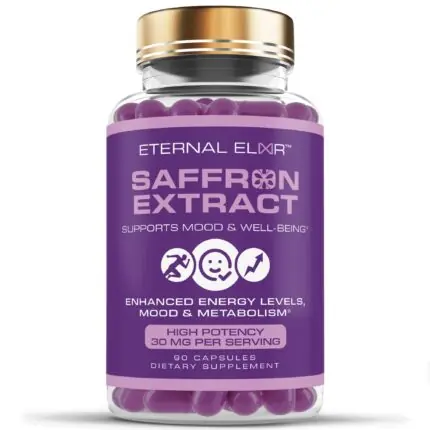
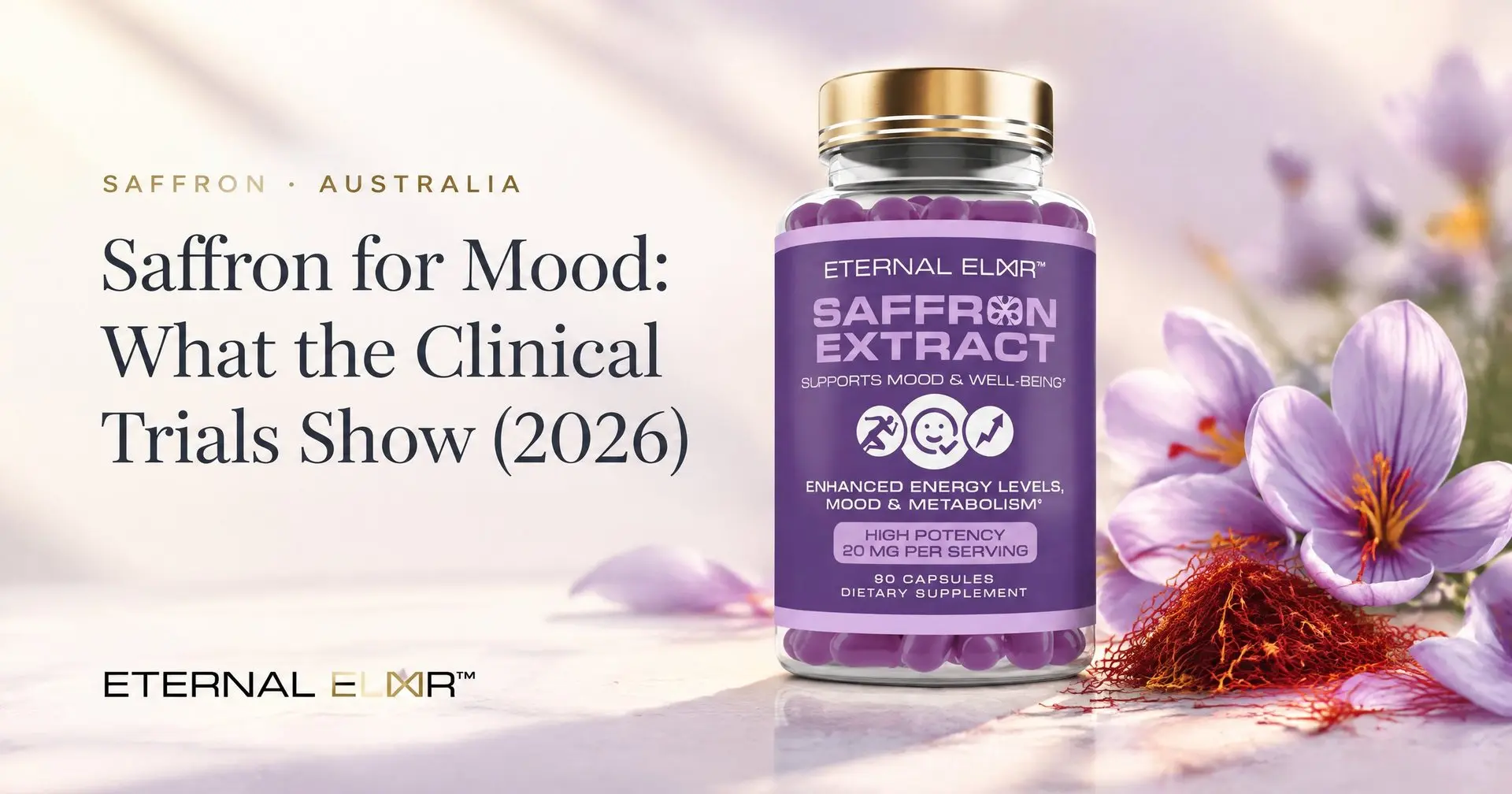
Our pick for Australians who want to try it is Eternal Elixir Saffron Extract 30mg. One capsule holds 30 mg of affron®, the extract tested in the two largest of those trials, and a 90-capsule bottle lasts three months at about $0.56 a day. Eternal Elixir makes this product, so weigh our pick with that in mind. Every study, trial figure and competitor price below is linked so you can check it yourself.
Key points
- Dose matters. In a 2017 trial, 28 mg a day of affron improved mood scores and 22 mg a day did nothing measurable.
- The largest trial (202 adults, 12 weeks) found saffron beat placebo by 2.92 points on the low-mood subscale of the DASS-21 questionnaire, a small-to-moderate effect.
- More than half of the placebo group in that trial also improved by a margin the researchers called clinically significant.
- None of these trials enrolled people with a diagnosed mood condition. If you take prescribed medicine for mood, anxiety or sleep, speak with your doctor or pharmacist before adding saffron.
Table of contents
- 1. Saffron for Mood: What Five Placebo-Controlled Trials Found
- 1.1. Kell 2017: 28 mg worked and 22 mg did not (Australia, 4 weeks)
- 1.2. Jackson 2021: Safr’Inside at 30 mg (UK, 8 weeks)
- 1.3. Lopresti 2025: the largest trial (Perth, 12 weeks)
- 1.4. Lopresti and Smith 2026: women aged 50 to 70 (Perth, 12 weeks)
- 1.5. Amadieu 2025: no effect on the main measure (France, 6 weeks)
- 1.6. The five trials side by side
- 2. How Big Is the Effect? The Placebo Response
- 3. What Saffron Has Not Been Shown to Do
- 4. Saffron Supplements in Australia Compared With the Trial Dose
- 5. How to Take Saffron for Mood: Dose, Timing and What to Expect
- 6. Why Eternal Elixir Saffron Extract 30mg Is Our Pick
- 7. Is Saffron Safe? Side Effects, Medicines and Who Should Be Careful
- 8. Saffron for Mood: Frequently Asked Questions
- 8.1. Does saffron actually work for mood?
- 8.2. Is saffron an antidepressant?
- 8.3. How do you take saffron for mood?
- 8.4. Is there a downside to taking saffron?
- 8.5. How long does saffron take to work for mood?
- 8.6. What is the best saffron supplement for mood in Australia?
- 8.7. Does saffron help with stress and sleep as well as mood?
- 9. The Bottom Line
- 10. Sources
Saffron for Mood: What Five Placebo-Controlled Trials Found
Saffron is the dried stigma of the Crocus sativus flower. Its colour comes from crocins and its smell from safranal, and those are the compounds extract makers standardise. The trials below all used branded, standardised extracts rather than kitchen saffron, so the extract named on a label tells you which results apply to it.
Extracts from two companies appear in these five trials. affron®, from the Spanish company Pharmactive, is standardised to 3.5% Lepticrosalides®, a measure made up mostly of crocins. The French company Activ’Inside supplied the other two: Safr’Inside™ in the UK trial, and a saffron extract standardised for crocins and safranal in the French one. A result for one extract doesn’t automatically carry over to another.
Kell 2017: 28 mg worked and 22 mg did not (Australia, 4 weeks)
Researchers at the University of Southern Queensland recruited 128 adults who reported low mood but had not been diagnosed with depression. They took affron at 28 mg a day, 22 mg a day or a placebo for four weeks. On the main measure, the total mood disturbance score of the Profile of Mood States (POMS), the 28 mg group improved significantly more than placebo (p < 0.001, effect size d = 1.10, which is large). The 22 mg group showed no treatment effect at all. The authors named self-reporting, at both screening and testing, as the study’s main weakness (Kell et al., 2017).
Jackson 2021: Safr’Inside at 30 mg (UK, 8 weeks)
At Northumbria University, 56 healthy adults aged 18 to 54 with low mood, anxiety or stress below clinical thresholds took 30 mg a day of Safr’Inside (one 15 mg capsule morning and evening) or a placebo for eight weeks. The saffron group reported lower low-mood scores and better social relationships by the end. The team also measured crocetin, a saffron metabolite, in urine. It rose in the saffron group, and the people whose crocetin rose most tended to improve most (Spearman ρ = −0.50). That shows the extract was absorbed and that absorption tracked the change (Jackson et al., 2021).
An acute test added one objective measure. Participants went through a lab-based psychosocial stressor while their heart rhythm was recorded. Heart rate variability normally falls under that kind of pressure. It fell in the placebo group and held steady after a dose of saffron (p = 0.003). It is one finding in 56 people, and none of the larger trials here measured heart rate variability. Stomach upset was more common on saffron (5 people against none on placebo), although the total number of adverse events was the same in both groups and none was serious.
Lopresti 2025: the largest trial (Perth, 12 weeks)
Clinical Research Australia in Perth ran what its authors describe as the largest saffron trial to date. A total of 202 adults aged 18 to 70 with low-mood symptoms took affron at 28 mg a day or a placebo for 12 weeks. On the primary measure, the low-mood subscale of the DASS-21, saffron beat placebo by 2.92 points (95% CI 0.71 to 5.13 points, Cohen’s d = 0.39, a small-to-moderate effect). By the end, 72.3% of the saffron group had reached a clinically significant change, defined as a drop of 7 points or more, against 54.3% of the placebo group (p = 0.010).
The other secondary outcomes, including sleep scales, a wellbeing index and daily mood ratings, showed no difference between the groups. An exploratory analysis found better sleep scores only among people who started with more disturbed sleep. No serious adverse reactions were reported (Lopresti et al., 2025).
Lopresti and Smith 2026: women aged 50 to 70 (Perth, 12 weeks)
The newest trial, published in June 2026, gave 86 women aged 50 to 70 with low mood and poor sleep either affron at 28 mg a day (one 14 mg tablet morning and evening) or a placebo for 12 weeks. Saffron again beat placebo on the DASS-21 low-mood subscale (adjusted difference 2.37 points, d = 0.48, p = 0.030). In the saffron group, 48.8% reached the 7-point threshold, against 25.6% on placebo. Self-esteem and sleep-related impairment (daytime tiredness, alertness and concentration) also improved. Sleep disturbance itself, self-rated appearance and an AI estimate of facial skin age did not change, and the authors call the secondary findings exploratory (Lopresti and Smith, 2026).
Amadieu 2025: no effect on the main measure (France, 6 weeks)
A University of Bordeaux team gave 51 healthy adults with low-mood symptoms below clinical thresholds either an Activ’Inside saffron extract at 30 mg a day (15 mg twice daily) or a placebo for six weeks. Saffron did not change the primary outcome, a combined score for low mood, anxiety and fatigue, or any of those symptoms on its own. One secondary measure, the mental health score of the SF-12 quality-of-life questionnaire, improved over time compared with placebo (p = 0.04). Inflammatory markers and stress-hormone reactivity did not change. The authors concluded that the extract did not affect these symptoms and that any mental-health benefit needs replicating in larger trials (Amadieu et al., 2025).
The five trials side by side
| Trial | Extract and daily dose | Who took part | Length | Main mood result |
|---|---|---|---|---|
| Kell 2017, Australia | affron, 28 mg or 22 mg | 128 adults with self-reported low mood | 4 weeks | 28 mg beat placebo on POMS (large effect). 22 mg had no effect. |
| Jackson 2021, UK | Safr’Inside, 30 mg | 56 healthy adults aged 18 to 54 | 8 weeks | Lower low-mood scores and better social relationships. Urinary crocetin tracked the change. |
| Lopresti 2025, Australia | affron, 28 mg | 202 adults aged 18 to 70 | 12 weeks | DASS-21 low-mood score 2.92 points better than placebo (d = 0.39). No other outcome differed. |
| Lopresti 2026, Australia | affron, 28 mg | 86 women aged 50 to 70 | 12 weeks | DASS-21 low-mood score 2.37 points better than placebo (d = 0.48). |
| Amadieu 2025, France | Activ’Inside extract, 30 mg | 51 healthy adults | 6 weeks | No effect on the main measure. The SF-12 mental health score improved. |
How Big Is the Effect? The Placebo Response
Few product pages quote this figure. In the 202-person trial, 54.3% of the people taking a placebo capsule improved by at least 7 points, a change the researchers themselves defined as clinically significant. Saffron lifted that to 72.3%. In the 2026 trial the split was 48.8% against 25.6%. The 2025 authors wrote that large placebo responses were evident and that future trials need to account for them.
Effect sizes point the same way. A Cohen’s d of about 0.2 is usually read as small, 0.5 as moderate and 0.8 as large. The two most recent affron trials landed at 0.39 and 0.48. The 2017 trial’s 1.10 came from a four-week study of 128 people, and the two 12-week affron trials that followed found effects less than half that size.
A 2026 meta-analysis pooled 34 randomised trials in adults, with 1,769 participants in total. Saffron lowered scores on self-rated questionnaires for low mood and anxiety. It made no significant difference on the clinician-rated scales or on POMS, and the reviewers rated the certainty of the evidence as moderate. They called for better trials precisely because the clinician ratings did not move (Mahmoudi et al., 2026).
So the fair reading is this. At the trial dose, saffron gives a small-to-moderate edge over placebo on how people rate their own mood, and part of the lift anyone feels would probably have come anyway. That is still a real effect. It is smaller than most marketing suggests.
What Saffron Has Not Been Shown to Do
- Change brain chemistry in people. You will read that saffron raises serotonin, dopamine or GABA. Those ideas rest on laboratory and animal research. None of the five human trials above measured brain chemistry, so the mechanism is unconfirmed in people.
- Reliably lower stress hormones. The 2025 Bordeaux trial measured stress-hormone reactivity and inflammatory markers and found no change in either.
- Work at lower doses. The 22 mg arm in 2017 produced nothing measurable, so a blend with a small amount of saffron sits outside the tested range.
- Stand in for medical care. None of these trials enrolled people with a diagnosed mood condition, and saffron is not a substitute for treatment. Persistent low mood that affects work, sleep or relationships is worth raising with your GP.
Funding is worth knowing about too. Every trial here included authors from, or money from, the company that makes the extract tested. A double-blind design limits how much that can skew the result, and the Bordeaux trial shows that industry-linked research can still report a null finding.
Saffron Supplements in Australia Compared With the Trial Dose
The trial dose is the filter to use. The table below lists saffron products Australians can buy locally or through iHerb AU, with the extract per day worked out from each label’s own directions. Prices are as of Sep 2026 and move often, especially during brand sales.
| Product | Saffron extract per day | Daily serve | Pack | Price (AUD, as of Sep 2026) | Cost per day | Buy |
|---|---|---|---|---|---|---|
| Eternal Elixir Saffron Extract 30mg (our pick) | 30 mg affron | 1 capsule | 90 capsules (90 days) | $49.99 | $0.56 | View at Eternal Elixir |
| Caruso’s Saffron (Chemist Warehouse) | 27 mg affron | 2 tablets | 60 tablets (30 days) | $19.97 (RRP $39.95) | $0.67 | Chemist Warehouse |
| California Gold Nutrition Saffron Extract with affron (iHerb AU) | 28 mg affron | 1 capsule | 60 capsules (60 days) | $42.66 | $0.71 | iHerb AU |
| Herbs of Gold Saffron Mood Balance | 30 mg affron, plus lemon balm extract (30 mg per capsule) | 2 capsules | 60 capsules (30 days) | $43.95 ($35.16 on sale when checked) | $1.47 ($1.17 on sale) | Herbs of Gold |
Eternal Elixir makes Saffron Extract 30mg. It is our pick because it gives a full trial-range daily amount of affron in one capsule, in the largest bottle here, at the lowest cost per day of the four.
Add Saffron Extract 30mg to cart · $49.99
Who each product suits
- Eternal Elixir Saffron Extract 30mg suits adults who want the whole daily amount in one capsule and a three-month bottle at the lowest daily cost in the table. It doesn’t suit anyone set on copying the affron trials’ split schedule exactly, because a single 30 mg capsule can’t be divided into two 14 mg doses.
- Caruso’s Saffron suits shoppers who want to pick up a bottle at Chemist Warehouse and like the morning-and-evening pattern the affron trials used. It has the lowest shelf price here. The pack lasts 30 days, and 27 mg a day is a touch under the 28 mg trial amount.
- California Gold Nutrition suits iHerb customers who want the 28 mg daily total in one capsule. A bottle lasts two months, and iHerb stock and delivery times vary.
- Herbs of Gold Saffron Mood Balance suits people who want lemon balm in the same capsule as their saffron. Lemon balm was not part of the saffron trials above, and at full price this is the most expensive option per day.
How to Take Saffron for Mood: Dose, Timing and What to Expect
Every positive trial above used 28 to 30 mg of standardised extract a day for at least four weeks. The affron trials have mostly split that into 14 mg in the morning and 14 mg in the evening (Lopresti and Smith, 2026). One 30 mg capsule gives the same daily total in a single dose. We have not found a trial comparing once-daily with twice-daily saffron, so choose between them on convenience.
- Dose: aim for 28 to 30 mg of a standardised extract per day. Check the milligrams of extract per serve, and check whether a serve is one capsule or two.
- Timing: take it with a meal at a time you will remember. Our product page suggests the same time each day, morning or evening.
- How long: give it four weeks before judging it, and up to 12 weeks, the length of the two most recent affron trials.
- Tracking: rate your mood once a week on a simple 1 to 10 scale, starting the week before your first capsule. Given the size of the placebo response, a written record is more reliable than memory.
If sleep is your main target, the sleep trials measured different outcomes, so read what the trials show about saffron and sleep quality before you settle on a routine. For stress, sleep and mood in one place, see our guide to saffron supplement benefits.
Why Eternal Elixir Saffron Extract 30mg Is Our Pick
Our capsule is built around the trial dose. Each one holds 30 mg of affron® saffron extract (Crocus sativus stigma, standardised to 3.5% Lepticrosalides®), the extract used in the 2017, 2025 and 2026 trials above. The only other ingredients are rice flour and a vegetable capsule, so it suits vegans.
- 90 capsules, one a day: one bottle covers the full 12-week course the longest trials ran, with days to spare.
- $49.99 a bottle: about $0.56 a day, or $16.66 for a 30-day month.
- Multi-bottle savings: 2 bottles save 10%, 3 save 15% ($127.47 for 270 days) and 5 save 20%.
- Delivery: free shipping on orders over $100, and orders ship from Sydney within 24 hours.
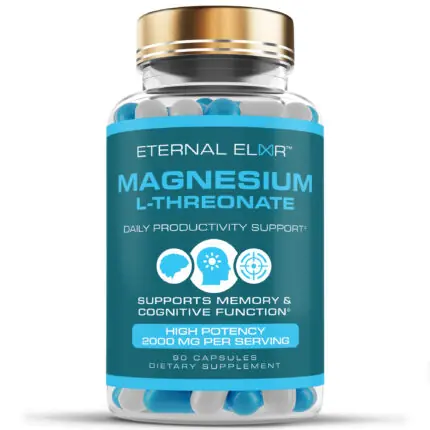
If you want to pair saffron with magnesium in the evening, Magnesium L-Threonate 2000mg is the form we stock (three capsules give 2,000 mg). We know of no trial that tested the two together, so read the magnesium L-threonate side effects guide and how to time magnesium L-threonate for sleep first, and add one product at a time so you can tell which one is doing what.
Is Saffron Safe? Side Effects, Medicines and Who Should Be Careful
Tolerability in the mood trials was good. Both 12-week trials reported no serious adverse events, and the side effect that stood out was stomach upset in the 2021 UK trial (5 people on saffron against none on placebo). WebMD’s saffron monograph describes supplemental doses of up to 100 mg a day for up to 26 weeks as possibly safe, which is more than three times the trial dose. The concern is very large amounts: 5 g or more can cause poisoning, far beyond anything in a capsule (WebMD).
Talk to your doctor or pharmacist before taking saffron if any of these apply to you:
- You take prescribed medicine for mood, anxiety or sleep. Don’t start, stop or change a prescribed medicine on your own. WebMD flags sedatives as one class where saffron might add to sleepiness or affect breathing.
- You take blood pressure or blood-sugar-lowering medicines. WebMD notes that saffron might lower both, so the combination could push either too low.
- You are pregnant or breastfeeding. Amounts above normal food use are described as likely unsafe in pregnancy, and there is not enough reliable information for breastfeeding.
- You have bipolar disorder. WebMD notes that saffron might trigger excitability and impulsive behaviour in people with the condition.
- You have a diagnosed mood condition. The trials above did not include people with a diagnosis, so their results don’t apply, and any supplement belongs in a conversation with the clinician managing your care.
For the attention side of the research, where the trial groups are different again, see what the saffron and attention trials show.
Saffron for Mood: Frequently Asked Questions
Does saffron actually work for mood?
In placebo-controlled trials of adults with everyday low mood, mostly yes, and modestly. Four of the five trials covered here found that saffron at 28 to 30 mg a day beat placebo on mood questionnaires over four to twelve weeks. One six-week trial found no effect on its main measure. In the largest study, 72.3% of the saffron group reached a clinically significant improvement, and so did 54.3% of the placebo group.
Add Saffron Extract 30mg to cart · $49.99
Is saffron an antidepressant?
No. Saffron is a food-derived supplement, not a prescription medicine. Researchers sometimes describe “antidepressant effects” when an ingredient moves scores on a mood rating scale, but the trials on this page enrolled people without a diagnosis. Saffron is not a substitute for prescribed treatment. If you are being treated for depression, talk to the clinician managing your care before adding any supplement.
How do you take saffron for mood?
Take 28 to 30 mg of a standardised extract each day with food, and keep it up for at least four weeks before you judge it. The affron trials mostly split the dose into 14 mg in the morning and 14 mg in the evening. One 30 mg capsule gives the same daily total with a single dose to remember. Check the label for milligrams of extract per serve, because 22 mg a day did nothing in the 2017 trial.
Is there a downside to taking saffron?
The main downsides are cost and expectations. Trials reported good tolerability, no serious adverse events and occasional stomach upset. The real risks are relying on saffron instead of care you need, combining it with prescribed mood, blood pressure or sedative medicines without asking your doctor or pharmacist, and buying an underdosed blend and then deciding the ingredient doesn’t work. Saffron is expensive as a raw material, which is one reason low-dose blends exist.
How long does saffron take to work for mood?
The trials measured change at four, six, eight and twelve weeks, and the UK trial also checked at 14 and 28 days. The shortest trial to find a benefit ran for four weeks. Judge it after a month and make your decision by three.
What is the best saffron supplement for mood in Australia?
Our pick is Eternal Elixir Saffron Extract 30mg. It gives 30 mg of affron, the extract used in the largest mood trials, in one capsule a day, and at $49.99 for 90 capsules it has the lowest cost per day of the four products compared above. Eternal Elixir makes it. If you want a bottle today from Chemist Warehouse, Caruso’s Saffron has the lowest shelf price at $19.97 for a 30-day pack. Our comparison of the best saffron supplements in Australia covers more brands.
Add Saffron Extract 30mg to cart · $49.99
Does saffron help with stress and sleep as well as mood?
Several of these trials measured stress and sleep, with mixed results. In the UK trial, heart rate variability held steady under a lab stressor after saffron. The 2025 trial found better sleep only in people who started with poor sleep, and the 2026 trial found less sleep-related impairment but no change in sleep disturbance. Our saffron and sleep guide covers the sleep trials in detail.
The Bottom Line
Saffron for mood has four positive placebo-controlled trials at 28 to 30 mg a day and one null result, all in adults with everyday low mood. The effect is modest and placebo does a lot of the work. The dose on the label decides whether a product matches the research. If you want to try it, pick a standardised extract in that range, give it at least a month and keep a weekly record.
Comparing saffron with other options for mood and focus? Our guide to the best nootropic supplements in Australia sets saffron beside the alternatives, and our roundup of saffron supplements for focus covers the attention angle. You can also browse the full Eternal Elixir range or read our buying notes on Eternal Elixir.
Sources
- Kell G, Rao A, Beccaria G, Clayton P, Inarejos-García AM, Prodanov M. affron® a novel saffron extract (Crocus sativus L.) improves mood in healthy adults over 4 weeks in a double-blind, parallel, randomized, placebo-controlled clinical trial. Complement Ther Med. 2017;33:58-64. PubMed 28735826
- Jackson PA, Forster J, Khan J, et al. Effects of saffron extract supplementation on mood, well-being, and response to a psychosocial stressor in healthy adults: a randomized, double-blind, parallel group, clinical trial. Front Nutr. 2021;7:606124. PubMed 33598475
- Lopresti AL, Smith SJ, Marx W, Díez-Municio M, Morán-Valero MI. An examination into the effects of a saffron extract (Affron) on mood and general wellbeing in adults experiencing low mood: a randomized, double-blind, placebo-controlled trial. J Nutr. 2025;155(7):2300-2311. PubMed 40414301
- Lopresti AL, Smith SJ. The effects of a saffron extract (Affron®) on mood, sleep, self-esteem, and exploratory measures of physical appearance in women aged 50 to 70 years experiencing low mood and poor sleep: a randomised, double-blind, placebo-controlled trial. Front Nutr. 2026;13:1838513. PubMed 42389708
- Amadieu C, Leyrolle Q, Farneti M, et al. Effect of saffron extract supplementation on mood in healthy adults with subclinical symptoms of depression: a randomized, double-blind placebo-controlled study. Am J Clin Nutr. 2025;122(6):1625-1635. PubMed 41047129
- Mahmoudi R, Mohammadi-Sartang M, Servatyari K, Rafieipour N. Effect of saffron on depression, anxiety and mood disorder: a GRADE assessed systematic review and meta-analysis of 34 randomized controlled trials. Nutr Neurosci. 2026;29(7):816-837. PubMed 41693488
- WebMD. Saffron: uses, side effects, and more. webmd.com
- Product pages and prices checked September 2026: Eternal Elixir Saffron Extract 30mg, Caruso’s Saffron at Chemist Warehouse, California Gold Nutrition at iHerb AU, Herbs of Gold Saffron Mood Balance.