Last updated: August 8, 2026 · Originally published: March 21, 2026 · By Eternal Elixir Editorial
When most people hear “TUDCA”, they think of the liver. TUDCA (tauroursodeoxycholic acid) is a bile acid, and bile acids also shape the environment inside your gut. That makes TUDCA part of a real and interesting connection between bile flow, the intestinal lining and the trillions of microbes that make up your gut microbiome.
This article explains that connection, what the research on TUDCA and the gut actually shows (mostly animal and cell studies so far), and how to take it if you decide to. One important point first: if you have ongoing gut problems, such as persistent pain, changed bowel habits, blood in your stool or unexplained weight loss, see your doctor before trying any supplement.
Table of contents
The Bile-Gut Axis: Why Bile Acids Matter for Your Microbiome
Bile acids are made in the liver from cholesterol, stored in the gallbladder, and released into the small intestine when you eat. Their textbook job is to emulsify dietary fat so it can be absorbed. Over the past decade, researchers have also shown that bile acids act as signalling molecules in the gut.
The primary bile acids your liver makes are converted by gut bacteria into secondary bile acids. These act on receptors in the intestinal lining, especially the farnesoid X receptor (FXR) and the bile acid receptor TGR5. Signalling through these receptors is linked to the gut lining, local immune activity, gut movement and the mix of microbes that live there.
So bile acids and gut bacteria shape each other. Your liver’s bile acids influence which bacteria thrive, and those bacteria change the bile acids into forms that signal back to your body. A 2016 review in Cell Metabolism describes this two-way crosstalk and its effects on metabolism (Wahlström and colleagues, 2016).
Most bile acids released into the gut are not lost. They are reabsorbed further down the small intestine and carried back to the liver to be used again, a loop called enterohepatic circulation. That means the bile acids in your gut, and the bacteria that act on them, are part of a system that keeps cycling between your liver and your intestine every day.
How TUDCA Supports Gut Barrier Integrity
The intestinal lining is a single layer of cells between the contents of your gut and your bloodstream. It lets nutrients through while keeping bacteria and other material where they belong. Tight junction proteins hold neighbouring cells together, and a layer of mucus sits on top.
TUDCA is ursodeoxycholic acid (UDCA) joined to the amino acid taurine. Your body makes small amounts of it. TUDCA is a hydrophilic (water-loving) bile acid, which makes it gentler on cells than the more hydrophobic bile acids. It is also known as a “chemical chaperone” that eases endoplasmic reticulum (ER) stress inside cells, which is the same property researchers study in the liver.
The gut evidence is early. In one recent animal study, broiler chickens given TUDCA by injection during an inflammatory challenge had lower markers of ER stress, more mucus-producing goblet cells and more Mucin2 in the small intestine than untreated birds, along with more Lactobacillus bacteria (Wang and colleagues, 2026). That is a long way from a person taking a capsule, and no human trial has tested TUDCA for the gut lining.
TUDCA and Microbiome Composition
The mix of bacteria in your gut is partly shaped by the bile acids present. Different species tolerate bile acids differently, so the type and amount of bile acid in the intestine influences which ones do well.
Because TUDCA is a bile acid, it can change that environment. In the broiler study above, TUDCA raised the share of Lactobacillus in the small intestine. It is worth being clear about what that does and doesn’t mean. TUDCA isn’t a probiotic and doesn’t add bacteria. Any effect it has would come from changing the conditions your existing microbes live in, and nobody has yet shown what that means for people in a controlled trial.
Who Benefits Most from TUDCA for Gut Health?
Honestly, we don’t know yet, because the human studies haven’t been done. What we can say is who tends to be interested in TUDCA, and who should check with a doctor first.
- People supporting their liver and bile flow. This is TUDCA’s best-known use, and our guide to signs your liver needs support covers it in more detail.
- Active people eating large amounts of food. Our article on TUDCA for athletes looks at bile acid support in training.
- People who have had their gallbladder removed, or who have any gut or liver condition. Talk to your doctor before taking TUDCA. It’s a bile acid, and your doctor should know about anything that changes your bile acid pool.
What to check before you buy TUDCA
- Dose per capsule. Products commonly come in 250 mg or 500 mg capsules, so check the label rather than the front of the bottle.
- Capsules per bottle. A 90-capsule bottle at one a day lasts three months. A 60-capsule bottle lasts two.
- Directions. Follow the label serve and don’t stack several bile acid products.
- A certificate of analysis. Ask the seller for the current batch certificate. We supply ours on request.
For a side-by-side look at the TUDCA products sold in Australia, see our TUDCA comparison.
Not for you if you’re pregnant or breastfeeding, under 18, or taking prescription medicines, until you’ve spoken with your doctor.
How to Use TUDCA for Gut Support
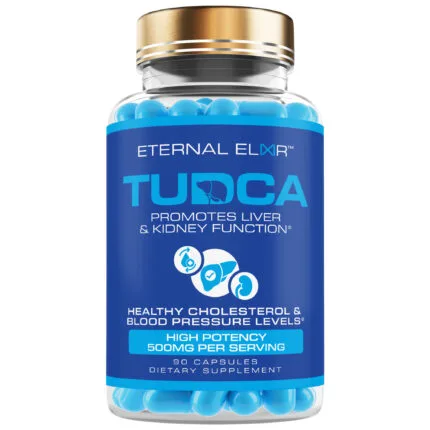
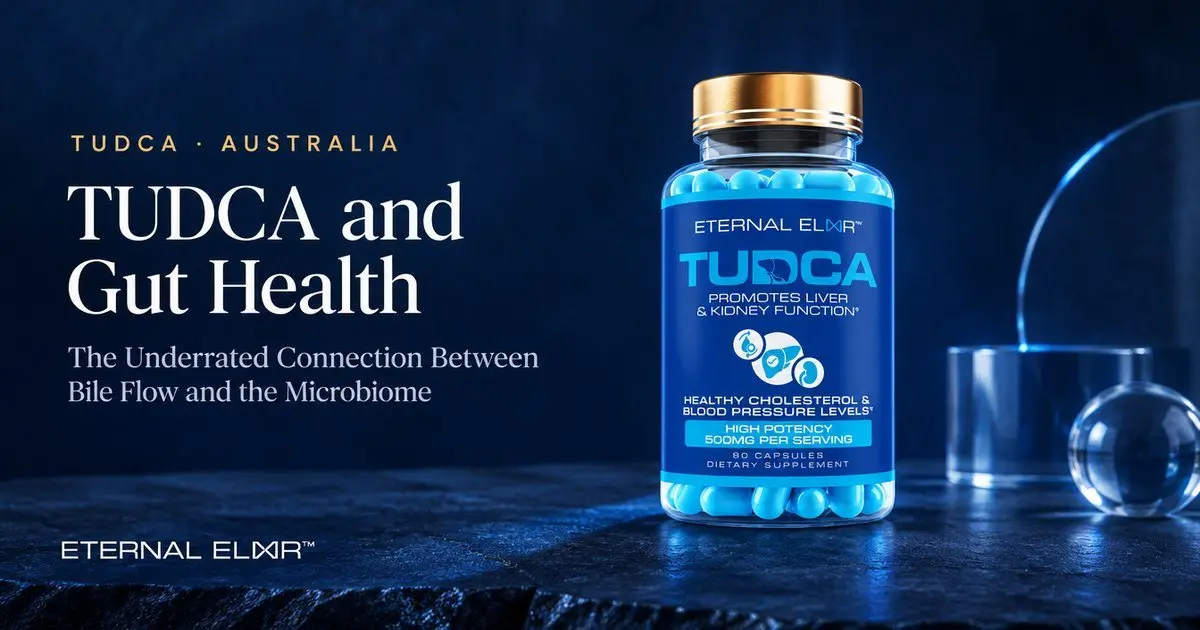
Follow the label. For Eternal Elixir TUDCA 500mg, that’s one 500 mg capsule a day with a meal. Taking it with food makes sense because bile is released when you eat. Each bottle has 90 capsules, so it lasts 90 days at the label serve, at about $0.67 a day ($59.99 a bottle). It ships from Sydney within 24 hours, with free shipping over $100, and buying two bottles saves 10%.
Add TUDCA 500mg to cart · $59.99
If you’re also comparing liver-support options, our glutathione supplement comparison covers another popular choice. Keep things simple: start one supplement at a time so you can tell what’s doing what.
TUDCA vs Probiotics: Different Layers of the Same Problem
A common question is whether TUDCA can replace probiotics, or the other way round. They work differently. Probiotics add live bacteria. TUDCA is a bile acid that may change the conditions those bacteria live in.
No study has tested TUDCA and probiotics together, so we can’t tell you the combination works better than either alone. If you take both, follow each product’s own directions. A probiotic that has been studied for the result you want is a better starting point than a theory about bile acids.
Food matters more than either. Vegetables, legumes, fruit and whole grains supply the fibre your gut bacteria feed on, and they’re a sensible foundation whatever supplements you choose to add on top.
The link between bile acids and gut health is one of the more active areas of microbiome research. For now, TUDCA’s gut story is promising biology rather than proven results in people.
Frequently Asked Questions
How long does it take for TUDCA to improve gut symptoms?
There’s no human data to answer that. No clinical trial has measured gut symptoms in people taking TUDCA, so any timeline you read is a guess. If you try it, give it a few weeks at the label dose, keep notes, and see your doctor about any symptom that persists.
Can TUDCA help with food sensitivities?
It hasn’t been shown to. TUDCA’s effects on the gut lining have only been studied in animals and cells, and food reactions have many causes. A true food allergy needs medical care, not a supplement. Talk to your doctor or a dietitian about food reactions.
Should I take TUDCA if I still have my gallbladder?
Having a gallbladder doesn’t rule TUDCA out, and most people taking it still have one. But don’t use TUDCA to manage digestive symptoms without advice. Pale or clay-coloured stools, yellowing of the skin or eyes, or pain in the upper right of your abdomen need a doctor’s assessment, not a supplement.
Is TUDCA the same as UDCA?
No, but they’re closely related. TUDCA is UDCA joined to taurine, and your body converts between bile acid forms. Don’t swap one for the other, or add TUDCA to a prescribed bile acid medicine, without talking to your doctor.
Sources
- Wahlström A, Sayin SI, Marschall HU, Bäckhed F. Intestinal crosstalk between bile acids and microbiota and its impact on host metabolism. Cell Metab. 2016;24(1):41-50. PubMed 27320064
- Wang G, Xu H, Zhang X, et al. Tauroursodeoxycholic acid alleviates LPS-induced intestinal injury by reducing endoplasmic reticulum stress and restoring Mucin2 in broilers. Poult Sci. 2026;105(12):107800. PubMed 42800448
Related Reading
- Best TUDCA supplements in Australia, compared
- Best NMN supplements in Australia, compared
- The full Eternal Elixir range