Last updated: November 9, 2026 · By Eternal Elixir Editorial
Last updated: November 9, 2026 · By Eternal Elixir Editorial · 6 products compared
Glutamine is a single amino acid that your muscles, gut and immune cells use in large amounts. Glutathione is a small antioxidant molecule your cells assemble from three amino acids. The names differ by a few letters, and that is where most of the confusion in the glutamine vs glutathione question starts. They sit on different shelves for good reason: glutamine is sold as a gym and gut powder, and glutathione as an antioxidant capsule or liquid.
There is a real link between them. Glutamine can become glutamate, and glutamate is one of the three building blocks of glutathione. That link is weaker than many supplement pages suggest, and we explain why below. Then we compare six products sold in Australia, three of each, on the label serve, the price per day and the cost per gram of the active ingredient in AUD. If glutathione is new to you, start with our guide to what glutathione does.
Eternal Elixir makes Reduced L-Glutathione 2000mg; it is our pick, and every figure for the other products is taken from their own labels and retailer pages.
Quick Answer
Eternal Elixir Reduced L-Glutathione 2000mg is our top pick if you are choosing between glutamine and glutathione for antioxidant support in Australia, because it gives you glutathione directly, 2,000 mg per serve, at $0.44 per gram, the lowest cost per gram of glutathione in this comparison. If your goal is training recovery or extra amino acids in a shake, Henry Blooms L-Glutamine Powder is the lowest daily cost here, from $0.15 a day.
Based on labels and live AUD prices for 6 glutamine and glutathione products sold in Australia, checked 9 November 2026
Not sure which suits you? Take the 60-second quiz and see the one Eternal Elixir product matched to healthy ageing, with its daily cost and how to take it.
Table of contents
- 1. Glutamine vs Glutathione: Six Products Compared
- 2. One Letter Apart: How Glutamine Feeds Into Glutathione
- 3. What Glutamine Does, and Where the Evidence Is Thin
- 4. What Oral Glutathione Has Been Shown to Do
- 5. Which One Fits Your Goal? Glutamine or Glutathione by Need
- 6. #1. Eternal Elixir Reduced L-Glutathione 2000mg — Best overall for taking glutathione directly
- 7. #2. BioCeuticals Glutathione — Best for small 250 mg steps
- 8. #3. Therapure My Liposomal Glutathione — Best for people who dislike capsules
- 9. #4. Musashi Glutamine 350g — Best for drug-tested athletes
- 10. #5. EHPlabs Glutamine — Best for heavy training blocks
- 11. #6. Henry Blooms L-Glutamine Powder — Best for the lowest daily cost
- 12. Can You Take Glutamine and Glutathione Together?
- 13. How We Evaluated These Glutamine and Glutathione Products
- 14. Other Eternal Elixir Products for Antioxidant Support
- 15. Glutamine vs Glutathione: Frequently Asked Questions
- 15.1. Is glutamine the same as glutathione?
- 15.2. Does glutamine increase glutathione?
- 15.3. Which is better for gut health, glutamine or glutathione?
- 15.4. What’s the most effective form of glutathione?
- 15.5. Can you take glutamine and glutathione together?
- 15.6. What foods are rich in glutamine?
- 15.7. How long does glutathione take to work?
- 15.8. How much glutamine should you take a day?
- 16. Our Verdict on Glutamine vs Glutathione
Glutamine vs Glutathione: Six Products Compared
Three glutathione products and three glutamine powders, side by side, so you can see the glutamine vs glutathione trade-off in dollars. Price per day uses each label’s own serve. Cost per gram compares the amount of the active ingredient you get for your money, but only within the same ingredient: a gram of glutamine and a gram of glutathione are different things, so compare glutathione rows with glutathione rows. Prices are the live AUD prices we found on 9 November 2026.
| Rank | Product | Type | Dose per serve (label) | Price AUD | Price per day | Cost per gram of active | AU Shipping | Best For |
|---|---|---|---|---|---|---|---|---|
| #1 | Eternal Elixir Reduced L-Glutathione 2000mg | Glutathione (reduced), capsules | 2,000 mg per 2 capsules | $39.99 (90 capsules) | $0.89 | $0.44 per g glutathione | Ships from Australia, free over $100 | Best overall: largest glutathione serve |
| #2 | BioCeuticals Glutathione | Glutathione (reduced), capsules | 250 mg per capsule, 1 or 2 a day | $46.95 (60 capsules, Mr Vitamins) | $0.78 to $1.57 | $3.13 per g glutathione | Australian retailer | Small 250 mg steps |
| #3 | Therapure My Liposomal Glutathione | Glutathione, liposomal liquid | 100 mg per 1 mL dose | $51.95 (50 mL, Mr Vitamins) | $1.04 | $10.39 per g glutathione | Australian retailer | No capsules to swallow |
| #4 | Musashi Glutamine 350g | L-glutamine powder | 3 g per scoop, 2 or 3 a day | $32.99 (350 g, Musashi) | $0.57 to $0.85 | $0.09 per g glutamine | Australian brand store | Drug-tested athletes |
| #5 | EHPlabs Glutamine | L-glutamine powder | 5 g per scoop, up to 3 a day | $54.95 (500 g, EHPlabs) | $0.55 to $1.65 | $0.11 per g glutamine | Australian brand store | Heavy training blocks |
| #6 | Henry Blooms L-Glutamine Powder | L-glutamine powder | 1.5 g daily, or 5 g after exercise | $29.95 (300 g, Mr Vitamins) | $0.15 to $0.50 | $0.10 per g glutamine | Australian retailer | Lowest daily cost |
Henry Blooms L-Glutamine Powder has the lowest daily cost in this comparison at its 1.5 g serve, and Musashi has the lowest cost per gram of glutamine. On the glutathione side, Eternal Elixir gives the largest serve by a wide margin and the lowest cost per gram. Its daily cost sits between the two other glutathione products because its serve is four to twenty times larger than theirs.
Not sure what to take? Take our 8-question quiz
to unlock 20% OFF your entire first order
+ a FREE gift worth up to $59.99
Choose your goal to start the quiz
One Letter Apart: How Glutamine Feeds Into Glutathione
Glutathione is a tripeptide, three amino acids joined in a chain: glutamate, cysteine and glycine. Your cells build it in two steps. The first enzyme, glutamate cysteine ligase, joins glutamate to cysteine. The second, glutathione synthetase, adds glycine. The finished molecule carries a sulphur group from cysteine, and that sulphur is what lets it mop up reactive molecules.
Glutamine enters the story because cells can strip one nitrogen group off it to make glutamate. So in principle a glutamine supplement adds to the glutamate pool your cells draw on. Most of the glutamine vs glutathione articles we read stop there and imply that glutamine is a cheap way to raise glutathione.
The research points to a different bottleneck. In a 2013 review of glutathione synthesis in Biochimica et Biophysica Acta, Shelly Lu of the Keck School of Medicine named two key determinants of how much glutathione cells make: the supply of the sulphur amino acid cysteine, and the activity of the rate-limiting enzyme, glutamate cysteine ligase. Glutamate is not on that list. Glutamate is plentiful in most cells, and glutamine is the most abundant free amino acid in the body, so adding more of it rarely changes the pace of glutathione production.
This is why the glutathione conversation usually turns to cysteine sources such as N-acetyl cysteine, or to glutathione itself. Our comparison of glutathione and NAC covers the cysteine route in detail. Glutamine still has plenty of uses. Raising glutathione is just not the main one.
What Glutamine Does, and Where the Evidence Is Thin
Glutamine is busy. A 2018 review by Vinicius Cruzat and colleagues at Curtin University in Nutrients describes it as the most abundant and versatile amino acid in the body. Immune cells use glutamine at a rate similar to or greater than glucose, and its release into the blood is mainly controlled by the gut, liver and skeletal muscles. During severe physical stress, such as critical illness or trauma, the body can run short, which is why glutamine is used in hospital nutrition.
Healthy adults are a different case. A 2008 review in The Journal of Nutrition by Michael Gleeson of Loughborough University looked at glutamine in exercise and sport. Plasma glutamine does fall after prolonged hard exercise, but feeding glutamine kept blood levels steady without preventing the post-exercise changes in immune function. Gleeson concluded that the usual reasons for taking glutamine, such as immune support, faster glycogen refuelling and less muscle breakdown, have received little support from well-controlled studies in healthy, well-nourished people.
The same review is reassuring on safety. Single intakes of about 20 to 30 g caused no ill effects in healthy adults, and one study gave athletes 28 g a day for 14 days with no harm reported. The powders in this comparison suggest 1.5 g to 15 g a day, well inside those amounts.
So glutamine is a reasonable, low-cost addition for people who train hard and like it in a shake, and many athletes use it for gut comfort during heavy training blocks. It is not a proven route to more glutathione. If your interest is gut health more broadly, our gut health supplements guide looks at the wider options.
What Oral Glutathione Has Been Shown to Do
For years, the standard objection to glutathione capsules was that digestion breaks the molecule apart before it can do anything. A 2015 trial challenged that. Richie and colleagues at Penn State ran a six-month randomised, double-blind, placebo-controlled study in 54 non-smoking adults, published in the European Journal of Nutrition. Participants took 250 mg or 1,000 mg of oral glutathione a day, or a placebo.
Glutathione levels in blood rose at one, three and six months compared with baseline at both doses. At six months the 1,000 mg group showed 30 to 35% higher glutathione in red blood cells, plasma and lymphocytes, and 260% higher levels in cells from the inside of the cheek. The 250 mg group rose 17% in whole blood and 29% in red blood cells. The ratio of oxidised to reduced glutathione fell in both groups, a sign of less oxidative stress. Levels returned to baseline within a month of stopping.
Two practical points follow. The effect built over months, so glutathione is a daily habit, not a quick fix, which our article on how long glutathione takes to work covers in more detail. And the effect depended on dose, with the larger dose giving the larger rise. Healthdirect notes that your body makes antioxidants, but you can also get them from food and supplements, and glutathione is one your body makes for itself.
Which One Fits Your Goal? Glutamine or Glutathione by Need
We read 19 glutamine and glutathione listings at Mr Vitamins, Wallaby Wellness and two brand stores on 9 November 2026. Glutamine serves ranged from 1.5 g to 5 g per scoop. Where a glutathione listing gave a daily amount, it ranged from 100 mg to 600 mg. Our own capsule gives 2,000 mg per serve, which is the outlier. The table below settles glutamine vs glutathione by goal.
| Your goal | Better match | Why | What to check on the label |
|---|---|---|---|
| Antioxidant support and body glutathione stores | Glutathione | Oral glutathione raised body stores in a six-month trial | Reduced form (GSH), mg per serve, cost per gram |
| Extra amino acids around hard training | Glutamine | Cheap, mixes into a shake, well tolerated at label doses | Grams per scoop, batch testing if you compete |
| Gut comfort during heavy training | Glutamine | The gut is a major user of glutamine | Pure L-glutamine, no added sweeteners |
| Skin brightness and tone | Glutathione | Studied for skin, though results vary | Daily mg and how long the trial ran |
| Raising glutathione on a budget | Glutathione, or ask your GP about a cysteine source | Cysteine, not glutamate, sets the pace of synthesis | Daily mg of glutathione or cysteine |
If skin is the reason you are here, our guide to glutathione for skin goes through what the skin trials measured. For a wider view of the category, see our antioxidant supplements roundup.
#1. Eternal Elixir Reduced L-Glutathione 2000mg — Best overall for taking glutathione directly
Eternal Elixir Reduced L-Glutathione 2000mg is our pick for anyone weighing glutamine against glutathione for antioxidant support, because it skips the conversion question entirely. A serve is two capsules, which gives 2,000 mg of reduced L-glutathione, the active GSH form. A bottle holds 90 capsules, so it lasts 45 days at the label serve. At $39.99 that is $0.89 a day, or $0.44 per gram of glutathione, the lowest cost per gram of glutathione in this comparison.
The label is short. The only other ingredients are rice flour and the cellulose capsule. Our product page suggests two capsules once a day with water, on an empty stomach, first thing in the morning or between meals. The serve is twice the higher dose in the 2015 trial, so some people start with one capsule and build up over a week or two.
Every batch of Eternal Elixir Reduced L-Glutathione is third-party lab tested, and the Certificate of Analysis is sent on request. Orders are dispatched within 24 hours on business days, shipping is free over $100, and there is a 30-day money-back guarantee. Our glutathione dosage guide sets out the amounts used in published studies and how to time them.
Key specs: 2,000 mg reduced L-glutathione per 2-capsule serve · 90 capsules (45 serves) · $39.99 AUD · dispatched from Australia · free shipping over $100
Pros:
- Largest glutathione serve in this comparison
- Lowest cost per gram of glutathione here, $0.44
- Every batch third-party lab tested, with the COA on request
- Single active ingredient with no fillers beyond rice flour
Cons:
- The 2,000 mg serve is above the doses used in the main trial
- Capsules only, no liquid option
- Costs more per day than the glutamine powders
Best for: adults who want glutathione itself, at a high daily amount and a low cost per gram. Buy Eternal Elixir Reduced L-Glutathione 2000mg.
#2. BioCeuticals Glutathione — Best for small 250 mg steps
BioCeuticals Glutathione is a pharmacy and practitioner brand that many Australians know by name. The Mr Vitamins listing gives 250 mg of reduced glutathione per vegan capsule, with directions of one capsule once or twice a day. The listing describes it as a practitioner-only product. A bottle of 60 capsules is $46.95.
At one capsule a day that is $0.78, and at two it is $1.57. The cost per gram of glutathione is $3.13, about seven times the Eternal Elixir figure. The 250 mg capsule does have one advantage: it matches the lower dose in the 2015 trial almost exactly, and it lets you step up in small amounts.
The label states it is for adults only and carries other warnings worth reading before you buy. Two capsules a day give 500 mg, half the higher dose studied and a quarter of the Eternal Elixir serve.
Key specs: 250 mg reduced glutathione per capsule · 60 capsules · 1 or 2 a day · $46.95 AUD at Mr Vitamins · vegan
Pros:
- Matches the 250 mg trial dose
- Small capsule for gradual increases
- Well-known Australian practitioner brand
Cons:
- About seven times our cost per gram of glutathione
- Listed as practitioner-only
- Only 30 days at two capsules a day
Best for: people who want to start glutathione at a low dose and increase it slowly.
#3. Therapure My Liposomal Glutathione — Best for people who dislike capsules
Therapure My Liposomal Glutathione is an oral liquid. According to the Mr Vitamins listing, each 1 mL holds 100 mg of glutathione in a liposomal base of glycerol, ethanol and sunflower lecithin, flavoured with lemon and peppermint oils. The 50 mL bottle gives 50 daily doses for adults and costs $51.95.
That works out at $1.04 a day for 100 mg. The cost per gram of glutathione is $10.39, the highest in this comparison by a long way. Liposomal products wrap the glutathione in tiny fat bubbles, an approach meant to protect it in the gut, and you pay for that processing. The 2015 trial that showed rising body stores used plain oral glutathione, not a liposomal form.
The liquid contains ethanol, which the listing flags for anyone avoiding alcohol, and it is for adults only. Our liposomal vs reduced glutathione comparison goes through when the liposomal premium might be worth paying.
Key specs: 100 mg glutathione per 1 mL · 50 mL (50 doses) · $51.95 AUD at Mr Vitamins · liposomal liquid with ethanol
Pros:
- No capsules to swallow
- Simple 1 mL daily dose
- Sponsored by an Australian company
Cons:
- Highest cost per gram of glutathione here, $10.39
- Small 100 mg daily amount
- Contains ethanol
Best for: adults who cannot or will not swallow capsules and accept a smaller daily amount.
#4. Musashi Glutamine 350g — Best for drug-tested athletes
Musashi Glutamine 350g is the first glutamine product in this comparison, from one of Australia’s best-known sports nutrition brands. The Musashi product page gives 3 g of glutamine per rounded scoop, with directions of one scoop two or three times a day, ideally after exercise. The 350 g tub costs $32.99.
That is $0.28 per scoop, or $0.57 to $0.85 a day at two or three scoops. At $0.09 per gram it is the lowest cost per gram of glutamine in this comparison. The page states it is Informed Sport certified, with every batch tested for banned substances before release, which matters if you compete in a drug-tested sport. It is also listed as vegan and halal suitable.
Musashi markets the powder for muscle health, digestive function and recovery from body stress. As the glutamine research above shows, those uses have limited support in well-fed adults, and the page makes no claim about raising glutathione.
Key specs: 3 g glutamine per scoop · 350 g tub · 2 or 3 scoops a day · $32.99 AUD at Musashi · Informed Sport certified
Pros:
- Lowest cost per gram of glutamine here
- Every batch tested for banned substances
- Vegan and halal suitable
Cons:
- Small 3 g scoop means several serves a day
- Glutamine does not supply glutathione directly
- Benefits in healthy adults are not well proven
Best for: athletes in tested sports who want batch-screened glutamine.
Skip the conversion step and buy direct. Eternal Elixir’s Reduced L-Glutathione 2000mg ships from Australia in 90-capsule bottles. Browse the range →
#5. EHPlabs Glutamine — Best for heavy training blocks
EHPlabs Glutamine comes from an Australian sports and wellness brand. The EHPlabs product page describes it as pharmaceutical-grade L-glutamine, HPLC tested, and the 500 g tub costs $54.95. Retailer listings give 100 serves of 5 g per tub and directions of one 5 g scoop with water, up to three scoops a day, with 10 to 15 g a day suggested for intensive training.
One 5 g scoop costs $0.55, and three come to $1.65. The cost per gram of glutamine is $0.11. That is a little dearer than Musashi and Henry Blooms per gram, though the larger scoop means fewer serves for the same daily amount.
The brand’s product page links glutamine with immune function and gut barrier support during training. Those links rest on the general biology of glutamine rather than on trials of this product. It is a reasonable pick for someone who already uses EHPlabs products and wants a single-ingredient powder.
Key specs: 5 g L-glutamine per scoop · 500 g (100 serves) · up to 3 scoops a day · $54.95 AUD at EHPlabs · HPLC tested
Pros:
- HPLC tested for purity
- Larger 5 g scoop, so fewer serves a day
- No fillers or bulking agents listed
Cons:
- Highest tub price of the glutamine powders
- Does not supply glutathione directly
- Product claims go beyond the trial evidence
Best for: people in a heavy training block who want 10 to 15 g of glutamine a day in a few scoops.
#6. Henry Blooms L-Glutamine Powder — Best for the lowest daily cost
Henry Blooms L-Glutamine Powder is a plain 300 g tub of L-glutamine. The Mr Vitamins listing gives two sets of directions: 1.5 g, about a quarter teaspoon, once daily on an empty stomach, or 5 g, about one teaspoon, once daily to support muscle health after exercise. It was $29.95 on the day we checked, down from $49.95.
At the 1.5 g serve the daily cost is $0.15, the lowest daily cost in this comparison. At 5 g it is $0.50. The cost per gram is $0.10. The label lists the powder as vegan and vegetarian, with no added gluten, dairy, soy or sugars.
Henry Blooms is a pharmacy brand that sits closer to general health than to the gym, and its smaller 1.5 g serve reflects that. Like the other glutamine powders, it gives you glutamine and nothing else, so think of it as an amino acid top-up rather than an antioxidant product.
Key specs: L-glutamine 1 g per g · 300 g tub · 1.5 g or 5 g daily · $29.95 AUD at Mr Vitamins · vegan
Pros:
- Lowest daily cost in this comparison
- Two clear dose options on the label
- Free of common allergens on the label
Cons:
- Sale price may not last
- Does not supply glutathione directly
- A small quarter-teaspoon serve is fiddly to measure
Best for: budget buyers who want a little extra glutamine each day.
Can You Take Glutamine and Glutathione Together?
Yes, many people take both, and glutamine vs glutathione does not have to be an either-or choice. They are used for different jobs: glutamine around training or for gut comfort, glutathione as a daily antioxidant. We found no trial that tested them together, so any combined benefit is untested.
If you take both, keep them apart in your routine. Glutathione is usually taken on an empty stomach in the morning, while glutamine powders fit after training or in a shake. Read our glutathione side effects guide before you start, and talk to your GP if you take regular medicines or have a kidney or liver condition. People curious about other routes to glutathione often ask about drips, and our article on glutathione injections in Australia covers what they involve.
How We Evaluated These Glutamine and Glutathione Products
We read 19 glutamine and glutathione listings on 9 November 2026: ten glutamine and six glutathione listings at Mr Vitamins, one glutathione listing at Wallaby Wellness, and the Musashi and EHPlabs brand stores. We kept single-ingredient products with a stated amount per serve and a live AUD price. We left out products whose listing did not give a pack size or a daily dose, because we could not work out a price per day for them.
We then ranked the six on the criteria below, weighted for an Australian buyer facing the glutamine vs glutathione decision:
- How directly the product delivers what you are buying it for (30%)
- Australian availability and shipping (20%)
- Price per day and per gram of active in AUD (20%)
- Label clarity and batch testing (15%)
- Range for stacking with other products (15%)
We did not test any of the other products ourselves, and we do not score them on taste or results. Eternal Elixir ranks first because we make it and stand behind it, and because it gives glutathione directly at the largest serve and lowest cost per gram of glutathione here. Henry Blooms keeps its lower daily cost, and Musashi its lower cost per gram of glutamine, and we say so in their reviews.
Editor’s Choice
Eternal Elixir Reduced L-Glutathione 2000mg: 2,000 mg of reduced glutathione per serve at $0.44 per gram, the lowest cost per gram of glutathione in this comparison, with every batch third-party lab tested.
Order Eternal Elixir Reduced L-Glutathione · $39.99 AUD · 90 capsules, ships from Australia
Other Eternal Elixir Products for Antioxidant Support
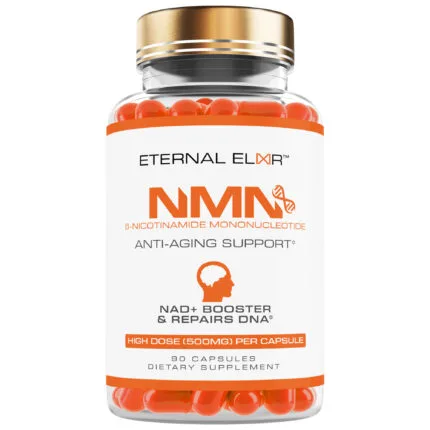
Glutathione is one part of the body’s antioxidant system, and some people pair it with a plant compound. Eternal Elixir Trans-Resveratrol 600mg is $59.99 for 90 capsules of 600 mg, and Eternal Elixir Trans-Pterostilbene 500mg, a close relative of resveratrol, is $64.99 for 90 capsules. People interested in liver health sometimes add Eternal Elixir TUDCA 500mg, a bile acid, at $59.99. For healthy ageing more broadly, Eternal Elixir NMN 500mg supports cellular NAD+. Our glutathione supplements comparison ranks the glutathione options in Australia on dose and price if you want a wider shortlist.
Glutamine vs Glutathione: Frequently Asked Questions
Is glutamine the same as glutathione?
No. Glutamine is a single amino acid, and glutathione is a small molecule your cells build from three amino acids: glutamate, cysteine and glycine. Glutamine can be turned into glutamate, so it is one possible raw material for glutathione, but the two do different jobs and are sold as different supplements.
Does glutamine increase glutathione?
It can supply glutamate, one of the three building blocks, but glutamate is rarely the bottleneck. A 2013 review of glutathione synthesis names cysteine supply and the activity of the enzyme glutamate cysteine ligase as the key limits. If raising glutathione is your aim, a glutathione product or a cysteine source is the more direct route.
Which is better for gut health, glutamine or glutathione?
Glutamine is the one linked with the gut. The gut is one of the main organs that takes up and controls glutamine, which is why sports and gut products use it. Glutathione is chosen for antioxidant support across the body. Evidence for glutamine supplements in healthy, well-nourished adults is limited, so diet comes first.
What’s the most effective form of glutathione?
Reduced glutathione (GSH) is the active form your cells use, and it is the form tested in the 2015 six-month trial that raised body stores at 250 mg and 1,000 mg a day. Liposomal products wrap glutathione in fat bubbles and cost more per gram. Our liposomal comparison sets out what that extra spend buys.
Can you take glutamine and glutathione together?
Many people do, because they are used for different reasons: glutamine around training and glutathione for daily antioxidant support. We found no trial that tested the pair together. Take each at its label serve, and check with your GP first if you take regular medicines or have a kidney or liver condition.
What foods are rich in glutamine?
Protein foods supply most of the glutamine in a normal diet, including meat, fish, eggs, dairy, tofu and legumes. People who eat enough protein already take in a fair amount each day. That is one reason glutamine supplements show little benefit in well-nourished adults.
How long does glutathione take to work?
In the 2015 trial, blood glutathione was already higher at one month and kept rising to six months at 1,000 mg a day. Levels fell back to baseline within a month of stopping. Plan on daily use for at least a few months before you judge a glutathione product.
How much glutamine should you take a day?
Label serves in this comparison run from 1.5 g to 5 g, taken one to three times a day. A 2008 review of glutamine in sport found single intakes of about 20 to 30 g caused no ill effects in healthy adults, and one study gave athletes 28 g a day for 14 days without harm. Start at the label serve.
Our Verdict on Glutamine vs Glutathione
Glutamine and glutathione share a few letters and one biochemical link, and that is about all. Glutamine is a cheap, well-tolerated amino acid for people who train hard. Glutathione is the antioxidant itself, and oral glutathione has raised body stores in a six-month trial. Because cysteine, not glutamate, sets the pace of glutathione production, glutamine is a weak shortcut to more glutathione. Settle the glutamine vs glutathione choice on your goal.
Our pick is Eternal Elixir Reduced L-Glutathione 2000mg, for the largest glutathione serve and the lowest cost per gram of glutathione in this comparison, with a batch certificate on request. If your goal is a training top-up, Henry Blooms L-Glutamine Powder is the lowest daily cost here, and Musashi Glutamine suits athletes who need batch-tested powder.
More buying guides
Glutathione Supplements in Australia, Compared → Glutathione vs NAC → Glutathione Dosage in Australia →Start your glutathione routine today
90 capsules per bottle · Australian shipping · Third-party tested
Find your routine in 60 seconds →Finish the quiz for 20% off your first order. Or Shop Eternal Elixir →
Recommended for you
About Eternal Elixir
Eternal Elixir is an Australian supplement company specialising in longevity and nootropic formulations. Every batch is third-party lab tested, and the batch Certificate of Analysis is sent on request. Browse the full range at eternalelixir.com.au/shop.
Not sure what to take? Take our 8-question quiz
to unlock 20% OFF your entire first order
+ a FREE gift worth up to $59.99