Last updated: September 27, 2026 · Originally published: May 5, 2026 · By Eternal Elixir Editorial
Quick Answer
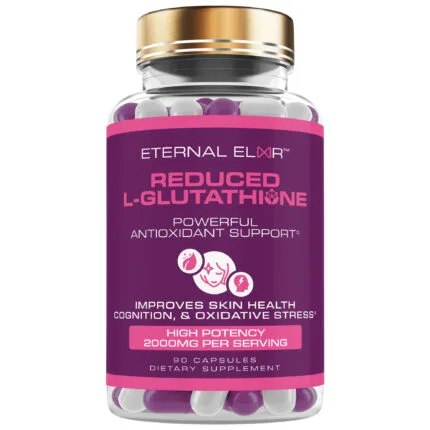
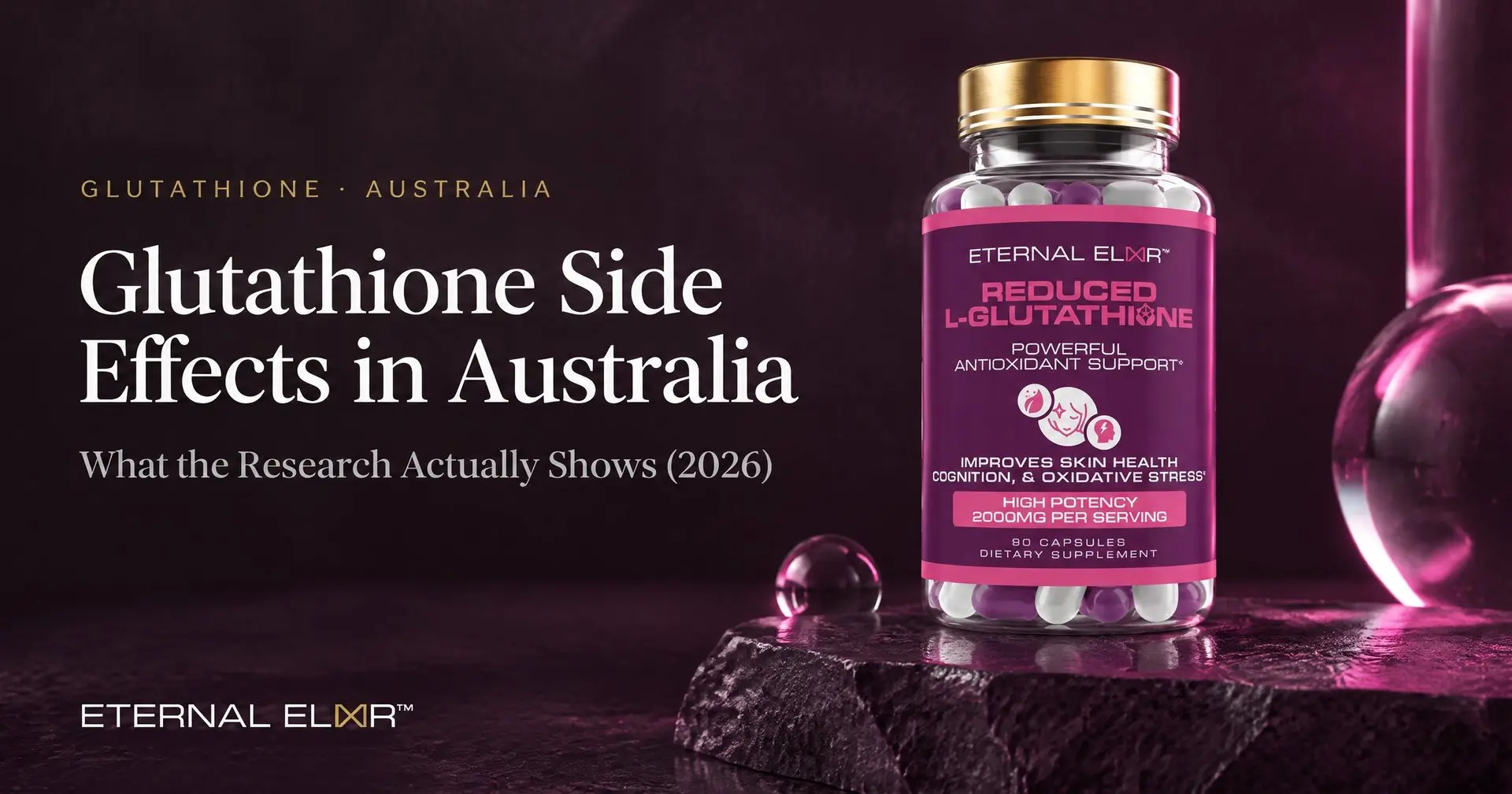
Is glutathione safe? For most healthy adults, oral glutathione has been well tolerated in controlled trials of 200mg to 1,000mg a day lasting up to six months. The side effects recorded were mild: itching, skin redness, small red spots and tiredness, and they turned up no more often than in the placebo group. One trial also saw two temporary rises in liver enzymes. Inhaled glutathione is a different story: it tightened the airways of people with asthma. Our pick is Eternal Elixir Reduced L-Glutathione 2000mg, 90 capsules for $39.99, or $0.89 a day. Its two-capsule serve is 2,000mg, which is above the doses those trials tested, so read the dose section before you start.
Eternal Elixir makes Reduced L-Glutathione 2000mg, so read this as our pick with the working shown. Competitor details were read from each live listing on 27 September 2026.
Glutathione is an antioxidant your cells make from three amino acids: glutamate, cysteine and glycine. Supplements supply it ready-made as capsules, liposomal capsules, liquids or tablets that dissolve under the tongue, and some clinics give it by drip. This guide covers the glutathione side effects that human trials actually recorded, who should be careful, how the forms differ, what the label doses mean, and what glutathione does in the body and to the skin.
Table of contents
- 1. Glutathione Side Effects at a Glance
- 2. What the Clinical Trials Reported
- 3. What Does Taking Glutathione Do to Your Body?
- 4. What Does Glutathione Do to Your Skin?
- 5. Who Should Be Cautious With Glutathione?
- 6. Oral vs Liposomal vs IV Glutathione: How Side Effect Profiles Differ
- 7. Dose and Timing: How to Lower the Risk of Side Effects
- 8. Glutathione Drug Interactions: What Australians Should Watch
- 9. What Food Is Highest in Glutathione?
- 10. Glutathione Supplements in Australia Compared
- 11. Our Glutathione: What’s on the Label
- 12. Frequently Asked Questions
- 12.1. Does glutathione have side effects?
- 12.2. Is glutathione safe to take every day?
- 12.3. Does glutathione cause weight gain?
- 12.4. Can glutathione damage the liver?
- 12.5. Will glutathione lighten my skin?
- 12.6. Is liposomal glutathione safer than regular capsules?
- 12.7. Can I take glutathione with NAC?
- 12.8. How long until I notice glutathione working?
- 12.9. What is the best glutathione supplement in Australia?
- 13. The Bottom Line
- 14. Sources
Glutathione Side Effects at a Glance
| Effect | What the research found | What to do |
|---|---|---|
| Itching, skin redness, small red spots | Reported in a 12-week trial at 250mg a day. People on placebo reported the same things, slightly more often. | Stop and see a doctor if a rash spreads or doesn’t settle. |
| Tiredness | One person in the reduced glutathione group of the same trial. | Note when it started and stop if it persists. |
| Raised liver enzymes | Two temporary cases in the same trial, back to normal within a few weeks. An 8-week trial found no change in blood chemistry. | If you have a liver condition, talk to your doctor first. |
| Lighter skin | The melanin index fell in trials at 500mg a day for 4 weeks and 250mg a day for 12 weeks. | Some people want this and some don’t. Watch for it. |
| Airway tightening | Seen with inhaled (nebulised) glutathione in people with mild asthma, not with capsules. | Never inhale glutathione if you have asthma. |
What the Clinical Trials Reported
Most of what is known about glutathione side effects comes from a handful of small randomised trials in healthy adults. Here is what each one recorded:
- 12 weeks at 250mg a day. Sixty healthy Thai women aged 20 to 50 took 250mg of reduced glutathione, 250mg of oxidised glutathione or a placebo each day at bedtime. Of the 57 whose results were analysed, an adverse event was reported by 3 of 20 on reduced glutathione, 2 of 18 on oxidised glutathione and 4 of 19 on placebo: itching, redness, small red spots and one case of tiredness. There were no serious adverse events. Two participants had a temporary rise in liver enzymes that returned to normal within a few weeks (Weschawalit et al., Clinical, Cosmetic and Investigational Dermatology, 2017). The study was funded by Kyowa Hakko Bio, which supplied the glutathione.
- 4 weeks at 500mg a day. Sixty medical students took 500mg a day in two doses, or a placebo. All 60 finished, and the authors reported both glutathione and placebo were very well tolerated. They also wrote that long-term safety had not been established (Arjinpathana and Asawanonda, Journal of Dermatological Treatment, 2012).
- 8 weeks at 200mg a day with L-citrulline. Seventy-five resistance-trained men, 25 per group, took glutathione plus L-citrulline, L-citrulline alone or a placebo while lifting weights. Neither training nor the supplements changed blood clinical chemistry, and no participant reported an adverse event from the supplements (Hwang et al., Journal of the International Society of Sports Nutrition, 2018). One author worked for the supplier.
- 6 months at 250mg or 1,000mg a day. In 54 non-smoking adults, both doses raised glutathione in the blood (Richie et al., European Journal of Nutrition, 2015). The published abstract reports the change in glutathione levels and immune markers, not a list of side effects.
- 4 weeks at 1,000mg a day. In 40 healthy adults, 39 of whom finished, 500mg twice a day made no difference to oxidative stress markers or to glutathione status in red blood cells (Allen and Bradley, Journal of Alternative and Complementary Medicine, 2011).
What hasn’t been shown: these trials are small, none ran longer than six months, and two were funded by or involved the company that makes the glutathione they tested. We found no long-term trial at 2,000mg a day, the serve on our own label. That is not evidence of harm, but it is a gap you should know about.
Add Reduced L-Glutathione to cart · $39.99What Does Taking Glutathione Do to Your Body?
The best evidence that swallowing glutathione does anything comes from the six-month trial above. Blood glutathione rose after one, three and six months at both doses. At six months, 1,000mg a day had lifted levels by 30% to 35% in red blood cells, plasma and lymphocytes and by 260% in cheek cells. At 250mg a day, blood and red-cell levels rose 17% and 29%. Natural killer cell activity, a marker of immune function, more than doubled at three months in the higher-dose group compared with placebo. Levels went back to baseline within a month of stopping (Richie et al., 2015).
Shorter tests are less encouraging. A single 3,000mg dose given to 7 healthy volunteers didn’t raise plasma glutathione over the following 270 minutes, because enzymes in the gut and liver break much of it down (Witschi et al., European Journal of Clinical Pharmacology, 1992). Four weeks at 1,000mg a day also left glutathione status unchanged (Allen and Bradley, 2011). The pattern is that glutathione appears to build up with daily use over months, and a one-off dose does little.
For how glutathione compares with the other common antioxidants, see our guides to glutathione vs NAC and glutathione vs vitamin C.
What Does Glutathione Do to Your Skin?
Skin lightening is the best-documented effect of oral glutathione, and whether it counts as a benefit or a side effect depends on what you want.
- In the four-week trial at 500mg a day, the melanin index (a measure of skin pigment) fell at all six sites measured. The drop was significantly greater than placebo at two of them: the right side of the face and the sun-exposed left forearm (Arjinpathana and Asawanonda, 2012).
- In the 12-week trial at 250mg a day, melanin and UV spots tended to be lower than placebo, but most differences did not reach statistical significance. Wrinkles were lower than placebo at some sites, and the changes were clearer in women over 40 (Weschawalit et al., 2017).
A 2016 review of glutathione for skin lightening concluded that how long the effect lasts, and how long to take it, are still unanswered questions (Sonthalia et al., Indian Journal of Dermatology, Venereology and Leprology). If you don’t want lighter skin, keep an eye on it and stop if you notice a change. Our glutathione and skin whitening guide covers this topic in more depth.
Who Should Be Cautious With Glutathione?
- Pregnant or breastfeeding women. None of the trials included them. BioCeuticals, Micronutrition and Henry Blooms all state on their labels that their glutathione isn’t for use in pregnancy or breastfeeding. Ask your doctor first.
- Anyone under 18. The trials were in adults, and BioCeuticals and Micronutrition label their products for adults only.
- People with asthma or sulfite sensitivity. In a small crossover trial, 8 people with mild asthma inhaled 600mg of nebulised glutathione. Lung function (FEV1) fell 19%, compared with 1% on placebo, and four of them started coughing. The authors put this down to sulfite forming from the glutathione (Marrades et al., American Journal of Respiratory and Critical Care Medicine, 1997). That was an inhaled dose, not a capsule, but if you react to sulfites, check the label: Henry Blooms’ sublingual tablets list sulfites.
- People having chemotherapy or radiotherapy. Don’t start glutathione or any other antioxidant supplement without talking to your oncologist.
- People taking immune-suppressing medicines. Glutathione changed immune markers in the six-month trial, so check with your specialist first.
- Anyone with a liver or kidney condition, or on prescription medicines. Talk to your doctor or pharmacist before you start.
Oral vs Liposomal vs IV Glutathione: How Side Effect Profiles Differ
Oral reduced glutathione (capsules)
This is the form used in every trial above, and the side effects recorded were mild and uncommon. It is also the form with the longest trial behind it: six months at up to 1,000mg a day.
Liposomal glutathione
Here the glutathione is wrapped in tiny fat-based spheres meant to protect it in the gut. In a one-month pilot in 12 healthy adults, 500mg or 1,000mg a day raised whole-blood glutathione by up to 40% within two weeks (Sinha et al., European Journal of Clinical Nutrition, 2018). The study had no placebo group, the abstract doesn’t report side effects, and it was funded by a company that sells liposomal glutathione. We found no trial comparing liposomal and standard glutathione head to head. The liposomes are made from phospholipids, so check the label for the source if you avoid soy. Our liposomal vs reduced glutathione guide compares the two.
Sublingual tablets and liquids
These dissolve in the mouth or are sprayed or pumped. Read the full ingredient list: Henry Blooms’ tablets, for example, contain sulfites and mannitol.
IV glutathione
A clinician gives this by drip. The 2016 review found no evidence that IV glutathione works for skin lightening and noted reports of adverse effects from it. Any drip also carries its own risks, such as vein irritation and infection at the needle site. We don’t suggest IV glutathione for general wellbeing when oral capsules have the better-studied safety record.
Dose and Timing: How to Lower the Risk of Side Effects
- Know where the evidence stops. The trials used 200mg to 1,000mg a day. Our label serve is two capsules, 2,000mg, which is double the highest trial dose. If you’d rather stay within the studied range, ask your GP or pharmacist whether one capsule (1,000mg) a day suits you.
- Follow the label. Ours says two capsules daily on an empty stomach, and most people take them first thing in the morning before food. In the 12-week skin trial, people took their capsule at bedtime.
- Stop if your stomach objects. None of the trials above reported stomach upset, but if you get it, stop and ask your pharmacist.
- Give it months, not days. Blood levels rose over one to six months in the longest trial and fell back within a month of stopping.
- Don’t double up. Our Metabolic Wellness Stack already contains our glutathione, along with TUDCA and berberine, so don’t add a separate bottle of glutathione on top of it.
Glutathione Drug Interactions: What Australians Should Watch
We found no published interaction studies between oral glutathione and common prescription medicines. That isn’t proof there are none, so ask your pharmacist if you take anything regularly. The specific cases to know about:
- Chemotherapy and radiotherapy. Talk to your oncologist before taking glutathione or any antioxidant.
- Immune-suppressing medicines. Check with your specialist, as above.
- Methylene blue. We found no study of the two taken together. Methylene blue has its own serious interaction with serotonergic antidepressants, which our methylene blue safety guide explains.
- NAC. No interaction has been reported, and no trial has tested glutathione and NAC together.
What Food Is Highest in Glutathione?
A US study measured glutathione in the foods on a standard diet questionnaire. Dairy foods, cereals and breads were generally low. Fruit and vegetables had moderate to high amounts, and freshly prepared meats were relatively high. Frozen foods kept about as much as fresh, while other processing and preserving methods lost much of it (Jones et al., 1992).
Food glutathione is broken down in the gut much like a supplement, and the single-dose study above found that dietary glutathione isn’t a major driver of blood levels. Your body makes its own from the amino acids in protein foods.
Glutathione Supplements in Australia Compared
Prices are as of Sep 2026, read from each listing on 27 September 2026. Cost per day uses each brand’s own serving size, and the label cautions are quoted from each listing. Eternal Elixir makes the first product and it is our pick. Every other row is described from its own listing.
| Product | Price (AUD) | Pack | Serve and dose | Glutathione per pack | Cost per day | Label cautions | Buy |
|---|---|---|---|---|---|---|---|
| Eternal Elixir Reduced L-Glutathione 2000mg (our pick) | $39.99 | 90 capsules | 2 capsules: reduced glutathione 2,000mg | 90g | $0.89 | Take on an empty stomach. Other ingredients: rice flour and a cellulose capsule. | Buy |
| BioCeuticals Glutathione | $47.99 | 60 capsules | 1 capsule once or twice a day: reduced glutathione 250mg each | 15g | $0.80 at 1 a day, $1.60 at 2 | Not in pregnancy or breastfeeding. Adults only. Practitioner only. | Chemist Warehouse |
| Henry Blooms VitaQIK Liposomal Glutathione Sublingual | $23.48 | 30 tablets | 1 tablet once or twice a day: glutathione 250mg each | 7.5g | $0.78 at 1 a day, $1.57 at 2 | Contains sulfites and mannitol. Not for pregnant or breastfeeding women. | Chemist Warehouse |
| Codeage Liposomal Glutathione | $63.99 | 60 capsules | 2 capsules: Setria glutathione 500mg | 15g | $2.13 | See a doctor first if pregnant, breastfeeding, under 18 or you have a medical condition. | iHerb AU |
| Micronutrition LipoCap Glutathione | $64.95 | 60 capsules | 2 capsules: glutathione 300mg | 9g | $2.17 | Not for pregnant or breastfeeding women. Adults only. | Micronutrition |
Who each one suits
- Eternal Elixir Reduced L-Glutathione 2000mg (our pick): the most glutathione per bottle in this table, 90g, at $0.89 a day, shipped from Sydney. Not for you if you want a small daily dose; our serve is above the trial doses.
- BioCeuticals Glutathione: 250mg capsules, so easy to take at a trial-sized dose. Chemist Warehouse lists it as practitioner only.
- Henry Blooms: the lowest cost per day at one tablet, dissolved in the mouth. Sold online through Chemist Warehouse’s marketplace, and it contains sulfites.
- Codeage and Micronutrition: liposomal capsules at 500mg and 300mg a day, and the most expensive per day here.
Our guide to the best glutathione supplements in Australia compares more options, and our check of glutathione at Chemist Warehouse covers what’s on the shelf.
Our Glutathione: What’s on the Label
Eternal Elixir Reduced L-Glutathione 2000mg contains reduced L-glutathione, the same form used in the trials above. Each serve is two capsules with 2,000mg, and the only other listed ingredients are rice flour and a cellulose capsule. A 90-capsule bottle holds 45 serves, so at $39.99 it costs $0.89 a day. The product page takes 10% off two bottles, 15% off three and 20% off five.
To be plain about the dose again: the longest trial used up to 1,000mg a day, and our serve is twice that. Because the dose is in 1,000mg capsules, you and your GP can decide on one or two a day.
Frequently Asked Questions
Does glutathione have side effects?
Yes, but the ones recorded in trials were mild and uncommon. In a 12-week trial at 250mg a day, people reported itching, redness, small red spots and tiredness, at a rate no higher than placebo, and two had a temporary rise in liver enzymes. Skin lightening is also possible. Inhaled glutathione tightened the airways of people with asthma.
Is glutathione safe to take every day?
For most healthy adults, daily oral glutathione was well tolerated in trials lasting from four weeks to six months, at 200mg to 1,000mg a day. There are no long-term trials beyond six months. If you’re pregnant, breastfeeding, under 18, on prescription medicines or have a health condition, talk to your doctor first.
Add Reduced L-Glutathione to cart · $39.99
Does glutathione cause weight gain?
There’s no evidence it does. In the 8-week trial of glutathione with L-citrulline in 75 men, there were no significant changes in total body mass or fat mass in any group.
Can glutathione damage the liver?
In the 12-week trial, two participants had a temporary rise in liver enzymes that went back to normal within a few weeks. The 8-week trial found no change in blood chemistry, including liver enzymes. If you have a liver condition, talk to your doctor before taking it. Our liver support supplements guide compares the other options people look at.
Will glutathione lighten my skin?
It might. The melanin index fell in trials at 500mg a day for four weeks and 250mg a day for 12 weeks, although most differences in the 12-week trial were not statistically significant. How long any lightening lasts is not known. If you don’t want lighter skin, watch for changes and stop if you see them.
Is liposomal glutathione safer than regular capsules?
There’s no evidence either way. We found no trial comparing their side effects. Standard reduced glutathione capsules have the longer safety record, with trials of up to six months. Liposomal forms have one small one-month pilot without a placebo group.
Can I take glutathione with NAC?
No interaction between them has been reported, but no trial has tested the two together, so we can’t say the pair works better than either one. Our glutathione vs NAC comparison covers how they differ.
How long until I notice glutathione working?
In the six-month trial, blood glutathione was higher than baseline after one month and rose further by six months. The skin trials measured changes at four and 12 weeks. Levels returned to baseline within a month of stopping.
What is the best glutathione supplement in Australia?
Our pick is Eternal Elixir Reduced L-Glutathione 2000mg: 90 capsules, 90g of glutathione per bottle, $0.89 a day, shipped from Sydney. Eternal Elixir makes it. If you want a smaller dose, BioCeuticals’ 250mg capsule costs $0.80 a day at one a day.
Add Reduced L-Glutathione to cart · $39.99
The Bottom Line
Oral glutathione has a mild side effect record in the trials that exist: itching, redness, small red spots and tiredness at placebo-like rates, two temporary liver enzyme rises in one trial, and skin lightening that some people want and others don’t. Those trials were small, ran for six months at most and used 200mg to 1,000mg a day. Inhaled glutathione is a real risk for people with asthma, and pregnant or breastfeeding women, under-18s and anyone having cancer treatment or taking immune-suppressing medicines should check with their doctor first. Our pick is Eternal Elixir Reduced L-Glutathione 2000mg at $0.89 a day, with the caveat that its serve is double the highest trial dose.
Sources
- Weschawalit S, Thongthip S, Phutrakool P, Asawanonda P. Glutathione and its antiaging and antimelanogenic effects. Clinical, Cosmetic and Investigational Dermatology. 2017;10:147-153. PubMed 28490897
- Arjinpathana N, Asawanonda P. Glutathione as an oral whitening agent: a randomized, double-blind, placebo-controlled study. Journal of Dermatological Treatment. 2012;23(2):97-102. PubMed 20524875
- Hwang P, Morales Marroquín FE, Gann J, et al. Eight weeks of resistance training in conjunction with glutathione and L-citrulline supplementation increases lean mass and has no adverse effects on blood clinical safety markers in resistance-trained males. Journal of the International Society of Sports Nutrition. 2018;15:30. PubMed 29945625
- Richie JP Jr, Nichenametla S, Neidig W, et al. Randomized controlled trial of oral glutathione supplementation on body stores of glutathione. European Journal of Nutrition. 2015;54(2):251-263. PubMed 24791752
- Allen J, Bradley RD. Effects of oral glutathione supplementation on systemic oxidative stress biomarkers in human volunteers. Journal of Alternative and Complementary Medicine. 2011;17(9):827-833. PubMed 21875351
- Witschi A, Reddy S, Stofer B, Lauterburg BH. The systemic availability of oral glutathione. European Journal of Clinical Pharmacology. 1992;43(6):667-669. PubMed 1362956
- Sinha R, Sinha I, Calcagnotto A, et al. Oral supplementation with liposomal glutathione elevates body stores of glutathione and markers of immune function. European Journal of Clinical Nutrition. 2018;72(1):105-111. PubMed 28853742
- Marrades RM, Roca J, Barberà JA, et al. Nebulized glutathione induces bronchoconstriction in patients with mild asthma. American Journal of Respiratory and Critical Care Medicine. 1997;156(2 Pt 1):425-430. PubMed 9279219
- Sonthalia S, Daulatabad D, Sarkar R. Glutathione as a skin whitening agent: facts, myths, evidence and controversies. Indian Journal of Dermatology, Venereology and Leprology. 2016;82(3):262-272. PubMed 27088927
- Jones DP, Coates RJ, Flagg EW, et al. Glutathione in foods listed in the National Cancer Institute’s Health Habits and History Food Frequency Questionnaire. Nutrition and Cancer. 1992;17(1):57-75. PubMed 1574445
- Eternal Elixir product pages (label facts, directions, multi-bottle pricing): Reduced L-Glutathione 2000mg, Metabolic Wellness Stack.
- Competitor listings, read on 27 September 2026: BioCeuticals Glutathione, Henry Blooms Liposomal Glutathione, Codeage Liposomal Glutathione (iHerb AU), Micronutrition LipoCap Glutathione.
More guides
TUDCA side effects: what the research shows
Berberine side effects and safety
TUDCA 500mg, one capsule a day with a meal
Shop the Eternal Elixir range