Last updated: October 18, 2026 · By Eternal Elixir Editorial
What is bile? Bile is a yellow-green digestive fluid that your liver makes every day. It is stored in the gallbladder between meals and released into the small intestine when you eat, where it helps you digest fat and absorb the vitamins that travel with it.
Bile also carries some of the body’s waste out through the gut. This guide explains what bile is made of, what it does at each stage, the signs that mean a GP visit, and where liver-support supplements fit, including the two Eternal Elixir products that relate to bile.
Most people never think about bile until something feels off after a rich meal. If you are wondering whether your liver could use some help, our checklist of signs your liver needs support is a good companion read, and our ranked guide to liver support supplements in Australia compares the main options side by side.
Key takeaways
- What is bile? A digestive fluid made by the liver, stored in the gallbladder and released into the small intestine to help digest fat.
- Bile acids break fat into tiny droplets so enzymes can reach it, and they help you absorb the fat-soluble vitamins A, D, E and K.
- Most bile acids are reabsorbed and sent back to the liver for reuse. Only a small share leaves the body in stool.
- Yellowing skin or eyes, pale stools or dark urine are reasons to see your GP promptly. Supplements come after that check, never instead of it.
Table of contents
What Is Bile? The Short Answer
Bile is the liver’s own digestive juice. Liver cells produce it around the clock and send it through a network of small ducts to the gallbladder, a pear-shaped pouch tucked under the liver. Between meals the gallbladder stores bile and concentrates it.
When food that contains fat reaches the small intestine, the gallbladder squeezes and releases a dose of bile into the gut, right where digestion is happening. A review in the Annals of Hepatology describes this cycle step by step, from production in the liver to storage during fasting and release in response to dietary fat (Di Ciaula et al., Annals of Hepatology, 2017).
The colour comes from bilirubin, a pigment left over when old red blood cells are broken down. Bilirubin is also the reason stool is brown. That link between bile and stool colour is one of the first things a GP asks about when bile flow is in question, which is why it appears again in the warning signs section below.
What Is Bile Made Of?
Bile is mostly water. The working parts are dissolved in it:
- Bile acids (bile salts): the active ingredients for digestion. The liver builds them from a sterol it already makes, then joins each one to glycine or taurine so it dissolves better in water.
- Phospholipids: fat-like molecules that help keep the mixture stable and fluid.
- Bilirubin: the pigment that gives bile its colour and leaves the body in stool.
- Salts and minerals: including bicarbonate, which helps balance the acid arriving from the stomach.
That joining step matters for the supplement section later. The Annals of Hepatology review notes that the liver conjugates its primary bile acids to glycine or taurine to make them more soluble before secreting them into bile (Di Ciaula et al., 2017). TUDCA, short for tauroursodeoxycholic acid, is one of these taurine-joined bile acids. Our explainer on TUDCA versus UDCA covers the chemistry in more detail.
Stocking up on TUDCA? Every bottle of Eternal Elixir’s TUDCA 500mg carries 90 capsules for $59.99 and ships locally within Australia. Browse the range →
What Does Bile Do in the Body?
Bile has three main jobs. The first is the one most people learn at school, but the other two explain why researchers take it seriously.
It helps you digest fat and absorb vitamins
Fat and water do not mix, so the fat in a meal clumps together in the watery gut. Bile acids act like a detergent. They coat fat and break it into tiny droplets, giving digestive enzymes far more surface to work on.
They then carry the digested fat to the gut wall in small bundles that can be absorbed. The same process brings in vitamins A, D, E and K, which dissolve in fat rather than water. The Annals of Hepatology review lists the digestion and absorption of dietary fats and fat-soluble vitamins as a core role of bile acids in the intestine (Di Ciaula et al., 2017).
It carries waste out of the body
Your kidneys clear water-soluble waste through urine. Many fat-soluble leftovers cannot go that way, so the liver sends them out in bile instead. A review in Comprehensive Physiology describes bile as the route the liver uses to secrete lipids, toxic metabolites and foreign compounds (Chiang, Comprehensive Physiology, 2013).
Bilirubin is the best-known example. Regular bowel habits finish the job, which is one reason fibre and fluids matter for liver health as much as for gut comfort.
It sends signals about energy and metabolism
Bile acids are also messengers. The same Comprehensive Physiology review explains that they switch on receptors in the liver and gut that help regulate how the body handles fat, glucose and energy (Chiang, 2013). This is an active research area rather than something you can steer day to day, but it explains why bile turns up in discussions of metabolic health. Our guide to metabolism supplements in Australia covers that side of the picture.
The Bile Cycle: From Liver to Gut and Back
Bile is recycled. Instead of making a fresh supply for every meal, the body reuses most of its bile acids several times. The table below follows one bile acid through the loop, with the everyday habit that relates to each stage. The stages come from the Annals of Hepatology review, and the gut bacteria step from a Journal of Lipid Research review of how intestinal bacteria transform bile salts.
| Stage | What happens | Everyday habit that relates |
|---|---|---|
| 1. Made in the liver | Liver cells build bile acids and join them to glycine or taurine, then add them to bile with bilirubin and phospholipids. | Give your liver lighter days: keep some alcohol-free days each week and avoid large late-night meals. |
| 2. Stored in the gallbladder | Between meals the gallbladder holds bile and concentrates it. | Eat at fairly regular times so bile is released and refreshed through the day. |
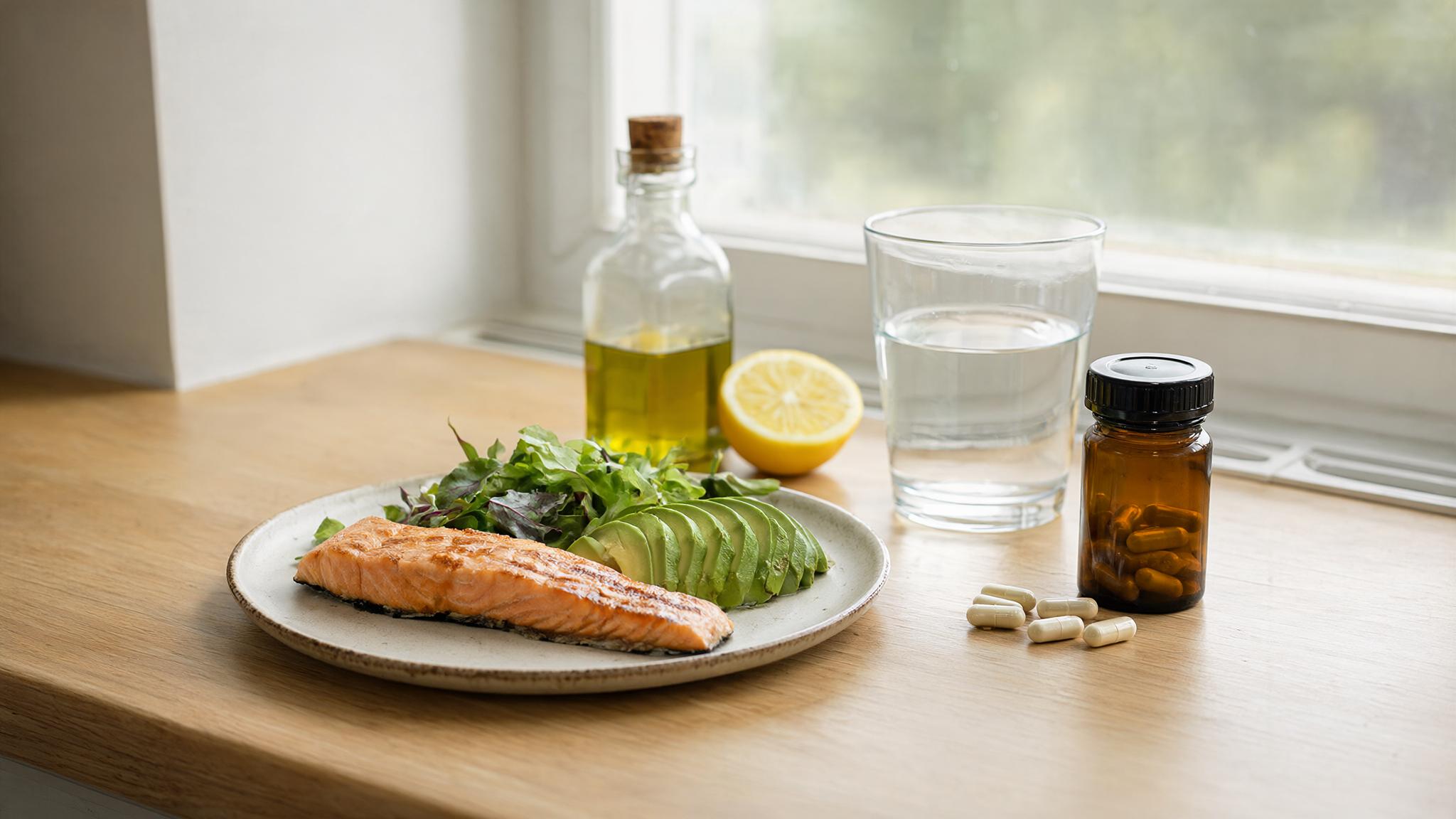
| 3. Released for a meal | Fat in the small intestine signals the gallbladder to contract and release bile. | Include a little healthy fat, such as olive oil, avocado or oily fish, in meals that carry fat-soluble vitamins. |
| 4. Reworked by gut bacteria | Bacteria in the lower gut turn some primary bile acids into secondary bile acids. | Eat a wide range of vegetables, legumes and wholegrains to support a varied gut community. |
| 5. Reabsorbed and returned | Most bile acids are reabsorbed in the last part of the small intestine and carried back to the liver. A small share leaves in stool. | Keep fluids and fibre up for regular bowel habits, and note any lasting change in stool colour. |
Step four is where bile and gut health meet. The Journal of Lipid Research review notes that secondary bile acids are produced only by intestinal bacteria (Ridlon et al., Journal of Lipid Research, 2006), so the make-up of your gut community shapes part of your bile acid pool. Our article on bile flow and the gut microbiome looks at that link, and our overview of gut health supplements in Australia covers the options with human research behind them.
What happens if you have no gallbladder? Plenty of Australians have had theirs removed and live normally. The liver keeps making bile, but it trickles into the gut steadily instead of arriving in a concentrated dose at mealtimes.
Some people find very large, fatty meals sit less comfortably afterwards, so smaller meals spread through the day often suit them better. Your surgeon or GP can advise on your own situation.
Signs Your Bile Flow Needs a GP Check
Bile problems are usually about flow: bile not leaving the liver freely, or the gallbladder not emptying well. These signs are reasons to book a GP visit soon rather than reach for a supplement:
- yellowing of the skin or the whites of the eyes
- pale, grey or clay-coloured stools
- dark, tea-coloured urine
- pain under the right ribs, especially after a fatty meal
- itchy skin with no rash
- repeated vomiting of green or yellow fluid
Severe abdominal pain, pain with a fever, or yellowing that appears quickly needs same-day care, and in an emergency call 000. Bringing up a little bitter yellow fluid once, after vomiting on an empty stomach, is usually just bile from the small intestine and settles on its own. If it keeps happening, mention it to your GP.
Can Supplements Support Bile and Liver Health?
For most healthy people, the liver makes all the bile it needs, and the habits in the table above matter more than any capsule. Supplements are an option for people who want extra liver support once a GP has ruled out a medical cause. Two ingredients relate directly to the topics on this page. If you want a ranked comparison of every TUDCA product sold here, see our guide to TUDCA supplements in Australia.
TUDCA
TUDCA is a bile acid joined to taurine, the same kind of conjugation step your liver performs on its own bile acids. As a supplement it is used to support healthy bile flow and liver health. Eternal Elixir’s TUDCA 500mg provides 500 mg per vegetarian capsule, 90 capsules per bottle, with a label serve of one capsule a day with a meal.
At $59.99 that works out to about $0.67 a day. Our TUDCA dosage guide explains timing, and our page on TUDCA side effects covers who should check with a GP or pharmacist first, including anyone taking regular medicines.
Glutathione
Glutathione is an antioxidant your liver makes and uses in its own processing work. The question has always been whether swallowing it raises the body’s stores.
In a six-month randomised, placebo-controlled trial, 54 non-smoking adults took 250 mg or 1,000 mg of oral glutathione a day. Glutathione levels in blood rose at both doses, and in the higher-dose group levels in red blood cells, plasma and lymphocytes were 30 to 35% higher after six months (Richie et al., European Journal of Nutrition, 2015). Levels returned to baseline after a one-month break.
Eternal Elixir’s Reduced L-Glutathione 2000mg gives 2,000 mg per two-capsule serve, which is double the highest dose in that trial, with 90 capsules (45 serves) per bottle for $39.99, about $0.89 a serve. The label suggests taking it on an empty stomach. Our comparison of glutathione and NAC for liver health explains how it differs from NAC, and the antioxidant supplement guide shows where it sits in the wider category.
Some people combine the two: TUDCA with a meal and glutathione between meals. Start one at a time for a few weeks so you can tell how each suits you. Order through the Eternal Elixir shop and both arrive from Australian stock, with free shipping on orders over $100.
What Is Bile? Questions Australians Ask
Is bile a serious problem?
Bile itself is normal and essential for digestion. It becomes a concern when it cannot flow freely, which can show up as yellowing skin or eyes, pale stools, dark urine or pain under the right ribs. Any of those signs is a reason to see your GP promptly.
What causes bile coming up?
Bringing up yellow or green fluid usually happens when you vomit on an empty stomach, because bile from the small intestine is all that is left to come up. A one-off episode is common. If it happens repeatedly or comes with pain, see your GP.
What are the symptoms of a bile problem?
Common signs include yellowing of the skin or eyes, pale or clay-coloured stools, dark urine, itchy skin without a rash, and pain under the right ribs after fatty meals. Severe pain or pain with a fever needs same-day care.
Where is bile made and stored?
Bile is made in the liver and stored in the gallbladder, which sits just under the liver. The gallbladder concentrates bile between meals and releases it into the small intestine when food that contains fat arrives.
Can you live without a gallbladder?
Yes. The liver keeps making bile, which then flows into the gut steadily instead of in concentrated bursts. Many people do well with smaller meals spread through the day. If you want liver support afterwards, our guide to TUDCA versus milk thistle compares two popular options.
Your liver routine starts here
Australian shipping · Third-party tested · 90 capsules per bottle
Shop Eternal Elixir →Related reading
Recommended for you
About Eternal Elixir
Eternal Elixir is an Australian supplement company specialising in longevity and nootropic formulations. Every batch is third-party lab tested for purity and potency, with the batch certificate of analysis available on request, and our products are designed for Australians who take their health seriously. Try a product that fits your routine or browse the full range at the Eternal Elixir shop.