Last updated: August 8, 2026 · Originally published: December 18, 2025 · By Eternal Elixir Editorial
Updated 20 May 2026 — What’s New This Week
Three 2025 papers now anchor the mechanistic picture for TUDCA: a European Journal of Pharmacology review naming TUDCA among the leading small-molecule modulators of ER stress (Alotaibi & Alkhammash, 2025; DOI), a Free Radical Biology & Medicine paper showing TUDCA preserved mitochondrial function in fructose-overloaded hepatocytes (Chalifoux et al., 2025; DOI), and a Nutrients study showing aerobic exercise raised endogenous TUDCA and resolved high-fat-diet steatosis through FXR signalling (Zou et al., 2025; DOI). The mechanistic case for TUDCA in metabolic-associated steatotic liver disease has firmed up considerably.
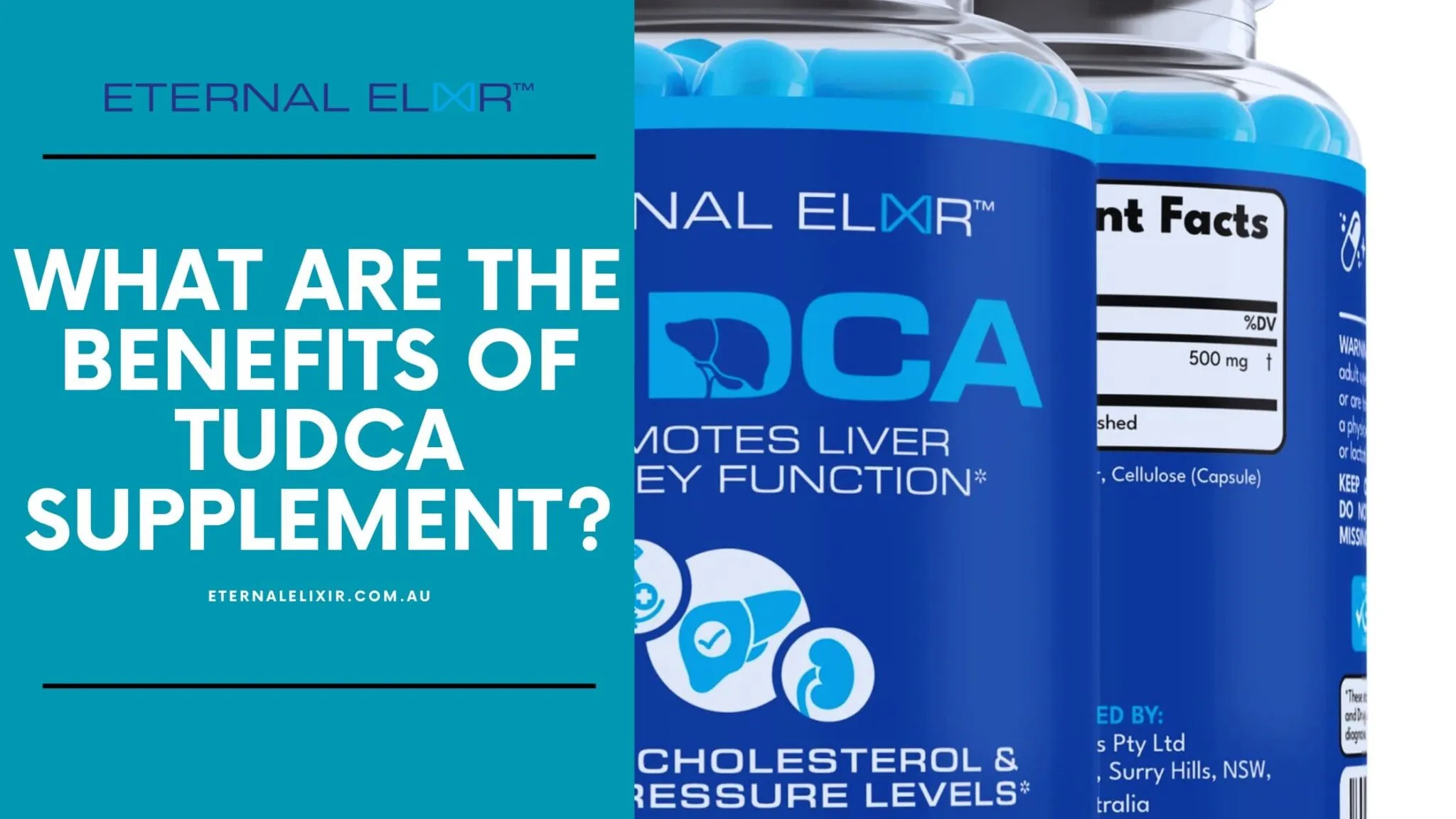
What are the benefits of TUDCA supplement? TUDCA (tauroursodeoxycholic acid) is a naturally occurring bile acid that supports liver function by improving bile flow, protects cells by reducing endoplasmic reticulum (ER) stress, supports insulin sensitivity and glucose metabolism, helps maintain gut barrier integrity, and has emerging evidence for retinal and neuroprotective effects. The strongest human research is in liver health and metabolic outcomes.
TUDCA — tauroursodeoxycholic acid — is a hydrophilic bile acid that has moved from a niche bodybuilder cycle-support supplement into one of the more closely studied compounds in metabolic and longevity research. It occurs naturally in the human body in trace amounts and has a long history in traditional Asian medicine, but the modern interest is driven by peer-reviewed work showing it acts as a chemical chaperone — a small molecule that helps cells handle protein-folding stress before that stress turns into inflammation or cell death.
This guide breaks down the seven evidence-backed benefits of TUDCA, the human trial data behind each one, dosing for adults, and how it fits into a broader liver and metabolic stack. For the cell-level explanation of how TUDCA produces these benefits, see our companion guide on what TUDCA does in the body.
Quick Summary — 7 TUDCA Benefits at a Glance
| Benefit | Mechanism & Evidence Strength |
|---|---|
| 1. Liver & bile flow | Outcompetes toxic bile acids, improves cholestasis markers — strong human data |
| 2. ER stress reduction | Chemical chaperone; suppresses PERK/IRE1α/ATF6 — strong cellular data |
| 3. Insulin sensitivity | +30% hepatic & muscle insulin sensitivity (Kars 2010 RCT) — strong human RCT data |
| 4. Gut barrier | Reinforces mucus layer, shifts microbiome — moderate evidence |
| 5. Eye & retinal health | Anti-apoptotic in retinal cells — consistent animal data, early human |
| 6. Neuroprotection | Crosses blood-brain barrier; protective in ALS, Parkinson’s, Alzheimer’s models — emerging human data |
| 7. Mitochondrial protection | Stabilises mitochondrial membranes, blocks cytochrome c release — strong cellular data |
Typical dose: 500 mg/day with food (range: 250–1,750 mg in trials). Allow 4–8 weeks for measurable effects.
Table of contents
- 1. 1. Liver Health and Bile Flow Support
- 2. 2. Reducing Endoplasmic Reticulum (ER) Stress
- 3. 3. Insulin Sensitivity and Blood Sugar Support
- 4. 4. Gut Barrier and Microbiome Support
- 5. 5. Eye and Retinal Health
- 6. 6. Neuroprotection
- 7. 7. Mitochondrial and Cellular Protection
- 8. How to Take TUDCA
- 9. Latest 2026 Research on TUDCA
- 10. Frequently Asked Questions
- 10.1. Is TUDCA legal in Australia?
- 10.2. What does TUDCA do for the body?
- 10.3. What is the typical TUDCA dosage?
- 10.4. When should I take TUDCA — with or without food?
- 10.5. Can TUDCA reverse fatty liver?
- 10.6. Is TUDCA anti-inflammatory?
- 10.7. Is TUDCA safe to take every day?
- 10.8. Can TUDCA be stacked with other supplements?
- 10.9. Related Reading
- 11. Latest TUDCA Research (May 2026 Update)
1. Liver Health and Bile Flow Support
The liver is the body’s primary detoxification organ and bile is the vehicle it uses to clear cholesterol, hormones, and lipid-soluble waste. When bile flow slows — a state called cholestasis — the liver accumulates toxic bile acids and oxidative stress climbs. TUDCA improves bile flow by stimulating hepatocellular secretion machinery and outcompeting more toxic bile acids for transporter sites.
According to PubMed, a comprehensive review in Handbook of Experimental Pharmacology summarises decades of clinical and experimental work on TUDCA in liver disease, concluding that it improves cholestasis markers, reduces hepatocyte injury, and shows superior tolerability to ursodeoxycholic acid (UDCA) in some patient groups (Cabrera, Arab & Arrese, 2019 — DOI: 10.1007/164_2019_241).
In non-alcoholic fatty liver disease (NAFLD) models, TUDCA reduces hepatic triglyceride content, supports favourable shifts in gut microbiota composition, and reinforces intestinal barrier function — three changes that compound, because a leakier gut means more inflammatory signalling reaching the liver.
2. Reducing Endoplasmic Reticulum (ER) Stress
ER stress is the upstream trigger behind a long list of metabolic and degenerative conditions. When cells are overloaded with misfolded proteins, they activate the unfolded protein response, which — if unresolved — drives inflammation, mitochondrial dysfunction, and apoptosis.
TUDCA acts as a chemical chaperone: it stabilises protein folding inside the ER and damps down the stress-response cascade by suppressing PERK, IRE1α, and ATF6 signalling, and by inhibiting the downstream activation of caspase-12. This effect has been shown across diverse cell types — hepatocytes, retinal cells, dorsal root ganglion neurons, cardiac tissue — which is why TUDCA’s protective effects are not confined to one organ.
For people under chronic metabolic load — high-calorie diets, sleep deprivation, glucose dysregulation — reducing ER stress is an upstream intervention rather than a symptomatic one.
Trying Premium TUDCA in Australia? Eternal Elixir’s Premium TUDCA ships locally with 90 capsules per bottle. Browse the longevity range →
3. Insulin Sensitivity and Blood Sugar Support
This is the strongest piece of human evidence for TUDCA outside of liver disease. According to PubMed, a randomised controlled trial published in Diabetes gave 20 obese adults 1,750 mg of TUDCA daily for four weeks and measured insulin sensitivity using the gold-standard hyperinsulinaemic-euglycaemic clamp. Hepatic and muscle insulin sensitivity improved by approximately 30 per cent versus placebo, alongside increased phosphorylation of insulin signalling proteins in muscle (Kars et al., 2010 — DOI: 10.2337/db10-0308).
The mechanism is multi-layered: TUDCA reduces ER stress in hepatocytes (which directly improves insulin signalling), upregulates insulin-degrading enzyme expression in the liver, and activates the Nrf2 antioxidant pathway, which lowers reactive oxygen species that otherwise interfere with insulin receptor function.
For adults managing prediabetes, metabolic syndrome, or healthy ageing, TUDCA is one of the few supplements with human RCT data on a hard metabolic endpoint.
4. Gut Barrier and Microbiome Support
Bile acids are not just lipid emulsifiers — they are signalling molecules that regulate gut barrier integrity, microbial composition, and intestinal inflammation. TUDCA reinforces the protective mucus layer, tightens epithelial junctions, and shifts microbial populations toward Bifidobacterium and Allobaculum — two genera that produce short-chain fatty acids and further stabilise the gut barrier.
In NAFLD models, gut barrier improvements appeared before hepatic improvements, suggesting that gut integrity is upstream of liver protection rather than a downstream side effect. For people dealing with bloating, intermittent digestive discomfort, or suspected intestinal permeability, TUDCA addresses the bile-acid-driven mechanisms directly.
5. Eye and Retinal Health
Systematic reviews of TUDCA in retinal disease consistently show neuroprotective effects across multiple models — retinitis pigmentosa, diabetic retinopathy, age-related macular changes, and retinal ganglion cell injury. The mechanisms are the same chemical-chaperone and anti-apoptotic pathways, applied to a tissue type that is essentially exposed neuronal extension.
In type 1 diabetes models, TUDCA preserved photoreceptor function despite hyperglycaemia-induced ER stress. In retinal pigment epithelial cells in vitro, it reduced oxidative injury. The clinical translation in humans is still emerging, but the consistency across models is striking.
6. Neuroprotection
TUDCA crosses the blood-brain barrier — a trait that distinguishes it from most liver-support compounds. In animal models of Alzheimer’s, Parkinson’s, Huntington’s, and amyotrophic lateral sclerosis, TUDCA has demonstrated neuroprotective effects via the same ER stress and anti-apoptotic mechanisms documented in liver and retinal tissue. A small human trial in ALS suggested high-dose TUDCA may slow functional decline, though the evidence base in humans for cognitive applications is still early.
7. Mitochondrial and Cellular Protection
TUDCA supports mitochondrial membrane stability and reduces cytochrome c release — a key step in the intrinsic apoptosis pathway. By stabilising the mitochondrial outer membrane and reducing ER-to-mitochondria stress signalling, TUDCA helps preserve cellular ATP production under metabolic load. This is part of why TUDCA shows protective effects in such diverse tissue types: the cellular machinery it stabilises is universal.
How to Take TUDCA
Human trials have used 250–1,750 mg per day. For general liver and metabolic support, 500 mg daily is the most common research-aligned starting dose. Athletes running on-cycle liver support typically use 500–1,000 mg per day in divided doses with meals. Take with food — ideally a meal containing some fat — to align with natural bile-flow timing and reduce the small chance of mild digestive looseness in the first week.
Allow four to eight weeks of consistent dosing before judging effects on digestion, energy, or metabolic markers. Cellular adaptations to ER-stress reduction develop gradually.
Browse our full range of evidence-based supplements in the Eternal Elixir shop.
Latest 2026 Research on TUDCA
The evidence base for TUDCA continues to expand. A 2025 review in European Journal of Pharmacology mapped TUDCA among the leading small-molecule modulators of endoplasmic reticulum (ER) stress, with relevance for insulin resistance, NAFLD and neurodegenerative pathways (Alotaibi & Alkhammash, 2025; DOI · PubMed).
A 2025 mechanistic paper in Free Radical Biology & Medicine reported that TUDCA preserved mitochondrial function and blocked succinate buildup in hepatocyte cultures exposed to fructose overload — supporting the “mitochondrial bodyguard” framing for early metabolic-associated steatotic liver disease (Chalifoux et al., 2025; DOI · PubMed).
A separate 2025 study in Nutrients on aerobic exercise and the gut–liver axis found that exercise increased endogenous TUDCA in the liver and resolved high-fat-diet steatosis through FXR signalling — adding lifestyle context for how Australians can amplify TUDCA’s natural cycle (Zou et al., 2025; DOI · PubMed).
Research indicates these effects in mechanistic and pre-clinical models. TUDCA is sold as a nutritional supplement in Australia; speak with your healthcare practitioner before starting.
Frequently Asked Questions
Is TUDCA legal in Australia?
Yes. TUDCA is sold as a dietary supplement through Australian retailers including Eternal Elixir. It is a naturally occurring bile acid present in trace amounts in the human body and is not a scheduled or restricted substance. As with any supplement, sourcing matters — choose products with a verifiable certificate of analysis and batch-level purity testing.
What does TUDCA do for the body?
TUDCA reduces endoplasmic reticulum stress, supports bile flow through the liver, protects hepatocytes from oxidative injury, improves insulin sensitivity, reinforces gut barrier integrity, and shows protective effects on retinal and neuronal tissue. It works upstream of the symptoms most people notice rather than masking them.
What is the typical TUDCA dosage?
Human studies have used 250 mg to 1,750 mg daily. The 500 mg per day dose is the most common starting point for general liver and metabolic support. Higher doses (1,000 mg+) appear in athletic and clinical contexts. Start at the low end and assess your response before escalating.
When should I take TUDCA — with or without food?
With food, ideally a meal containing some fat. This aligns with natural bile-flow timing and reduces the chance of mild gastrointestinal discomfort. If you split the dose, pair both halves with your two largest meals of the day.
Can TUDCA reverse fatty liver?
TUDCA has shown reductions in hepatic triglyceride content in NAFLD models and improvements in liver-function markers in human studies, but reversing established fatty liver requires a broader intervention — calorie deficit, reduced fructose intake, resistance training, and addressing insulin resistance. TUDCA is a useful adjunct in that stack, not a standalone fix.
Is TUDCA anti-inflammatory?
Indirectly, yes. By reducing ER stress and reinforcing gut barrier function, TUDCA lowers a major upstream source of systemic inflammatory signalling. Animal and cell studies show reduced pro-inflammatory cytokines after TUDCA treatment. It is not a direct COX or NF-κB inhibitor like a typical anti-inflammatory drug.
Is TUDCA safe to take every day?
Human trials lasting weeks to months at doses up to 1,750 mg per day have reported good tolerance. TUDCA is endogenously produced as part of normal bile-acid metabolism rather than being a novel synthetic compound. People on hepatically metabolised medications, those who are pregnant or breastfeeding, or anyone with active gallbladder disease should consult their doctor before starting.
Can TUDCA be stacked with other supplements?
Yes. TUDCA pairs well with berberine (insulin sensitivity), L-glutathione (antioxidant defence and phase II detoxification), milk thistle (hepatocellular support), and NAC. Because TUDCA’s primary mechanism is ER-stress reduction rather than a single metabolic target, it tends to complement rather than compete with other liver-support compounds.
Related Reading
- What Does TUDCA Do in the Body? The Cellular Mechanisms Explained
- Best TUDCA Supplements in Australia 2026: 7 Products Compared
- TUDCA vs Milk Thistle: Which Is the King of Liver Protection?
- TUDCA Dosage Guide Australia: How Much, When, and How Long to Take It
- Is TUDCA Legal in Australia and Where to Buy?
Latest TUDCA Research (May 2026 Update)
The bile-acid pharmacology field has moved quickly in the past 12 months. A 2025 paper in International Immunopharmacology demonstrated that TUDCA modulates neuroinflammation through the STING/NF-κB axis after experimental brain injury, supporting a wider picture of TUDCA as a multi-organ signalling molecule rather than a purely hepatic agent (Xu et al., 2025). A separate 2025 mechanistic study in the Journal of Visualized Experiments showed that TUDCA-rich bile reduced ALT, AST and malondialdehyde markers in a mouse model of alcohol-related liver injury, reinforcing the long-standing hepatoprotective signal seen in older clinical work (Zhou et al., 2025). Research indicates these effects are dose- and duration-dependent — short-term, low-dose use rarely shifts the markers seen in longer trials.
Eternal Elixir is an Australian supplement company focused on premium, science-backed formulas for liver, nootropic, and longevity support. Every product is third-party tested for purity and potency, with 90 capsules per bottle for a full three-month supply. We source pharmaceutical-grade ingredients and publish independent lab results for every batch.
Last updated: 31 May 2026
Ready to start your Eternal Elixir longevity stack?
90 capsules per bottle · Australian shipping · Third-party tested
Shop Eternal Elixir →