Last updated: September 27, 2026 · Originally published: March 21, 2026 · By Eternal Elixir Editorial
Berberine and gut health are closely linked, but not in the simple “good bacteria up, bad bacteria down” way most articles claim. Very little berberine is absorbed, so most of each dose stays in the gut, and human trials show it clearly changes the gut bacteria. A 2026 review of seven randomised trials found significant shifts in six, but the shifts were not uniformly favourable: several trials saw fewer butyrate-producing bacteria and more Proteobacteria. Glucose and cholesterol measures improved at the same time, and whether the gut changes caused those improvements is not yet proven.
Quick Answer
Does berberine help gut health? It reshapes the gut microbiome, but the human trials were mostly run for blood glucose and cholesterol, not digestion, and some of the bacterial changes look unhelpful. Gut side effects such as wind, loose stools or constipation are the most common complaint. If you take berberine for glucose or cholesterol support, our pick is Eternal Elixir Berberine HCl 500mg: 500 mg per capsule so you can start low, 90 capsules for $49.99, sent from Sydney.
Eternal Elixir makes Berberine HCl 500mg, so this is our recommendation, not a neutral review. If gut comfort is your main goal, berberine is not the obvious first choice.
This article covers what human trials found about berberine and the gut microbiome, why the popular claims run ahead of the evidence, how the gut links to berberine’s effects on glucose, the gut side effects to expect, whether to take probiotics with it, and how to choose a product.
Key numbers:
- 6 of 7 randomised trials in a 2026 review found berberine significantly changed the gut bacteria.
- 409 adults took part in PREMOTE, a trial that found berberine lowered several butyrate-producing species and raised Proteobacteria.
- 2% to 23% of people on berberine had gut side effects across placebo-controlled trials, against 2% to 15% on placebo.
- No human trial we found has measured berberine’s effect on gut barrier function directly.
- $0.56 per 500 mg for our Berberine HCl 500mg.
Table of contents
- 1. Can Berberine Help With Gut Issues?
- 2. How Berberine Reshapes the Gut Microbiome
- 3. Berberine’s Antibacterial Properties: Less Selective Than Claimed
- 4. The Gut and Metabolism Connection
- 5. Berberine and Intestinal Barrier Function
- 6. Gut Side Effects: What to Expect
- 7. Should You Take Probiotics With Berberine?
- 8. Who Should Be Cautious
- 9. Choosing a Berberine Supplement in Australia
- 10. Berberine and Gut Health: Frequently Asked Questions
- 10.1. Can berberine help with gut issues?
- 10.2. How long does it take for berberine to change the gut microbiome?
- 10.3. Does berberine increase Akkermansia?
- 10.4. What are the downsides of taking berberine?
- 10.5. What organ is berberine hard on?
- 10.6. Why don’t doctors like berberine?
- 10.7. Should I take probiotics alongside berberine?
- 10.8. What is the best berberine supplement in Australia?
- 11. The Bottom Line
- 12. More Reading
- 13. Sources
Can Berberine Help With Gut Issues?
Berberine is a yellow compound from plants such as barberry and goldenthread (Coptis chinensis). It has a long history in traditional Chinese and Ayurvedic medicine for digestive complaints, and it has antibacterial activity: the authors of the largest human trial describe it as a bacteriostatic agent, meaning it slows bacterial growth.
That history is why it is sold for gut health. The modern human trials, though, were mostly set up to test blood glucose and cholesterol, and they measured gut bacteria along the way. None of the trials in the 2026 review was a test of digestive comfort. So the honest answer is that berberine changes your gut, but it hasn’t been shown to make your gut feel better, and in the short term it often does the opposite.
If you have ongoing gut symptoms, see your doctor before you try any supplement. Symptoms can have many causes, and some need proper tests.
How Berberine Reshapes the Gut Microbiome
These are the human trials that tell you most about what berberine does to gut bacteria.
| Study | Who | Berberine a day | How long | What happened in the gut |
|---|---|---|---|---|
| Zhang 2020 (PREMOTE) | 409 adults with newly found raised blood glucose, 20 centres in China | 1,200 mg (600 mg twice a day before meals), with or without probiotics, or placebo | 12 weeks | Fewer Roseburia, Ruminococcus bromii, Faecalibacterium prausnitzii and Bifidobacterium. More Bacteroides and Proteobacteria. More gut side effects than placebo. |
| Ming 2021 | 300 adults with newly found raised blood glucose, 49 on berberine alone | 1,000 mg (500 mg twice a day), with or without Bifidobacterium, or placebo | 16 weeks | More change in gut bacteria than placebo. Fewer Roseburia, more Proteobacteria including Klebsiella pneumoniae. Adding Bifidobacterium offset the Proteobacteria rise. |
| Candrea 2026 (review) | 7 randomised trials, 34 to 446 people per group | Varied | Up to more than a year | Significant shifts in 6 of 7 trials, “not uniformly favourable”. In one trial of 600 mg a day for over a year, Akkermansia muciniphila fell compared with placebo. |
Three points stand out.
- The changes are real. Across different groups of people, berberine reliably changed which bacteria lived in the gut, more than placebo did.
- They are not all good news. Faecalibacterium prausnitzii, Roseburia and Bifidobacterium are among the bacteria usually seen as helpful, and berberine lowered them. Proteobacteria, which rose, include species such as Klebsiella pneumoniae that can cause infections. The review authors called the shifts “not uniformly favourable” and their findings “hypothesis-generating”.
- Animal results didn’t carry over. The popular claim that berberine boosts Akkermansia muciniphila comes from animal studies. In the one long human trial that reported it, Akkermansia went down.
Berberine’s Antibacterial Properties: Less Selective Than Claimed
You’ll often read that berberine is “selective”, suppressing harmful bacteria while sparing helpful ones. The human trials don’t back that up. In the PREMOTE trial, berberine lowered several species that ferment fibre into short-chain fatty acids, while raising Proteobacteria. The authors of the Ming trial linked a drop in the number of bacterial genes in the gut to berberine’s antibacterial action.
Berberine is not an antibiotic in the way a prescription antibiotic is, and apart from gut symptoms, side effects in PREMOTE were comparable to placebo. But it does act on gut bacteria broadly, which is worth knowing if you are taking it for the gut rather than for glucose or cholesterol.
The Gut and Metabolism Connection
Berberine has a puzzle at its centre. It is poorly absorbed into the blood, a point a 2025 pharmacokinetic study in 44 healthy adults confirmed, yet trials show changes in blood glucose and cholesterol. One explanation is that it works partly through the gut.
The PREMOTE trial tested this. Berberine alone lowered HbA1c by 0.99 percentage points over 12 weeks, against 0.59 on placebo. When the researchers looked at the gut bacteria and bile acids, they linked berberine’s glucose effect to the loss of Ruminococcus bromii and a change in how gut bacteria convert one bile acid. That is the strongest human evidence for a gut route. Even so, the 2026 review concluded that the gut changes and the metabolic improvements happened together, and that cause and effect “cannot be established” yet.
If blood glucose support is your reason for taking berberine, our berberine dosage guide covers the doses used in each trial, and our berberine timeline guide covers how long results take.
Berberine and Intestinal Barrier Function
Claims that berberine “heals leaky gut” or strengthens the gut lining come from cell and animal studies:
- In human gut cells grown in a dish, berberine protected the tight junctions between cells from damage caused by inflammatory signals (Li 2010).
- In rats given a high-fat diet and a drug to raise their blood glucose, two weeks of berberine restored gut lining structure and the tight junction protein ZO-1, and lowered a blood marker of bacterial toxins (Shan 2013).
We found no human trial that measured gut barrier function after berberine. Results from cells and rats often don’t carry over to people, so treat barrier claims as a hypothesis, not a benefit.
Gut Side Effects: What to Expect
Gut symptoms are the most common side effect of berberine, and they are the reason most people stop.
- A 2023 review of 18 placebo-controlled trials with 1,788 adults found gut side effects in 2% to 23% of people on berberine, against 2% to 15% on placebo, with no serious adverse events.
- In a trial of 1,500 mg a day, 34.5% of patients had short-lived gut side effects.
- In the Ming trial, stomach discomfort affected 10.2% of the berberine group against 7.1% on placebo.
- In PREMOTE, both berberine groups had more gut side effects than placebo.
You may read that early symptoms are a “die-off” sign that bad bacteria are being cleared. No study we found supports that idea. The simpler explanation is that berberine irritates some people’s gut at higher doses. To keep symptoms down, start with 500 mg once a day with a meal and step up slowly. Examine, the supplement research site, advises taking berberine “with a meal, or shortly after” and warns that “too much berberine at once can result in stomach upset, cramping, and diarrhea”. Our berberine side effects guide covers every trial’s numbers.
Should You Take Probiotics With Berberine?
Two large trials tested berberine with and without probiotics:
- Ming 2021: adding Bifidobacterium to berberine offset the rise in Proteobacteria seen with berberine alone, and the authors wrote that the drop in bacterial gene richness was “mildly reversed”.
- PREMOTE: probiotics did not change berberine’s overall effect on gut bacteria. In a later analysis of 365 participants, berberine plus probiotics lowered after-meal total and LDL cholesterol more than either alone.
So there is a reasonable case for taking a probiotic alongside berberine, based on two trials in adults with raised blood glucose. No trial has tested the timing, so the advice you may see to start berberine first and add a probiotic weeks later is a guess. If you want to compare probiotic and other gut products, see our guide to the best gut health supplements in Australia.
Who Should Be Cautious
- Anyone taking prescription medicine. In healthy men who took 300 mg of berberine three times a day for two weeks, blood levels of a test medicine cleared by the liver enzyme CYP3A4 rose by 40%. Ask your pharmacist before you start. Our berberine drug interactions guide covers the details.
- Anyone on glucose-lowering medicine, because the effects can add together.
- Anyone taking antibiotics or recovering from a gut infection: ask your doctor first, since berberine also acts on gut bacteria.
- Pregnant or breastfeeding women. The Wagner and Caruso’s labels say it is not recommended for pregnant or lactating women.
- Anyone with ongoing gut symptoms that haven’t been checked by a doctor.
Choosing a Berberine Supplement in Australia
For the gut, the most useful label detail is how much berberine sits in each capsule or tablet, because a small unit lets you start low and step up. We took each price and direction from the seller’s own page in September 2026.
| Product | Berberine per unit | Label directions | Pack | Price (AUD, as of Sep 2026) | Cost per 500 mg | Buy |
|---|---|---|---|---|---|---|
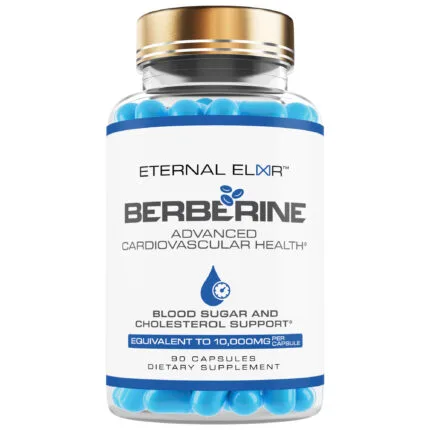
| Eternal Elixir Berberine HCl 500mg (our pick) | 500 mg berberine HCl | 1 capsule on an empty stomach, or as your doctor directs | 90 capsules | $49.99 | $0.56 | Shop Berberine HCl 500mg |
| Bulk Nutrients Berberine HCL Capsules | 500 mg berberine HCl | 1 to 2 capsules a day, preferably with meals, starting with 1 | 120 capsules | $39.00 | $0.33 | Bulk Nutrients |
| Wagner Berberine 500 (Chemist Warehouse) | 500 mg berberine | 1 tablet once or twice a day with meals | 60 tablets | $14.99 (EDLP $29.99) | $0.25 | Chemist Warehouse |
| Caruso’s Berberine 500 (Chemist Warehouse) | 500 mg berberine | 1 tablet up to 2 to 3 times a day with each main meal | 60 tablets | $24.97 (RRP $49.95) | $0.42 | Chemist Warehouse |
Eternal Elixir makes Berberine HCl 500mg, the first row, and it is our pick. Cost per 500 mg is the pack price divided by the total berberine in the pack.
Add Berberine HCl 500mg to cart · $49.99
Who each suits. Our Berberine HCl 500mg suits adults who want 500 mg steps with only rice flour and a cellulose capsule besides the berberine, and a 90-capsule bottle from Sydney, though it isn’t the cheapest per 500 mg. Bulk Nutrients suits people who want a big bottle at a low cost per 500 mg. Wagner has the lowest cost per 500 mg here, but contains soy. Caruso’s suits pharmacy shoppers, and its label says to take it two hours away from pharmaceutical medicines. Our roundup of the best berberine supplements in Australia compares more brands, and our guide to reading supplement labels in Australia explains what to check.
Eternal Elixir Berberine HCl 500mg: what’s in the bottle
- Berberine HCl, 500 mg per capsule, from a 20:1 concentrate, with rice flour and a cellulose capsule.
- 90 capsules a bottle: 90 days at one a day, or 45 days at two.
- Label directions: one capsule on an empty stomach, or as your doctor directs. If an empty stomach upsets you, take it with a meal, as Examine advises.
- $49.99 a bottle. Two bottles save 10%, three save 15% and five save 20%, with free shipping over $100.
- Ships from Sydney within 24 hours, with a 30-day money-back guarantee and Afterpay.
Add Berberine HCl 500mg to cart · $49.99
Berberine is one part of our Metabolic Wellness Stack, alongside TUDCA and glutathione, so if you buy the stack you don’t need a separate berberine bottle. For the bile side of gut health, read about TUDCA and the gut, or browse the full Eternal Elixir range.
Berberine and Gut Health: Frequently Asked Questions
Can berberine help with gut issues?
It changes the gut bacteria, but no trial has shown it improves digestive comfort, and gut side effects are its most common downside. The trials tested blood glucose and cholesterol. If you have ongoing gut symptoms, see your doctor rather than trying berberine first.
How long does it take for berberine to change the gut microbiome?
The human trials checked gut bacteria after 12 to 16 weeks and found clear changes by then. They didn’t track how fast the changes began, so claims of change within two to four weeks aren’t backed by these trials.
Does berberine increase Akkermansia?
In animal studies it did. In the one long human trial that reported it, 600 mg a day for over a year, Akkermansia muciniphila fell compared with placebo. So the popular claim doesn’t hold in people so far.
What are the downsides of taking berberine?
Gut side effects such as wind, stomach discomfort, diarrhoea or constipation, especially at higher doses. It also changes how the liver clears some medicines, and it lowered some helpful gut bacteria in trials. Start at 500 mg a day with food, and check with your pharmacist if you take any medicine.
What organ is berberine hard on?
Mostly the gut, where side effects are most common. In the Yin and PREMOTE trials, liver and kidney tests stayed normal, and a 2023 review of 18 trials found no serious adverse events. The liver is still worth mentioning because berberine slows some of the enzymes it uses to clear medicines.
Why don’t doctors like berberine?
Mainly because of the evidence gaps and interactions. Most trials ran 4 to 24 weeks, 15 of the 18 trials in the 2023 review were done in mainland China and Hong Kong, and berberine can raise blood levels of some medicines. Products also vary in how much berberine they contain. None of that means it doesn’t work, but it is why doctors want to know before you start.
Should I take probiotics alongside berberine?
There is a reasonable case for it. In one trial, adding Bifidobacterium offset the rise in Proteobacteria seen with berberine alone. No trial has tested the best timing.
Start with 500mg: add to cart · $49.99
What is the best berberine supplement in Australia?
Our pick is Eternal Elixir Berberine HCl 500mg: 500 mg per capsule, 90 capsules a bottle, $0.56 per 500 mg, sent from Sydney within 24 hours. The single 500 mg step suits the slow start that keeps gut side effects down. Eternal Elixir makes it, so weigh that when you read our pick. If lowest price per 500 mg matters most, Wagner Berberine 500 at Chemist Warehouse costs less.
Shop Berberine HCl 500mg · $49.99
The Bottom Line
Berberine changes the gut microbiome in people, clearly and consistently, but not in the tidy way marketing suggests. Some helpful bacteria went down and some less welcome ones went up, and the link between those changes and berberine’s effects on glucose is still being worked out. Gut side effects are common, so start with 500 mg a day with food. If you take berberine for glucose or cholesterol support, our Berberine HCl 500mg gives you that 500 mg step in each capsule.
More Reading
- Berberine in Australia: benefits, dosage and how to choose
- What the berberine HCl label means
- Glutathione in Australia: what it can do
Sources
- Candrea AR, Gavrilaș LI, Frumuzachi O, et al. The integrative role of berberine in gut microbiota modulation and cardiometabolic outcomes: a systematic review of randomised clinical trials. Nutrients. 2026;18(12):1858. PubMed 42356246
- Zhang Y, Gu Y, Ren H, et al. Gut microbiome-related effects of berberine and probiotics on type 2 diabetes (the PREMOTE study). Nature Communications. 2020;11(1):5015. PubMed 33024120
- Ming J, Yu X, Xu X, et al. Effectiveness and safety of Bifidobacterium and berberine in human hyperglycemia and their regulatory effect on the gut microbiota. Genome Medicine. 2021;13(1):125. PubMed 34365978
- Wang S, Ren H, Zhong H, et al. Combined berberine and probiotic treatment as an effective regimen for improving postprandial hyperlipidemia in type 2 diabetes patients. Gut Microbes. 2022;14(1):2003176. PubMed 34923903
- Blais JE, Huang X, Zhao JV. Overall and sex-specific effect of berberine for the treatment of dyslipidemia in adults: a systematic review and meta-analysis of randomized placebo-controlled trials. Drugs. 2023;83(5):403-427. PubMed 36941490
- Yin J, Xing H, Ye J. Efficacy of berberine in patients with type 2 diabetes mellitus. Metabolism. 2008;57(5):712-717. PubMed 18442638
- Blöcher JA, Meyer-Tönnies MJ, Morof F, et al. Sex-dependent effects of CYP2D6 on the pharmacokinetics of berberine in humans. Clinical Pharmacology & Therapeutics. 2025;117(1):250-260. PubMed 39488825
- Li N, Gu L, Qu L, et al. Berberine attenuates pro-inflammatory cytokine-induced tight junction disruption in an in vitro model of intestinal epithelial cells. European Journal of Pharmaceutical Sciences. 2010;40(1):1-8. PubMed 20149867
- Shan CY, Yang JH, Kong Y, et al. Alteration of the intestinal barrier and GLP2 secretion in berberine-treated type 2 diabetic rats. Journal of Endocrinology. 2013;218(3):255-262. PubMed 23757509
- Guo Y, Chen Y, Tan ZR, Klaassen CD, Zhou HH. Repeated administration of berberine inhibits cytochromes P450 in humans. European Journal of Clinical Pharmacology. 2012;68(2):213-217. PubMed 21870106
- Examine. Berberine. examine.com