Last updated: September 28, 2026 · Originally published: August 2, 2026 · By Eternal Elixir Editorial
Quick answer: this is the Longevity Supplement Evidence Index 2026, our count of the published human research behind 16 longevity and performance compounds sold in Australia. Re-running our PubMed queries on 27 September 2026 returns 1,728 human randomised controlled trials across the 16 compounds, up from 1,717 when we first ran the same queries on 3 August 2026. Glutathione has the most (571), then methylene blue (382) and resveratrol (263). NMN has 17, and turkesterone and Fadogia agrestis have none.
What this is not: a ranking of what any compound does. It counts published research volume, nothing else. For a buying view of the same category, read our guide to the best longevity supplements in Australia, or the walkthrough of a complete longevity supplement stack.
We count the human trial literature behind every compound in this index because it’s the first thing a careful buyer should know and the thing marketing leaves out. Every figure below comes from a PubMed search you can re-run yourself: the exact query strings are in the methodology section. Eternal Elixir sells 13 of these 16 compounds today. The other three (turkesterone, hyaluronic acid and our tongkat ali with Fadogia agrestis) are currently sold out, and we’ve kept them in the census because the counts are useful whether or not we stock them.
Table of contents
- 1. Key statistics at a glance
- 2. How the evidence index works
- 3. How many human trials exist for each longevity supplement?
- 4. Which longevity supplements are the best studied in humans?
- 5. Which compounds have the least human evidence?
- 6. NMN or NR: which NAD+ precursor has more human trials?
- 7. Is longevity supplement research accelerating?
- 8. Whose evidence is newest?
- 9. When reviews outnumber trials
- 10. The 16 compounds: what the count tells you about each
- 10.1. Glutathione
- 10.2. Methylene blue
- 10.3. Resveratrol
- 10.4. Panax ginseng
- 10.5. Hyaluronic acid (oral)
- 10.6. Berberine
- 10.7. Spermidine
- 10.8. Alpha-ketoglutarate (including Ca-AKG)
- 10.9. Nicotinamide riboside (NR)
- 10.10. TUDCA
- 10.11. NMN (nicotinamide mononucleotide)
- 10.12. Pterostilbene
- 10.13. Shilajit
- 10.14. Tongkat ali
- 10.15. Fadogia agrestis
- 10.16. Turkesterone
- 11. Methodology
- 12. How to read a supplement trial once you’ve found it
- 13. How to use this index when you buy
- 14. Frequently asked questions
- 14.1. Which longevity supplement has the most human research?
- 14.2. How many human clinical trials of NMN have been published?
- 14.3. Is NMN or NR better studied?
- 14.4. Does turkesterone have any human studies?
- 14.5. Does a high trial count mean a supplement works?
- 14.6. Why did the count change from 1,717 to 1,728?
- 14.7. How often is this index updated?
- 15. Sources
Key statistics at a glance
- 1,728 human randomised controlled trials (RCTs) across 16 compounds, counted on 27 September 2026.
- 2,172 human clinical trials of any design, and 666 systematic reviews or meta-analyses.
- 472 of the 1,728 human RCTs (27%) were published in 2021 or later.
- 2 of 16 compounds, turkesterone and Fadogia agrestis, have no indexed human clinical trial of any design.
- 97,592 PubMed records mention these compounds in the title or abstract, and only 1.8% of them are human RCTs.
- The top three compounds by RCT count (glutathione, methylene blue and resveratrol) hold 70% of all the human RCTs in the index.
- NMN has 17 human RCTs, and 16 of them were published in 2021 or later.
- Across the 13 compounds whose literature is mostly about supplements, new human RCTs peaked at 53 in 2021 and fell to 34 in 2024.
How the evidence index works
The index puts each compound into one of four evidence-depth bands, based only on how many human randomised controlled trials PubMed indexes for it. An RCT is the study design that best separates an effect from chance and expectation, which is why we count it rather than every paper.
- Deep: 100 or more human RCTs.
- Moderate: 20 to 99 human RCTs.
- Thin: 1 to 19 human RCTs.
- None: no human RCTs indexed.
The bands are deliberately blunt. They measure how much human trial work exists, not whether the trials were large, long, well run or positive. A compound with 100 small, short trials lands in the same band as one with 100 large ones. We add two more columns to help read the count: how many of the RCTs are recent (2021 or later), and how many systematic reviews or meta-analyses exist, because a large review literature usually means researchers have had enough trials to pool.
How many human trials exist for each longevity supplement?
The full census is below, sorted by human RCTs. “All records” counts every PubMed entry that mentions the compound in its title or abstract, including cell and animal work, reviews, letters and case reports. Only 1.8% of that total is human randomised trials, which is a reminder that a compound with thousands of papers behind it may still have little human trial data.
| Compound | All records | Human clinical trials | Human RCTs | Human RCTs since 2021 | Systematic reviews or meta-analyses | Evidence band |
|---|---|---|---|---|---|---|
| Glutathione (supplementation) | 9,714 | 699 | 571 | 112 | 109 | Deep |
| Methylene blue | 27,785 | 526 | 382 | 90 | 111 | Deep |
| Resveratrol | 21,333 | 306 | 263 | 80 | 227 | Deep |
| Panax ginseng (incl. Korean red) | 5,098 | 145 | 124 | 23 | 47 | Deep |
| Hyaluronic acid (oral) | 1,553 | 135 | 114 | 50 | 44 | Deep |
| Berberine | 8,406 | 134 | 110 | 41 | 79 | Deep |
| Spermidine | 10,928 | 65 | 41 | 15 | 7 | Moderate |
| Alpha-ketoglutarate (incl. Ca-AKG) | 7,280 | 51 | 34 | 9 | 7 | Moderate |
| Nicotinamide riboside | 947 | 39 | 31 | 22 | 8 | Moderate |
| TUDCA | 1,425 | 27 | 21 | 3 | 7 | Moderate |
| NMN (nicotinamide mononucleotide) | 1,527 | 23 | 17 | 16 | 11 | Thin |
| Pterostilbene | 1,137 | 7 | 7 | 4 | 1 | Thin |
| Shilajit | 126 | 9 | 7 | 3 | 1 | Thin |
| Tongkat ali (Eurycoma longifolia) | 290 | 6 | 6 | 4 | 7 | Thin |
| Turkesterone | 33 | 0 | 0 | 0 | 0 | None |
| Fadogia agrestis | 10 | 0 | 0 | 0 | 0 | None |
| All 16 compounds | 97,592 | 2,172 | 1,728 | 472 | 666 |
Three rows need a caveat, and we’d rather flag them than bury them. Glutathione, oral hyaluronic acid and methylene blue all have literatures shaped by uses other than an oral supplement: intravenous and inhaled glutathione, trials of other supplements that measured glutathione as an outcome, injected hyaluronic acid, and methylene blue as a hospital, surgical and diagnostic agent. Their RCT counts are real, but they overstate the number of trials that studied an oral supplement at supplement doses. The other 13 compounds don’t have this problem on anything like the same scale.
Which longevity supplements are the best studied in humans?
Six compounds reach the deep band with 100 or more human RCTs: glutathione (571), methylene blue (382), resveratrol (263), Panax ginseng (124), oral hyaluronic acid (114) and berberine (110). Once you set aside the three with mostly non-supplement literatures, the three best-studied compounds taken as oral supplements are resveratrol, Panax ginseng and berberine.
- Resveratrol has 263 human RCTs and 227 systematic reviews or meta-analyses, the largest review literature of any compound here. Only 80 of its RCTs are from 2021 or later, so most of that base is mature rather than new.
- Panax ginseng, including Korean red ginseng, has 124 human RCTs and 47 reviews. It has been through formal human trials for decades, and only 23 of its RCTs are recent.
- Berberine has 110 human RCTs and 79 reviews, and 41 of those RCTs were published since 2021, so its trial base is both large and still growing.
In the moderate band, spermidine (41), alpha-ketoglutarate (34), nicotinamide riboside (31) and TUDCA (21) each have enough trials to be taken seriously, but not enough to settle much on their own.
Which compounds have the least human evidence?
Turkesterone and Fadogia agrestis have none. PubMed indexes 33 records mentioning turkesterone in the title or abstract and 10 mentioning Fadogia agrestis. Neither has a single human clinical trial of any design. Their research base is entirely preclinical: cell culture and animal work. That’s a statement about the state of published research, not a verdict on the compounds, but it’s worth knowing before you buy either.
Four compounds sit in the thin band:
- NMN: 17 human RCTs, 16 of them since 2021.
- Pterostilbene: 7 human RCTs and one systematic review, against 1,137 total records.
- Shilajit: 7 human RCTs and one systematic review, from only 126 total records.
- Tongkat ali: 6 human RCTs, but 7 systematic reviews or meta-analyses. When reviews outnumber trials, they’re pooling the same small set of studies again and again.
A thin band doesn’t mean a compound doesn’t work. It means the human trial record is short, so any claim you read about it rests on a handful of studies. If you’re comparing tongkat ali with shilajit, our tongkat ali vs shilajit comparison goes through what those few trials measured, and our article on what the Fadogia agrestis research shows covers the animal work behind it.
NMN or NR: which NAD+ precursor has more human trials?
Nicotinamide riboside has more: 31 human RCTs against NMN’s 17. NR’s record is also older, with 22 of its 31 RCTs (71%) published since 2021, against 16 of NMN’s 17 (94%). Both have small, recent evidence bases, and neither count says which compound performs better. It only tells you how much human trial data exists for each.
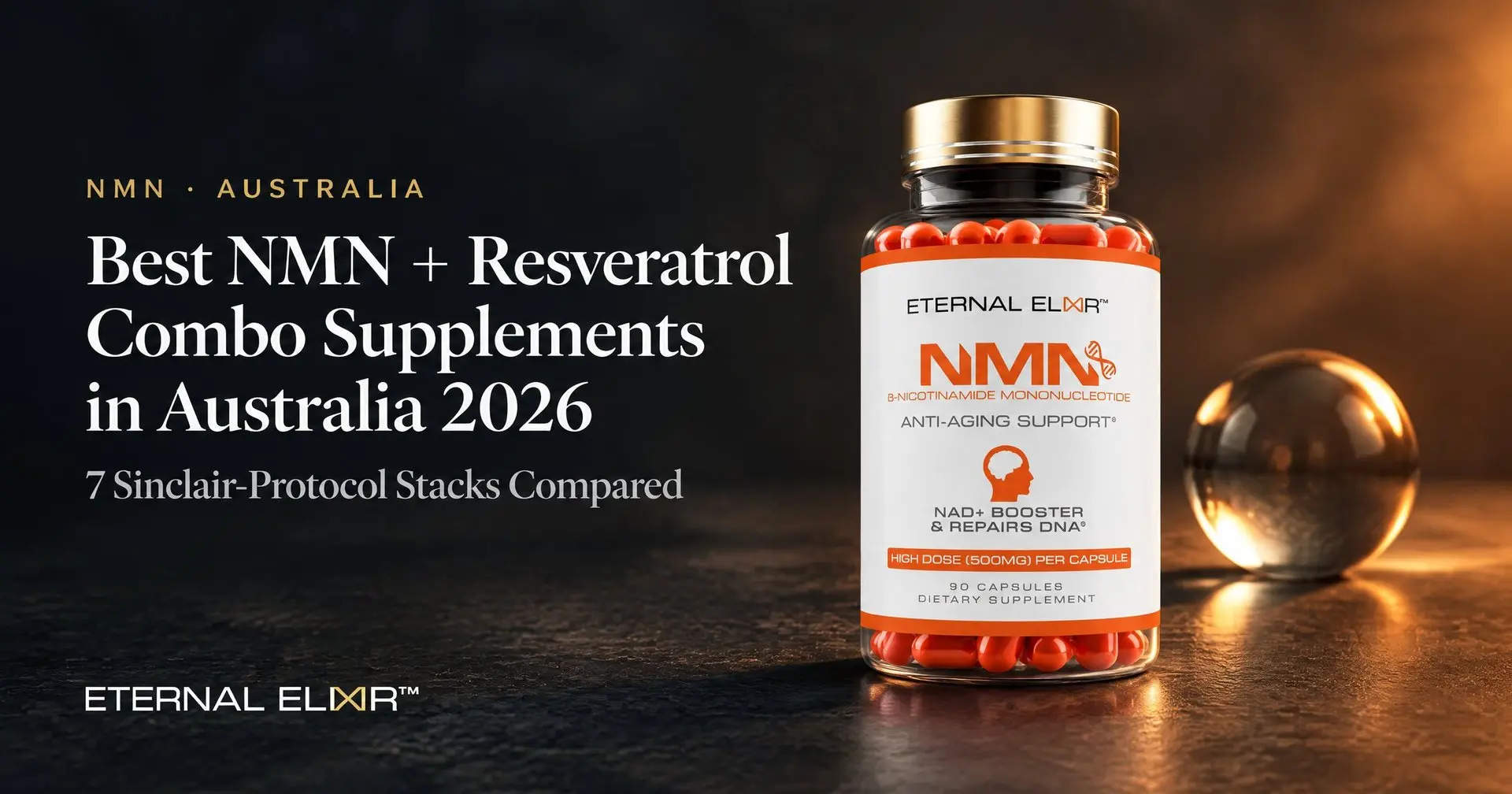
If you’re choosing between them, our NMN vs NR comparison for Australia looks at what the trials measured, and our NAD+ supplement comparison covers the products. Our Pure NR 500mg and NMN 500mg are both 90 capsules at one capsule a day for $59.99.
Add Pure NR 500mg to cart · $59.99
Is longevity supplement research accelerating?
Not by this measure. We restricted this count to the 13 compounds whose literature is mostly about supplements, leaving out glutathione, hyaluronic acid and methylene blue, and counted new human RCTs by publication year. Across those 13, PubMed indexes 650 human RCTs in total. Year by year, the count has moved within a narrow range for a decade:
| Publication year | New human RCTs | Change on prior year |
|---|---|---|
| 2016 | 49 | n/a |
| 2017 | 39 | -10 |
| 2018 | 48 | +9 |
| 2019 | 42 | -6 |
| 2020 | 47 | +5 |
| 2021 | 53 | +6 |
| 2022 | 45 | -8 |
| 2023 | 36 | -9 |
| 2024 | 34 | -2 |
| 2025 | 40 | +6 |
| 2026 (to 27 Sep) | 28 | -12 |
From 2016 to 2025 the average was 43.3 new human RCTs a year, with a high of 53 in 2021 and a low of 34 in 2024. Read the recent years with care. PubMed indexing lags publication, publication lags trial completion by a year or more, and a few large trials can move a single year’s count. But over ten years there’s no sign of the steep growth that the attention these compounds get might suggest. The human evidence base is growing steadily, not quickly.
Whose evidence is newest?
The share of a compound’s human RCTs published since 2021 tells you whether its evidence is still being written or has mostly been settled. Here’s that share for every compound with at least one human RCT:
| Compound | Human RCTs since 2021 | All human RCTs | Share since 2021 |
|---|---|---|---|
| NMN | 16 | 17 | 94% |
| Nicotinamide riboside | 22 | 31 | 71% |
| Tongkat ali | 4 | 6 | 67% |
| Pterostilbene | 4 | 7 | 57% |
| Hyaluronic acid (oral) | 50 | 114 | 44% |
| Shilajit | 3 | 7 | 43% |
| Berberine | 41 | 110 | 37% |
| Spermidine | 15 | 41 | 37% |
| Resveratrol | 80 | 263 | 30% |
| Alpha-ketoglutarate | 9 | 34 | 26% |
| Methylene blue | 90 | 382 | 24% |
| Glutathione | 112 | 571 | 20% |
| Panax ginseng | 23 | 124 | 19% |
| TUDCA | 3 | 21 | 14% |
The two NAD+ precursors top the table, which matches how recently they became popular as supplements. A high share with a small count, as for NMN, tongkat ali and pterostilbene, means the field is young: expect the picture to change as more trials report. A low share with a large count, as for Panax ginseng and resveratrol, means most of what will be learned from the current style of trial has probably been published, and the systematic reviews are the best place to read it.
When reviews outnumber trials
A systematic review or meta-analysis pools published trials, so the ratio of reviews to trials is a useful warning light. For resveratrol there are 227 reviews for 263 RCTs, and for berberine 79 reviews for 110 RCTs. Both have enough trials that different reviews can ask different questions. For NMN there are 11 reviews for 17 RCTs, and for tongkat ali 7 reviews for 6 RCTs. At that ratio, most reviews are re-reading the same small set of studies, and a new review doesn’t add new human data. When you see “a meta-analysis found” in marketing for a thin-band compound, check how many trials it pooled.
The 16 compounds: what the count tells you about each
Each profile gives the census figures, what they mean in practice, and, where we stock the compound, the label facts for our product. Prices are as of Sep 2026.
Glutathione
571 human RCTs, 699 clinical trials, 109 reviews, and 112 RCTs since 2021, from 9,714 records. It’s the largest raw count in the index, but the caveat above applies: our query requires the word “supplementation”, yet it still catches intravenous and inhaled use and trials of other supplements that measured glutathione levels. Our Reduced L-Glutathione is 90 capsules, 2 capsules (2,000 mg) daily on an empty stomach, 45 serves for $39.99, or $0.89 a serve. Our glutathione comparison and liposomal vs reduced glutathione guide cover the buying decision.
Methylene blue
382 human RCTs, 526 clinical trials, 111 reviews, and 90 RCTs since 2021, from 27,785 records. Most of that literature is hospital, surgical and diagnostic use, often at doses and routes that have nothing to do with a daily supplement. Our Methylene Blue Capsules are 10 mg each, one capsule daily, 60 capsules for $59.99, or $1.00 a serve. Methylene blue isn’t for everyone. Don’t take it with SSRIs, SNRIs, MAOIs or other serotonergic medicines, because of the risk of serotonin syndrome. Don’t take it if you have G6PD deficiency, are pregnant or breastfeeding, or are under 18. It can colour urine blue or green. Talk to your doctor before taking it if you take any prescription medicine. Our methylene blue comparison has more.
Resveratrol
263 human RCTs, 306 clinical trials, 227 reviews, and 80 RCTs since 2021, from 21,333 records. The trials use a wide spread of doses and formulations, which is one reason the review literature is so large. Our Trans-Resveratrol is 600 mg per capsule, 2 capsules daily with or without food, 90 capsules (45 serves) for $59.99, or $1.33 a serve. See our resveratrol comparison and pterostilbene vs resveratrol.
Panax ginseng
124 human RCTs, 145 clinical trials, 47 reviews, and 23 RCTs since 2021, from 5,098 records. It’s a mature literature, but extracts differ in root age, processing and ginsenoside content, which makes trials hard to compare. Our Korean Red Ginseng gives 1,600 mg of extract per serving (800 mg per capsule), standardised to 5% ginsenosides, 2 capsules in the morning, 90 capsules (45 serves) for $44.99, or $1.00 a serve.
Hyaluronic acid (oral)
114 human RCTs, 135 clinical trials, 44 reviews, and 50 RCTs since 2021, from 1,553 records. Our query requires oral, ingestion or dietary terms, but injected and topical trials that mention those words still slip in. Our hyaluronic acid capsules are currently sold out, and we don’t have a date for their return.
Berberine
110 human RCTs, 134 clinical trials, 79 reviews, and 41 RCTs since 2021, from 8,406 records. After resveratrol, it has the largest review literature of the supplement-first compounds. Our Berberine HCl 500mg (20:1 concentrate) is one capsule on an empty stomach, 90 capsules for $49.99, or $0.56 a serve. Our berberine comparison covers the other Australian options.
Spermidine
41 human RCTs, 65 clinical trials, 7 reviews, and 15 RCTs since 2021, from 10,928 records. Only 0.38% of its records are human RCTs, the lowest share of any compound with more than a handful of trials, because so much spermidine research is basic cell biology. Our Spermidine 10mg is one capsule daily with a meal, 90 capsules for $49.99, or $0.56 a serve. See our spermidine comparison and spermidine vs NMN.
Alpha-ketoglutarate (including Ca-AKG)
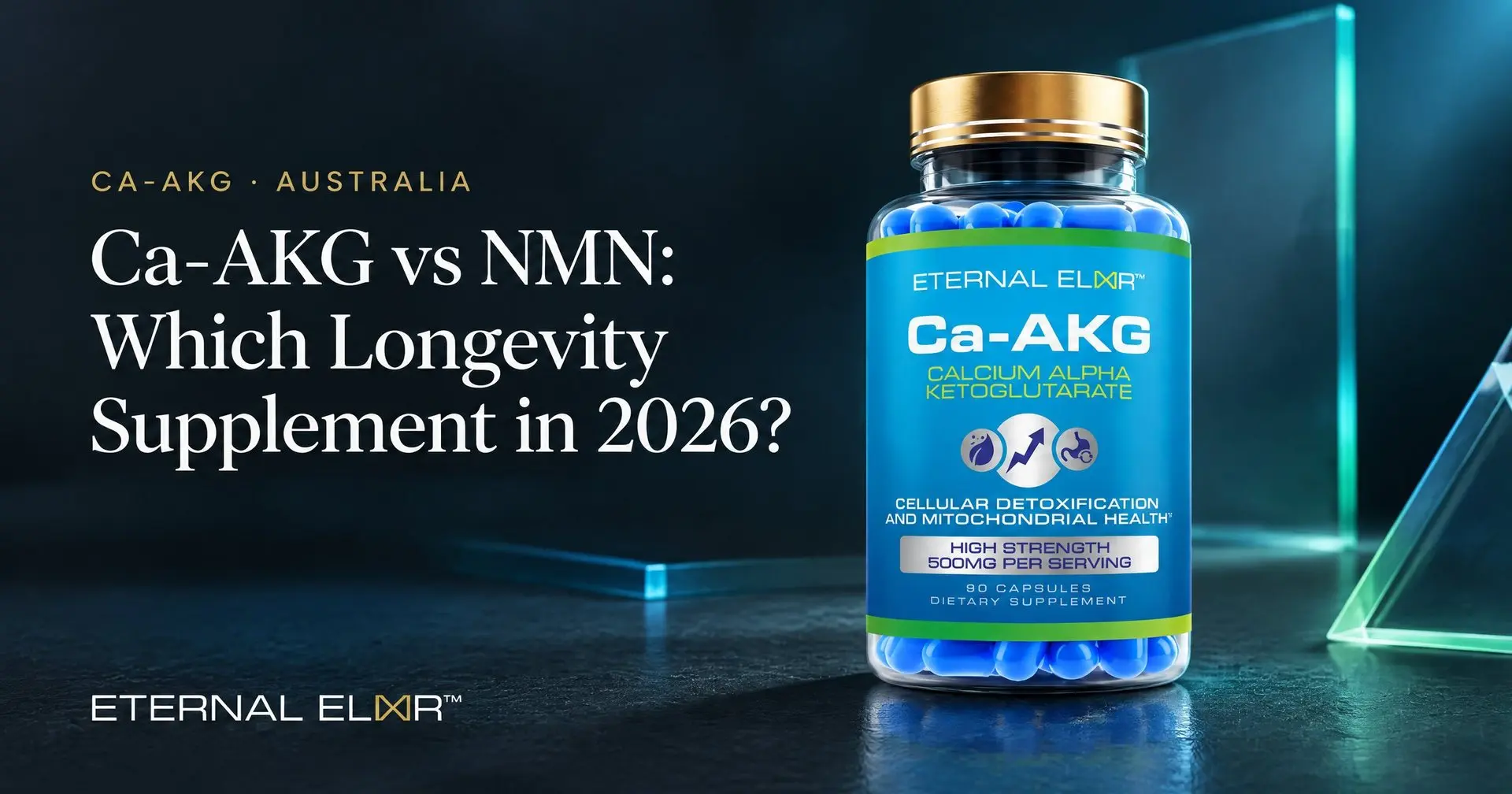
34 human RCTs, 51 clinical trials, 7 reviews, and 9 RCTs since 2021, from 7,280 records. Our query covers every form of alpha-ketoglutarate, including its use in clinical nutrition and as a salt with other compounds, so it overstates the trials of calcium alpha-ketoglutarate specifically. Our Ca-AKG 500mg is one capsule daily, 90 capsules for $59.99, or $0.67 a serve. Read our Ca-AKG guide, Ca-AKG vs NMN and Ca-AKG vs spermidine.
Nicotinamide riboside (NR)
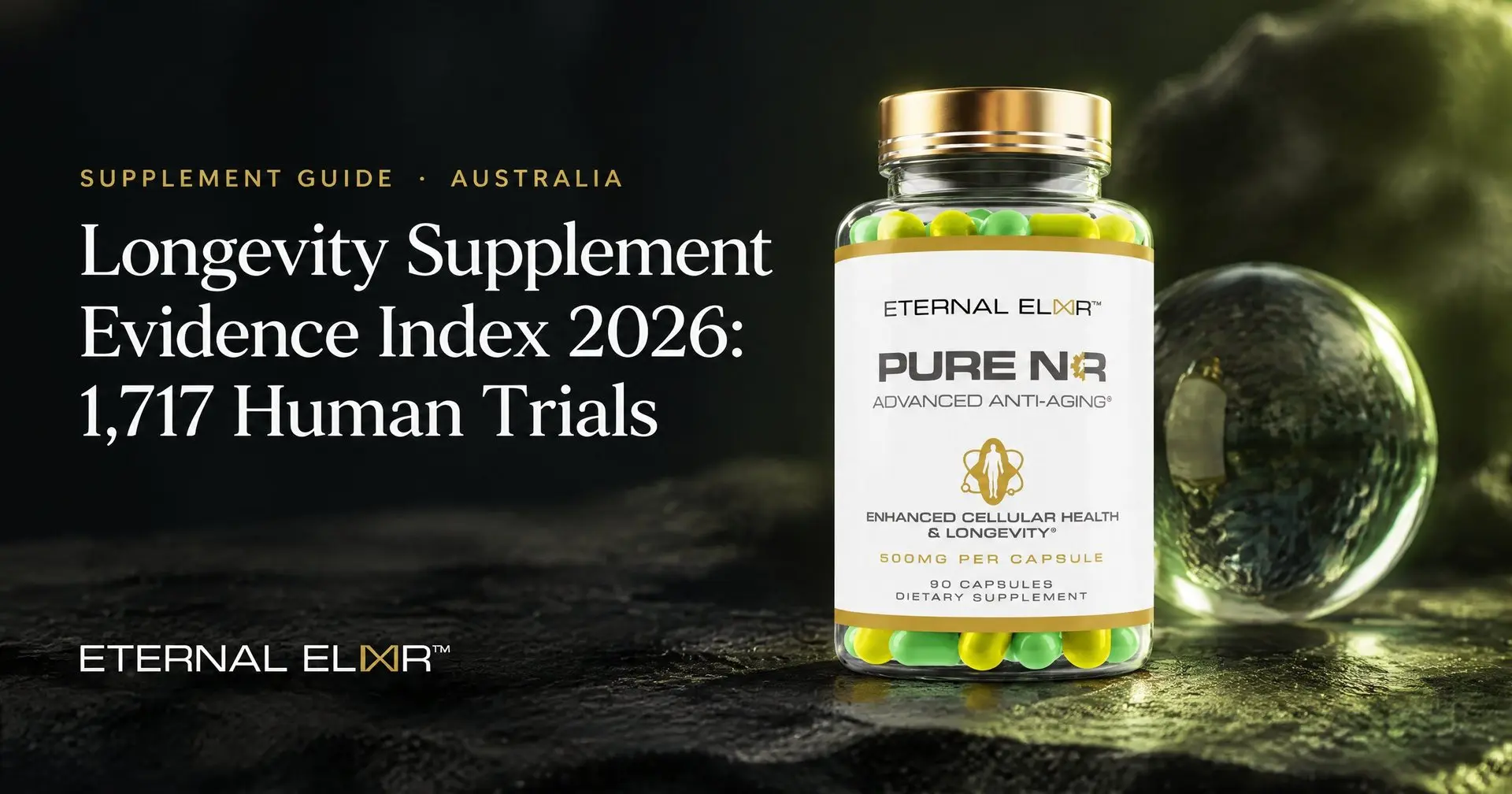
31 human RCTs, 39 clinical trials, 8 reviews, and 22 RCTs since 2021, from 947 records. It’s the better-studied of the two NAD+ precursors here, and most of its trials are recent. Our Pure NR 500mg is one capsule daily, preferably in the morning, 90 capsules for $59.99, or $0.67 a serve.
TUDCA
21 human RCTs, 27 clinical trials, 7 reviews, and only 3 RCTs since 2021, from 1,425 records. Much of its human trial record comes from specialist clinical settings rather than everyday supplement use. Our TUDCA 500mg is one capsule daily with a meal, 90 capsules for $59.99, or $0.67 a serve. Our TUDCA comparison covers the other brands.
NMN (nicotinamide mononucleotide)
17 human RCTs, 23 clinical trials, 11 reviews, and 16 RCTs since 2021, from 1,527 records. It’s the newest evidence base in the index: almost all of its human trials were published in the last five years, and 11 reviews against 17 trials means reviewers are pooling a small set of studies. Our NMN 500mg is one capsule daily, preferably in the morning, 90 capsules for $59.99, or $0.67 a serve. See our NMN comparison and NMN dosage guide.
Pterostilbene
7 human RCTs, 7 clinical trials, 1 review, and 4 RCTs since 2021, from 1,137 records. It’s structurally close to resveratrol but has a small fraction of resveratrol’s human trial record. Our Trans-Pterostilbene 500mg is one capsule daily, 90 capsules for $64.99, or $0.72 a serve.
Shilajit
7 human RCTs, 9 clinical trials, 1 review, and 3 RCTs since 2021, from only 126 records. The whole literature is small. Our Shilajit 1000mg is a 20:1 extract with 20% fulvic acid, 1,000 mg per 2-capsule serving, 45 serves for $44.99, or $1.00 a serve. Our shilajit comparison covers the other forms and brands.
Tongkat ali
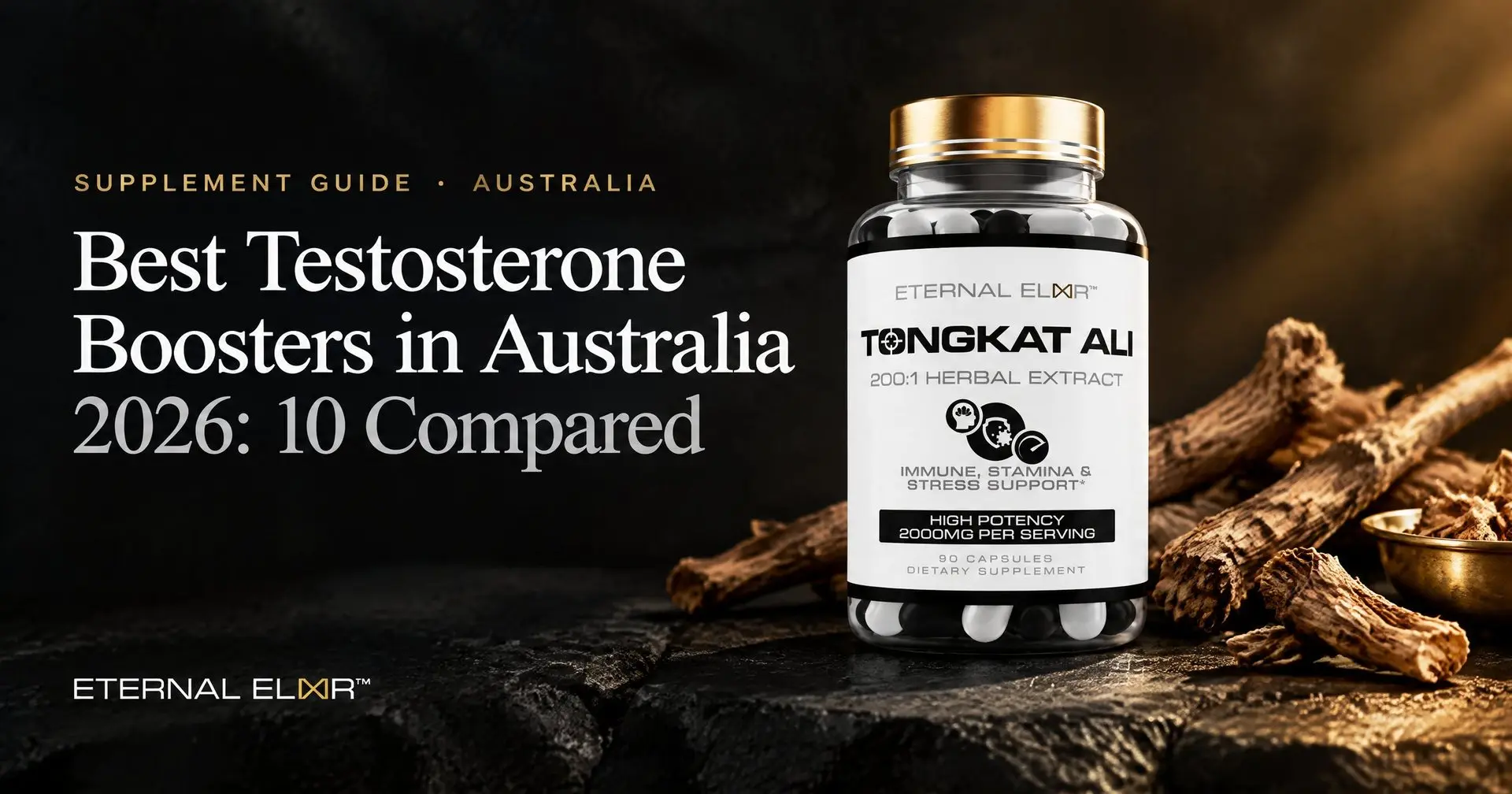
6 human RCTs, 6 clinical trials, 7 reviews, and 4 RCTs since 2021, from 290 records. More reviews than trials is the clearest sign of a thin evidence base being summarised repeatedly. Our Tongkat Ali 200:1 gives 2,000 mg per 3-capsule serving on an empty stomach, 90 capsules (30 serves) for $39.99, or $1.33 a serve. Our tongkat ali comparison covers the rest of the market.
Fadogia agrestis
No human RCTs and no human clinical trials of any design, from 10 records. Everything published is cell or animal work. Our tongkat ali with Fadogia product is currently sold out.
Turkesterone
No human RCTs and no human clinical trials of any design, from 33 records. Our turkesterone is currently sold out. If you’re interested in it, know that no published human trial has tested it yet.
Methodology
Every number in this index is reproducible. Here’s exactly how it was produced.
Trial counts
Counts were retrieved from PubMed on 27 September 2026 through the NCBI E-utilities esearch endpoint with rettype=count. For each compound we ran five queries built from a core term set restricted to the title and abstract field ([tiab]), combined with these filters:
- All records: the core term set only.
- Human clinical trials:
AND "clinical trial"[pt] AND "humans"[mh] - Human RCTs:
AND "randomized controlled trial"[pt] AND "humans"[mh] - Human RCTs since 2021: as above,
AND ("2021/01/01"[dp] : "2026/12/31"[dp]) - Systematic reviews and meta-analyses:
AND ("meta-analysis"[pt] OR "systematic review"[pt]) AND "humans"[mh]
The core term sets were: "nicotinamide mononucleotide"[tiab]; "nicotinamide riboside"[tiab]; "resveratrol"[tiab]; "pterostilbene"[tiab]; "spermidine"[tiab]; "alpha-ketoglutarate"[tiab] OR "alpha ketoglutarate"[tiab]; "berberine"[tiab]; "tauroursodeoxycholic acid"[tiab] OR "TUDCA"[tiab]; "Eurycoma longifolia"[tiab] OR "tongkat ali"[tiab]; "Fadogia agrestis"[tiab]; "shilajit"[tiab] OR "mumijo"[tiab]; "glutathione"[tiab] AND "supplementation"[tiab]; "Panax ginseng"[tiab] OR "Korean red ginseng"[tiab]; "turkesterone"[tiab]; ("hyaluronic acid"[tiab] OR "hyaluronan"[tiab]) AND ("oral"[tiab] OR "ingestion"[tiab] OR "dietary"[tiab]); "methylene blue"[tiab].
The year-by-year table uses the union of the 13 supplement-first compounds’ term sets (every compound except glutathione, hyaluronic acid and methylene blue), with the human RCT filter and a single-year publication date filter for each year. Totals in the census table are sums of the per-compound counts, so a paper that mentions two compounds is counted under each.
What changed since the first run
We first ran the same queries on 3 August 2026 and counted 1,717 human RCTs. The 27 September run counts 1,728. The difference is new indexing: a few more trials for glutathione, methylene blue, resveratrol, oral hyaluronic acid, berberine, alpha-ketoglutarate and NMN. Our first version of this page also paired each count with Australian search volumes and Google Trends data. We’ve removed those figures because we couldn’t re-check them against their source for this update, and we’d rather publish fewer numbers than numbers we can’t stand behind.
Known limitations
- PubMed publication-type tags are assigned by indexers and are imperfect. Some randomised trials are mistagged, and some tagged trials are secondary analyses of an earlier trial rather than new trials.
- Counts measure volume, not quality, sample size, duration, dose relevance or risk of bias. A compound can sit in the deep band and still have a weak evidence base for any particular use.
- Title and abstract searching misses papers that name a compound only in the full text, and over-counts papers that mention it in passing.
- Glutathione, oral hyaluronic acid and methylene blue counts include substantial non-supplement research, as flagged above.
- PubMed keeps indexing older papers, so the same query run on a later date can return slightly higher counts for past years.
Reuse and citation
This index is free to cite, quote and chart. If you use it, please attribute it as: Eternal Elixir, “Longevity Supplement Evidence Index 2026”, eternalelixir.com.au, counts retrieved 27 September 2026, with a link to this page. If you find a counting error, contact us and we’ll check it. For more of our research and buying guides, see the Eternal Elixir blog and the supplement guides, or start at the Eternal Elixir home page.
How to read a supplement trial once you’ve found it
The counts on this page tell you how many human trials exist. To judge what any one of them means for you, open the PubMed abstract and check six things:
- Was it randomised and placebo-controlled? Our RCT count only includes papers tagged as randomised controlled trials, but check the abstract for a placebo group and blinding. Open-label trials, where everyone knows what they’re taking, are more prone to expectation effects.
- Who took part? A trial in healthy middle-aged adults tells you more about a healthy middle-aged reader than a trial in hospital patients or elite athletes.
- How many people, and for how long? Many supplement trials enrol a few dozen people for a few weeks. That’s enough to detect a change in a blood marker, and rarely enough to show a lasting effect on how people feel or function.
- What dose and form? Compare the trial dose with the label serve on the product you’re considering. A trial of a high dose or an injected form doesn’t tell you much about a lower-dose capsule.
- What was measured? A change in a blood marker isn’t the same as a change you’d notice. Check whether the main outcome was a lab value, a performance test or a questionnaire.
- What did it find, and who paid for it? Read the results, not the conclusion’s tone, and note any industry funding. Funding doesn’t make a trial wrong, but it’s part of the picture.
You can find the trials behind any count here by pasting its query from the methodology section into PubMed and filtering to randomised controlled trials. For NMN, that returns the 17 human RCTs in this index, most of them published since 2021.
How to use this index when you buy
A trial count can’t tell you whether a supplement will do what you want, but it can tell you how much of the claim rests on human studies. Three practical rules:
- Treat thin-band compounds as experiments. For NMN, pterostilbene, shilajit and tongkat ali, any claim rests on a handful of trials. That can still be worth trying, but read the trials rather than the marketing.
- Check what the trials actually tested. A large count built on injected or hospital use says little about a daily capsule.
- Stack with the evidence in mind. If you’re combining compounds, our guide to building a longevity stack walks through NMN, resveratrol, spermidine and TUDCA together, and you can browse the full Eternal Elixir range.
Whichever compound you’re considering, talk to your doctor or pharmacist first if you’re pregnant or breastfeeding, take prescription medicines or have a medical condition.
Frequently asked questions
Which longevity supplement has the most human research?
Of the 16 compounds in the index, glutathione has the highest raw count at 571 human randomised controlled trials, followed by methylene blue (382) and resveratrol (263). Much of the glutathione and methylene blue literature isn’t about oral supplements, so among compounds studied mainly as supplements, resveratrol, Panax ginseng (124) and berberine (110) have the deepest human trial records.
How many human clinical trials of NMN have been published?
PubMed indexed 23 human clinical trials of nicotinamide mononucleotide on 27 September 2026, of which 17 are randomised controlled trials. Sixteen of those 17 were published in 2021 or later, so NMN’s human evidence base is both small and very recent.
Is NMN or NR better studied?
Nicotinamide riboside has more published human randomised trials, 31 against NMN’s 17. NMN’s evidence base is newer, with 94% of its human RCTs published since 2021, against 71% for nicotinamide riboside. Neither count says which compound performs better.
Add NMN 500mg to cart · $59.99
Does turkesterone have any human studies?
No. On 27 September 2026, PubMed indexes 33 records mentioning turkesterone in the title or abstract, and none is a human clinical trial of any design. The same is true of Fadogia agrestis, with 10 indexed records and no human trials.
Does a high trial count mean a supplement works?
No. The count measures how much human research exists, not what it found. A compound with hundreds of trials can have mixed results, and a compound with a handful can have consistent ones. Use the count to judge how much the claims rest on human studies, then read the trials or a systematic review for what they found.
Why did the count change from 1,717 to 1,728?
The first run of these queries on 3 August 2026 counted 1,717 human RCTs. Re-running the identical queries on 27 September 2026 returned 1,728, because PubMed indexed more trials in the meantime. Every table on this page uses the newer count.
How often is this index updated?
We plan to re-run the queries every quarter and state the retrieval date on every table, so any figure you quote can be pinned to a point in time.
Sources
- PubMed, US National Library of Medicine: every count on this page, retrieved 27 September 2026 with the queries in the methodology section. pubmed.ncbi.nlm.nih.gov
- NCBI E-utilities documentation, for the
esearchcount endpoint. Entrez Programming Utilities help - Eternal Elixir product pages, checked September 2026, for every label fact and price quoted in the compound profiles.