Last updated: September 28, 2026 · Originally published: February 15, 2026 · By Eternal Elixir Editorial
Tallow balm is not a treatment for eczema or psoriasis, and no controlled trial has tested beef tallow on either condition. What tallow can do is act as a rich, water-free moisturiser for dry skin, and many people with sensitive skin use it that way. If you have eczema or psoriasis, the safe approach is to keep the plan your GP or dermatologist has given you, patch-test any tallow balm first, and use it as a moisturiser alongside that plan, not instead of it.
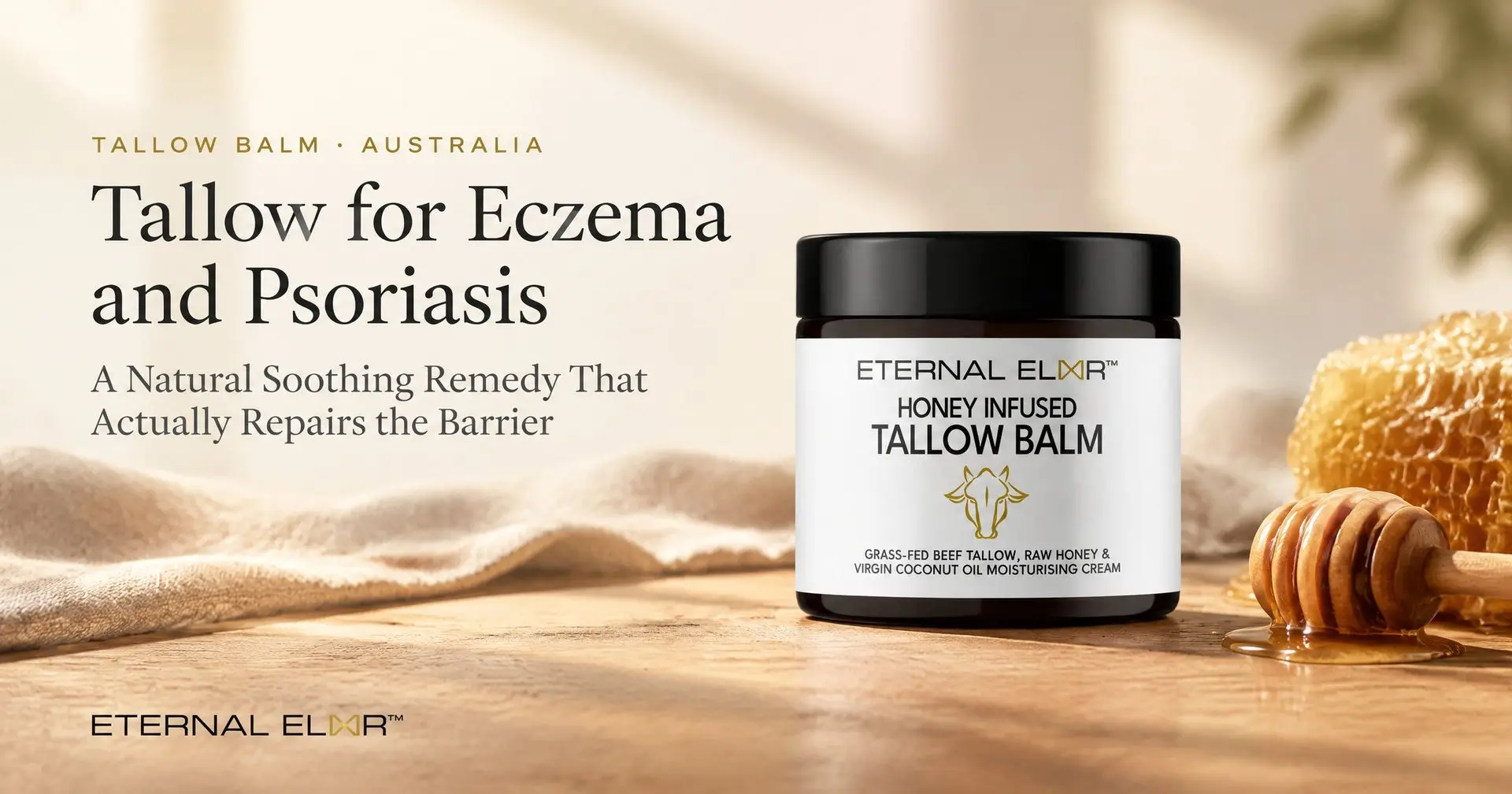
Eternal Elixir makes a Grass-Fed Tallow Balm, and it is our pick for a tallow moisturiser: a 60 g jar for $29.99, made from grass-fed beef tallow, organic raw beeswax, organic virgin coconut oil, organic raw honey and vitamin E, with no fragrance in the ingredient list. Below you will find what the research does and does not show, what dermatologists worry about, how to try tallow safely, and how five Australian tallow balms compare.
Table of contents
- 1. Tallow for eczema: not a treatment, but it can be a moisturiser
- 2. What tallow balm does for dry skin
- 3. What the research does and does not show
- 4. Tallow and psoriasis: what we can and cannot say
- 5. If you have eczema or psoriasis: how to try tallow safely
- 6. Why some dermatologists do not recommend tallow
- 7. Tallow balms in Australia compared
- 8. Our Grass-Fed Tallow Balm: what is in the jar
- 9. Frequently asked questions
- 9.1. Can you use tallow if you have eczema?
- 9.2. If you have psoriasis, does beef tallow help?
- 9.3. Why don’t dermatologists like tallow?
- 9.4. What clears up eczema quickly, and when should I see a doctor?
- 9.5. Should I ask a GP before using tallow on a baby with eczema?
- 9.6. Does tallow clog pores?
- 9.7. Will a tallow balm smell like beef?
- 10. The bottom line
- 11. Sources
Tallow for eczema: not a treatment, but it can be a moisturiser
If you have eczema and want to know whether tallow is good for it, the honest answer has two parts, and most pages selling tallow only give you one.
First, tallow is a fat. Rendered beef tallow is solid at room temperature and melts on contact with skin. Its fatty acids are mostly saturated and monounsaturated, including palmitic, stearic and oleic acid. On the skin it behaves as an emollient with occlusive properties: it softens rough, dry patches and slows water loss from the surface, the same broad job that thick moisturisers do. A balm with no water in it also needs no preservative system, which some people with reactive skin prefer.
Second, there is no clinical evidence that tallow calms, clears or shortens flares in people with eczema, and it is not a substitute for prescribed care. A 2024 scoping review in Cureus screened 147 papers on tallow and skin and found 19 that fit. They were comparative, basic science and animal studies, and the authors listed randomised controlled trials among the study designs still needed. The authors concluded that more research is needed, particularly on side effects, where the sources disagreed most.
So tallow sits in the same place as any other moisturiser. It can help keep dry skin comfortable. It does not replace the medicines your doctor prescribes for a flare.
What tallow balm does for dry skin
A good tallow balm does three practical things:
- Seals in water. Applied to slightly damp skin after a shower, a balm forms a thin layer that slows evaporation. This is why most people get the best result by pressing a small amount into skin that is still a little wet.
- Softens rough patches. Fats fill the gaps between dry, lifted skin cells, so elbows, knuckles and heels feel smoother.
- Lasts. A waterless balm is concentrated. A pea-sized amount covers a face, and a jar goes a long way.
What it does not do is reach “deep into the cells” or rebuild anything. Claims like that come from marketing, not measurement. For more on how the outer layer of skin holds water, see our explainer on the skin barrier and where tallow fits.
What the research does and does not show
Three pieces of evidence are worth knowing before you buy any tallow product.
The scoping review (Russell and colleagues, Cureus, 2024). Of 147 studies screened, 19 met the criteria. The review found support for tallow’s composition suiting skin, but said more research is needed on tallow as a cosmetic in humans, and called for controlled studies of its side effects.
The olive oil study (Danby and colleagues, Pediatric Dermatology, 2013). Nineteen adults, some with a history of atopic dermatitis and some without, applied olive oil to one forearm twice a day. After four weeks, olive oil had reduced the integrity of the outer skin layer and caused mild redness, while sunflower seed oil did not. Tallow is not olive oil, but both contain oleic acid, and this study is one reason dermatologists warn that “natural” does not automatically mean gentle.
Dermatologist views. In a 2026 article for the Children’s Hospital of Philadelphia, Dr Katie Lockwood wrote that evidence is limited on whether tallow helps in eczema, that some of its fatty acids may increase water loss over time, and that it can cause allergic reactions in some people. She recommends a regular, fragrance-free, thick moisturiser and a conversation with a doctor before trying new remedies. Australian dermatologists interviewed by the ABC in 2025 were more open: they described tallow as a natural emollient, warned that it can clog pores in acne-prone skin, advised against raw or home-rendered tallow because of impurities, and suggested patch testing first.
Put together: tallow is a reasonable moisturiser for many people with dry skin, it is not proven for any skin condition, and a small number of people react to it or to what is blended with it.
Tallow and psoriasis: what we can and cannot say
If you have psoriasis and are asking whether beef tallow helps, you probably want to know whether it will soften thick, dry plaques. We cannot point you to any study of tallow in people with psoriasis, so we will not claim that it helps the condition. What a balm can do is keep the surrounding skin moisturised and less tight, which is the same job any heavy moisturiser does.
Psoriasis is an immune condition, not only a dry-skin problem, and it often needs prescription care. If you have psoriasis, talk to your GP or dermatologist before adding any new product, and never stop a prescribed medicine because a balm feels good. If a patch of skin cracks, bleeds, weeps or spreads, see a doctor rather than adding more balm.
If you have eczema or psoriasis: how to try tallow safely
- Check with your GP or dermatologist first if you are currently managing a flare or using prescribed creams, so the balm fits around your plan.
- Patch-test. Apply a small amount to the inside of your forearm once a day for a few days. If you see redness, itching or bumps, do not use it.
- Read the whole ingredient list. Honey, beeswax, coconut oil, olive oil and essential oils are common additions to tallow balms. Each suits most people, and each can bother someone. If you know you react to one, choose a balm without it.
- Do not apply it to broken, weeping or infected skin. A warm, crusting or oozing patch needs a doctor, not a moisturiser.
- Apply to damp skin. Press a small amount into skin that is still slightly wet after washing, then reapply to dry areas as needed.
- Stop if it makes things worse. Any balm that stings, itches or causes breakouts is not the right one for you.
For babies and young children, ask your GP or child health nurse before using any new product. Our guide to tallow on baby and sensitive skin covers this in more detail.
Why some dermatologists do not recommend tallow
The concerns raised by doctors are specific, and worth taking seriously:
- Thin evidence. There are no controlled trials of tallow balms on skin conditions.
- Pore clogging. Heavy fats can cause breakouts in acne-prone skin, especially on the face.
- Quality. Raw or home-rendered tallow can carry impurities. A commercially made balm with a published ingredient list is the safer choice.
- Add-ins. Essential oils and fragrance are common in tallow products and are a frequent cause of skin reactions.
- Delay. The biggest risk is someone skipping effective prescribed care while trying a balm.
None of these is a reason to avoid tallow if your skin simply runs dry. They are reasons to choose carefully and keep your doctor involved when a skin condition is diagnosed.
Tallow balms in Australia compared
If you decide to try tallow, the ingredient list matters more than the marketing. Here are five Australian tallow balms, with prices as of Sep 2026 from each brand’s own product page. Eternal Elixir makes the first one and it is our pick. The figures for the other four come from their own pages.
| Product | Size | Price (AUD) | Price per gram or ml | Ingredients | Best for | Buy |
|---|---|---|---|---|---|---|
| Eternal Elixir Grass-Fed Tallow Balm | 60 g | $29.99 | $0.50 per g | Grass-fed beef tallow, organic raw beeswax, organic virgin coconut oil, organic raw honey, vitamin E | Our pick: lowest price per gram here, honey-infused, no fragrance listed | Our range |
| Naked Tallow Tallow Cream (unscented) | 80 g | $43.00 | $0.54 per g | Grass-fed and finished tallow, organic golden jojoba oil | Two-ingredient formula, larger jar sizes | Naked Tallow |
| Tallō SKIN Tallow Cream | 100 ml | $43.00 | $0.43 per ml | Grass-fed and grass-finished tallow, organic golden jojoba oil | Two ingredients, fragrance free, sold by volume | Tallō |
| Tassie Tallow Whipped Tallow and Honey (Manuka) | 60 g net (100 mL jar) | $36.95 | $0.62 per g | Tasmanian grass-fed tallow, leatherwood honey, hemp seed oil, manuka essential oil | Whipped texture, Tasmanian honey, unscented version sold | Tassie Tallow |
| Tuttofare Holy Grail Tallow Balm | 70 g | $49.00 | $0.70 per g | Grass-fed and finished tallow, organic olive oil, jojoba oil, organic cocoa butter, olive squalane, beeswax | Cocoa-butter scent with no essential oils | Tuttofare |
Price per gram is the jar price divided by the net weight the brand states. Tallō sells by volume, so its figure is per millilitre and is not directly comparable.
How to read the table if your skin is reactive: the two-ingredient creams from Naked Tallow and Tallō have the shortest ingredient lists, which suits you if you already know you react to honey, beeswax or coconut oil. The Manuka version from Tassie Tallow contains an essential oil, and the brand also sells an unscented version. Tuttofare contains olive oil, the oil tested in the study above.
Our Grass-Fed Tallow Balm: what is in the jar
Our balm is a 60 g jar of grass-fed beef tallow blended with organic raw beeswax, organic virgin coconut oil and organic raw honey, with tocopherol (vitamin E) to protect the fats. There is no water, so there is no preservative, and there is no fragrance or essential oil in the ingredient list. At $29.99 it is the lowest price per gram in the comparison above.
Each ingredient has a plain job. Tallow and coconut oil soften and seal. Beeswax gives the balm its firmer texture and helps it sit on the skin. Honey is a humectant, which means it draws water towards the skin. The label directions are simple: apply to clean skin as needed.
Who it suits: adults with dry, rough or tight skin who want a rich balm without fragrance, and anyone who likes the idea of a honey-infused formula.
Who it doesn’t: anyone who knows they react to honey, beeswax or coconut oil (choose a two-ingredient cream instead), anyone with acne-prone skin on the face, and anyone looking for something to use on broken or infected skin.
It ships from Sydney within 24 hours, with free delivery on orders over $100 and a 30-day money-back guarantee. Read more on why we use grass-fed fat in our guide to grass-fed tallow and why source matters, compare more brands in the best tallow balms in Australia, or see how tallow compares with plant oils in tallow vs seed oils.
Frequently asked questions
Can you use tallow if you have eczema?
Many people with eczema use a tallow balm as a moisturiser, but it is not a treatment and has no trial evidence behind it for the condition. Keep using the plan your GP or dermatologist has given you, patch-test first, avoid broken or weeping skin, and stop if the balm stings, itches or causes a rash.
Add Grass-Fed Tallow Balm to cart · $29.99
If you have psoriasis, does beef tallow help?
There are no studies of tallow in people with psoriasis, so we cannot say it helps the condition. A balm can keep dry skin around plaques softer and more comfortable, like any heavy moisturiser. Psoriasis often needs prescription care, so talk to your doctor before adding new products and do not stop prescribed medicines.
Why don’t dermatologists like tallow?
Their main concerns are the lack of controlled trials, the chance of clogged pores in acne-prone skin, impurities in raw or home-rendered tallow, allergic reactions to tallow or to what is blended with it, and people delaying proven care. Some dermatologists are more positive and describe tallow as a natural emollient for dry skin, provided you use a properly made product and patch-test first.
What clears up eczema quickly, and when should I see a doctor?
No moisturiser clears eczema overnight, tallow included. See your GP if a flare is spreading, weeping, crusting, painful, disturbing sleep or not settling with your usual routine, because prescribed treatment and a check for infection matter far more than which balm you use. Regular moisturising and avoiding your known triggers are the everyday basics your doctor will usually build around.
Should I ask a GP before using tallow on a baby with eczema?
Yes. Ask your GP or child health nurse before using any new product on a baby, and do not use it on broken skin. If you get the go-ahead, patch-test a small area first and choose a formula with the fewest ingredients. Our baby skin and tallow guide explains what to look for.
Does tallow clog pores?
It can for some people. Dermatologists note that heavy fats have pore-clogging potential, especially on acne-prone facial skin. If you break out easily, use tallow on the body first, use a small amount on the face, and stop if you notice new breakouts or blackheads.
Will a tallow balm smell like beef?
Well-rendered tallow has a faint, neutral smell that most people stop noticing within minutes. Some brands say their unscented tallow creams keep a natural tallow scent. Balms with honey or cocoa butter smell of those ingredients instead, and some brands add essential oils, which is worth avoiding if your skin is reactive.
The bottom line
Tallow is a moisturiser, not a medicine. If your skin is dry and you like the idea of a short, water-free ingredient list, a well-made tallow balm is a reasonable thing to try, and our Grass-Fed Tallow Balm is our pick at $29.99 for 60 g. If you have eczema or psoriasis, keep your doctor’s plan in place, patch-test, and use any balm as a comfort layer on top of it. For a wider routine, see our tallow and honey skincare routine or browse the Eternal Elixir range.
Sources
- Russell MF, Sandhu M, Vail M, et al. Tallow, rendered animal fat, and its biocompatibility with skin: a scoping review. Cureus. 2024;16(5):e60981. PubMed 38910727
- Danby SG, AlEnezi T, Sultan A, et al. Effect of olive and sunflower seed oil on the adult skin barrier: implications for neonatal skin care. Pediatr Dermatol. 2013;30(1):42-50. PubMed 22995032
- Lockwood KK. Is beef tallow a good treatment for eczema? Children’s Hospital of Philadelphia, 2026. chop.edu
- Dermatologists share their verdict on beef tallow in skincare. ABC News, 21 March 2025. abc.net.au
- Product details and prices: each brand’s product page linked in the comparison table, checked in September 2026. Eternal Elixir net weight from the jar label.