Last updated: October 19, 2026 · By Eternal Elixir Editorial
Learning how to sleep better comes down to a short list of habits: a consistent wake time, morning light, sensible caffeine and alcohol timing, a cool dark room, and a wind-down that does not involve a screen.
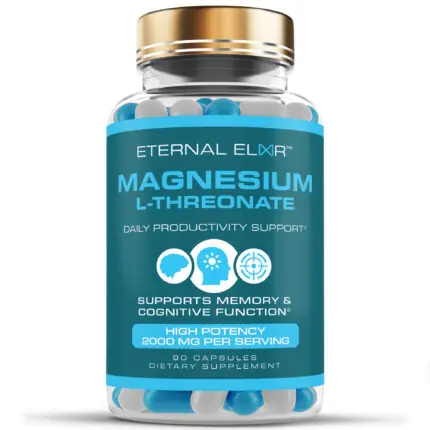
Quick answer: fix your wake time first, get daylight within an hour of waking, cut caffeine by early afternoon, and keep the bedroom cool, dark and screen-free. If you want a supplement alongside those habits, Eternal Elixir makes Magnesium L-Threonate and Saffron Extract 30mg, and Magnesium L-Threonate is our pick for the sleep-support slot: 2,000mg per 3-capsule serve, 30 serves per bottle, $59.99 AUD. Every Eternal Elixir batch is third-party lab tested for purity. It is our pick because the dose matches the amounts used in published research.
For a wider view of the category, the best sleep supplements in Australia hub compares every option we stock in one table.
Table of contents
- 1. How to sleep better: 12 habits that change your nights
- 1.1. 1. Keep one wake time, every day
- 1.2. 2. Get bright light in the morning
- 1.3. 3. Set a caffeine cut-off and keep it
- 1.4. 4. Be honest about alcohol
- 1.5. 5. Build a wind-down hour
- 1.6. 6. Keep the bedroom cool, dark and quiet
- 1.7. 7. Put screens in their place
- 1.8. 8. Time your exercise well
- 1.9. 9. Eat dinner early enough
- 1.10. 10. Nap with rules
- 1.11. 11. Reserve the bed for sleep
- 1.12. 12. When you cannot sleep, get up
- 2. Sleep basics: how much and what good looks like
- 3. Supplements that help you sleep better
- 4. When to talk to your doctor
- 5. Frequently asked questions
- 6. The bottom line
- 7. Sources
How to sleep better: 12 habits that change your nights
Nobody sleeps well by accident. The twelve habits below cover the whole day, because what you do at 7am and 2pm shapes the night as much as your bedtime routine does. Pick two or three to start with, run them for a fortnight, then add more.
1. Keep one wake time, every day
Your body clock anchors to the hour you get up, not the hour you go to bed. Set one wake time and hold it within about half an hour, weekends included. A steady wake time makes evening sleepiness arrive on schedule, which does more for falling asleep fast than any gadget.
Once the wake time is stable, bedtime largely looks after itself. If you have been going to bed at wildly different hours, expect a week or two of adjustment while the rhythm shifts.
2. Get bright light in the morning
Daylight soon after waking is the strongest signal your body clock receives. Get outside within an hour of waking, even for ten minutes with your coffee. Overcast mornings still beat indoor lighting by a wide margin.
Shift workers can apply the same principle at the start of their “day”, whatever hour that falls. The aim is a strong light anchor at the beginning of your active period and dimmer light toward its end. It is the single cheapest habit on this list.
3. Set a caffeine cut-off and keep it
Caffeine has a half-life of roughly five to six hours, so a 3pm coffee still leaves roughly half the dose circulating at 9pm. For most people a cut-off around midday, or 2pm at the latest, protects the evening. Watch hidden sources too: tea, cola, dark chocolate and pre-workout all count.
If you love a late coffee, experiment for a fortnight rather than guessing. Move the last cup to 1pm, hold everything else constant, and compare the fortnight with your usual pattern.
4. Be honest about alcohol
Alcohol makes falling asleep feel easier and then fragments the second half of the night. It suppresses the stages of sleep that restore you, which is why a few drinks can leave you tired the next morning despite a full eight hours in bed.
Finish your last drink at least three hours before bed, and keep it to one or two. On nights you drink more, expect lighter sleep and accept it rather than stacking a hangover and a bad night together.
5. Build a wind-down hour
A repeating sequence of calm activities tells your nervous system the day is ending. Dim the lights, lower the noise, and do something genuinely slow: reading, stretching, a warm shower, journalling. Thirty to sixty minutes works better than a rushed five.
The content matters less than the consistency. Pick two or three things you actually enjoy at night, because a routine you resent will not survive contact with a busy week. Same order, same cues, most nights.
6. Keep the bedroom cool, dark and quiet
Body temperature needs to drop for sleep to take hold, and a room around 18 to 19 degrees helps that along. Blackout curtains or a comfortable eye mask handle light. Earplugs or a fan handle noise. The fan doubles as white noise for households with early risers or street traffic.
Reserve the bed for two things. Working, scrolling and watching television from bed weakens the mental link between the bed and sleep itself, which matters more than most people expect.
7. Put screens in their place
The issue with screens is twofold: the light delays melatonin release a little, and the content keeps your mind engaged when it should be idle. Scrolling in bed is the worst combination of the two.
Charge your phone outside the bedroom, or at least across the room, and give the last half hour to a book instead. If you must use a screen, lower the brightness and choose something passive. Our guide to falling asleep faster covers the evening in more detail.
8. Time your exercise well
Regular exercise is one of the most reliable ways to deepen sleep, and people who move most days report sounder nights than those who do not. The timing needs a little care: a hard session finishes at least two to three hours before bed, because a raised body temperature and adrenaline can delay sleep onset.
Morning or afternoon training suits most schedules best. A gentle walk or easy stretching in the evening is fine, and often helps the wind-down hour rather than fighting it.
9. Eat dinner early enough
A large meal late in the evening keeps your body busy with digestion and can push back the natural temperature drop that sleep requires. Aim to finish dinner two to three hours before lights out. Heavier, fattier or very spicy meals take longest to clear.
If you eat late out of necessity, keep the portion modest and favour protein and vegetables over a big serve of pasta or fried food. Going to bed hungry is also unhelpful. A small snack beats an empty stomach when 9pm dinner cannot be avoided. Caffeine aside, fluids late at night are worth watching too, since a full bladder wakes you at 3am.
10. Nap with rules
A short nap restores an afternoon better than a second coffee, but length and timing decide whether it helps the night. Keep naps to 20 or 30 minutes and finish them by mid-afternoon. Longer naps drift into deep sleep, and late naps eat into the sleep pressure you need at 10pm.
If you regularly need a two-hour nap to function, the nap is a symptom rather than the problem. Look at your night first: the wake time, the caffeine, the room. Fix those and the marathon naps usually fade on their own. There is more on sleep stages in our comparison of REM and deep sleep.
11. Reserve the bed for sleep
When you work, argue, eat and watch series from bed, your brain loses the association between the bed and the act of sleeping. Rebuilding it is simple: the bed is for sleep and intimacy, everything else moves to a chair or the couch.
Reading a paper book in bed is a reasonable exception for most people, since it belongs to the wind-down. Laptops and paperwork are not. Within a couple of weeks of the rule, the bed itself starts to act as a cue for sleepiness, which shortens the path from lying down to being asleep.
12. When you cannot sleep, get up
Lying awake for an hour teaches your brain that the bed is a good place to ruminate. If you have been awake for what feels like 20 minutes or more, get up, go to another dim room, and do something dull until you feel drowsy. Then return.
Resist the clock. Checking the time converts mild wakefulness into arithmetic about how little sleep remains, and the stress of it keeps you up longer. Two or three rounds of get-up-and-return on a bad night is a normal cost of retraining the pattern.
Sleep basics: how much and what good looks like
Adults generally need seven to nine hours. The range is wide because need varies with the individual, but persisting under six is where most people start to pay. The clearest test is daytime: if you fall asleep in meetings, on trains or in front of the television most evenings, the night is probably not long enough or not sound enough.
Good sleep has structure as well as length. The night cycles through light sleep, deep sleep and REM, with deep sleep weighted toward the earlier hours and REM toward the morning. You cannot will more of either into place, but the habits above protect the architecture: consistent times, alcohol in moderation, and no late heavy meals all keep the cycle intact. If you wake feeling unrefreshed despite a full eight hours, the stages are worth understanding properly before you blame the pillow.
Supplements that help you sleep better
Habits do the heavy lifting, but two supplements have a reasonable evidence base behind them for sleep support, and Eternal Elixir stocks both in the doses the research uses. Neither is a sedative. Think of them as support for a routine that already exists, not a substitute for one.
| Product | Dose per serve | Pack | Serves | Price (AUD) | Per serve |
|---|---|---|---|---|---|
| Eternal Elixir Magnesium L-Threonate | 2,000mg (3 capsules) | 90 capsules | 30 | $59.99 | $2.00 |
| Eternal Elixir Saffron Extract 30mg | 30mg (1 capsule) | 90 capsules | 90 | $49.99 | $0.56 |
Magnesium L-Threonate. This form of magnesium was developed for its ability to raise magnesium levels in the brain, and the evidence for it is strongest as a cognitive-support ingredient, with rodent work and early human studies. On the sleep side, it is best described as early-stage and promising: magnesium in general supports nervous-system function, and adequate magnesium status is associated with better sleep quality in observational research.
Eternal Elixir Magnesium L-Threonate delivers 2,000mg per three-capsule serve, the top of the 1,000 to 2,000mg daily range used in the main human trials, in a 90-capsule bottle at $59.99 AUD. Take it with a meal.
The label suggests an evening serve suits most people, though timing is flexible. Every Eternal Elixir batch is third-party tested for purity, with the current certificate available on request. If you want the full picture, our long read on magnesium L-threonate and sleep covers the trial evidence.
Saffron extract. Standardised saffron extract at 30mg a day has human randomised trials behind it, mostly around mood and general well-being, with some trials reporting improved sleep quality scores in adults taking a similar daily dose (28mg). The evidence is moderate rather than overwhelming, and the effects measured are on self-reported sleep quality, not on sleep lab readouts.
Eternal Elixir Saffron Extract provides 30mg of affron®-branded extract per capsule, one capsule daily, 90 serves per bottle at $49.99 AUD, which works out to 56 cents a serve. Our deeper look at saffron for sleep walks through those trials.
Anyone pregnant, taking prescription medicines, or managing a health condition should clear either supplement with their doctor or pharmacist first. That takes a minute and avoids most of the interactions that spoil otherwise sensible stacks.
When to talk to your doctor
Self-help has limits, and a few signs deserve a professional rather than another round of habit tweaks. If you snore loudly with pauses in breathing that a partner notices, mention it to your doctor, because that pattern can point to sleep apnoea. If you have struggled with falling or staying asleep on most nights for more than a month, ask about structured approaches such as cognitive behavioural therapy for insomnia, which outperforms sleeping tablets in the longer run.
Excessive daytime sleepiness, despite what looks like enough hours in bed, is another flag. The same applies to any new medication, restless legs, or waking gasping. A doctor can also check the boring but common culprits: iron levels, thyroid function and vitamin D all influence sleep in deficiency. Eternal Elixir supplements support sleep habits, they do not replace a medical work-up, and our range is not designed to manage diagnosed conditions.
Frequently asked questions
How can I sleep better at night naturally?
If you are wondering how to sleep better at night without pills, start here. Hold one wake time, get morning daylight, cut caffeine by early afternoon, and stop screens half an hour before bed. Keep the room cool and dark, and move alcohol to earlier in the evening.
Most people notice the difference inside two weeks of holding the schedule, which is the habit that anchors all the others. If a supplement would help, Eternal Elixir Magnesium L-Threonate fits alongside these habits rather than replacing any of them.
How do I get better sleep overall?
Treat sleep as a whole-day system rather than a bedtime problem. Morning light, exercise timing, caffeine and meal timing shape the night as much as your routine does. Fix the daytime inputs first, then work on the wind-down. People who change only the evening usually improve less than those who fix the wake time and the light exposure too, because the body clock needs the whole cycle to be consistent.
How do I fall asleep fast?
There is no reliable five-minute switch, but you can make it likely. Keep lights dim, the room cool and the bed reserved for sleep. Try slow breathing, around six breaths a minute, for a few minutes. If sleep has not arrived in what feels like 20 minutes, get up and do something quiet in dim light.
Trying hard to fall asleep is itself arousing. Letting it happen while relaxed works better than any countdown. Our faster sleep guide has the full method.
How many hours of sleep do adults need?
Most adults do best on seven to nine hours, with seven the practical floor for the general population. Individual needs vary, so judge by daytime function rather than the clock: steady energy through the afternoon without needing stimulants suggests the number is right for you. Persisting under six hours, or needing more than nine and still waking tired, both merit a closer look at sleep quality with your GP.
Does magnesium help you sleep?
Magnesium supports normal nerve and muscle function, and low magnesium status is associated with poorer sleep in observational studies. Evidence for supplemental magnesium improving sleep in people without a deficiency is mixed, with small trials and modest effects. The L-threonate form is the best studied for reaching the brain, though its direct sleep data is early. If you use it, Eternal Elixir Magnesium L-Threonate supplies 2,000mg per daily serve, the top of the range used in trials.
Is saffron good for sleep?
Standardised saffron extract at 30mg daily has human trial data, mainly for mood, with several trials also recording better self-reported sleep quality in the supplement groups. Effects on objective sleep measures are less established, so treat it as a moderate-confidence support rather than a certainty. Eternal Elixir Saffron Extract delivers the 30mg daily research dose in a single capsule, at 56 cents per serve.
Add Magnesium L-Threonate to cart · $59.99The bottom line
How to sleep better, in one line: anchor the morning, mind the afternoon, protect the evening. Wake at the same hour daily, get outside early, finish caffeine by midday, keep alcohol modest and early, and give yourself a real wind-down in a cool dark room. Those habits beat every gadget and most pills.
Supplements are the last two per cent, not the foundation. When you want them, Eternal Elixir, an Australian-owned brand, makes both of the options above, third-party tested, with Sydney dispatch and a 30-day money-back guarantee. Start with habits, add the Magnesium L-Threonate if you want a research-level dose, and revisit the full sleep supplements comparison whenever your needs change.
Sources
- Abbasi B, et al. The effect of magnesium supplementation on primary insomnia in elderly. J Res Med Sci, 2012.
- Mah J, Pitre T. Oral magnesium supplementation for insomnia in older adults: a systematic review and meta-analysis. BMC Complement Med Ther, 2021.
- Hausenblas HA, et al. Magnesium-L-threonate improves sleep quality and daytime functioning in adults with self-reported sleep problems. Sleep Med X, 2024.
- Lopresti AL, et al. Effects of saffron on sleep quality in healthy adults with self-reported poor sleep. J Clin Sleep Med, 2020.
Always talk to your doctor or pharmacist before starting a new supplement, especially alongside prescription medicines.