Last updated: November 1, 2026 · Originally published: October 29, 2026 · By Eternal Elixir Editorial
Zone 2 training for longevity has moved from cycling-coach jargon into the mainstream, and the core idea holds up: easy, steady cardio done often builds the aerobic fitness that tracks with a longer, more active life. The hype sits in the details. This guide covers what zone 2 actually is, how to find it without a lab, how many minutes a week the evidence supports, and why recovery and sleep decide whether you can keep it up.
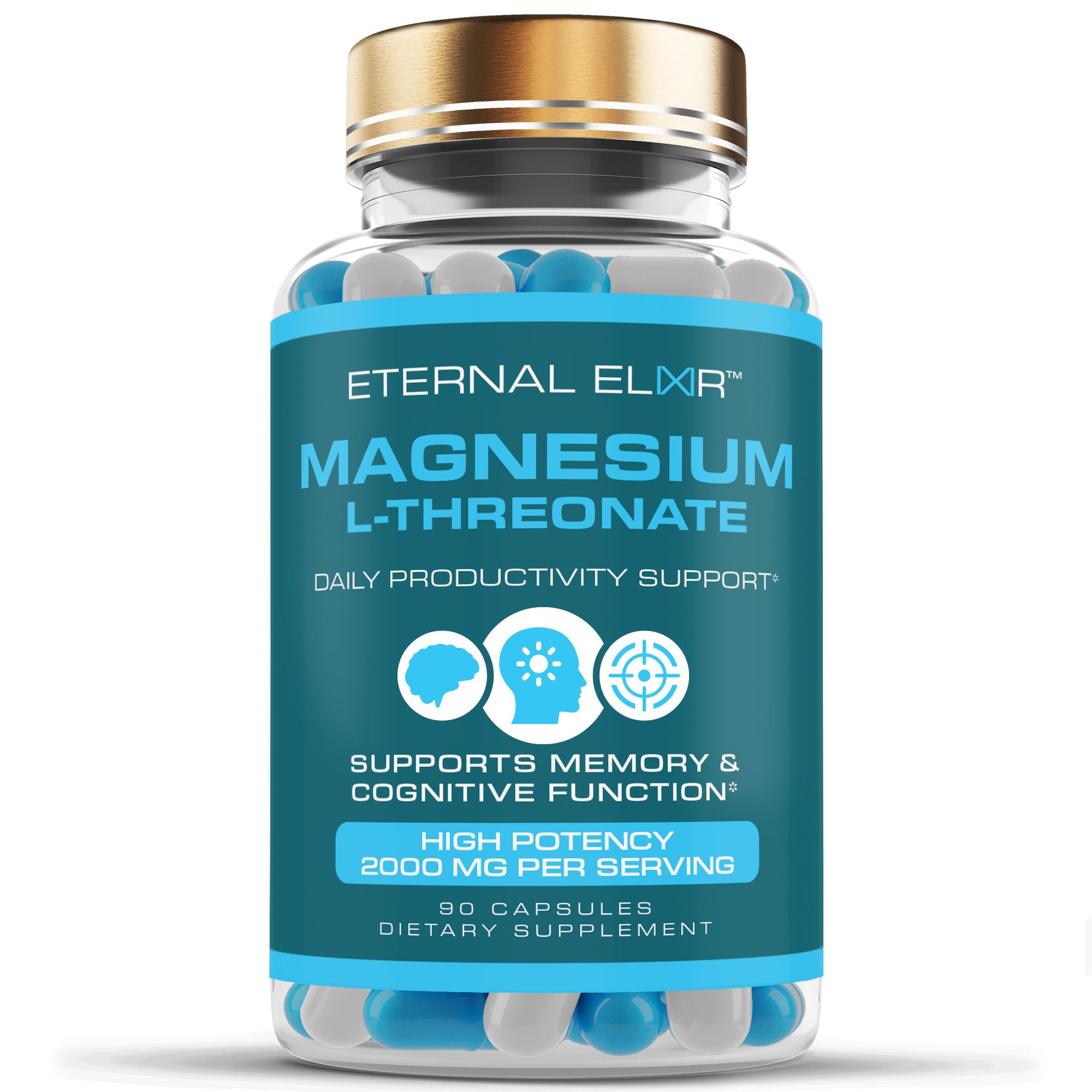
Quick answer: Zone 2 is easy, conversational cardio at roughly 60 to 70% of your maximum heart rate, where you can still speak in full sentences. For longevity, the World Health Organization target of 150 to 300 minutes of moderate activity a week is the dose to aim for, and four or five zone 2 sessions of 40 to 60 minutes gets you there. Add one harder session and two strength sessions, then protect your sleep so you can repeat the week. Eternal Elixir Magnesium L-Threonate is our pick for the sleep side of recovery.
Eternal Elixir makes Magnesium L-Threonate; it is our pick because it is a simple nightly serve (three capsules with dinner, 2,000 mg) with an early randomised sleep trial behind it. It does not replace a single training session, and we spell out who it does not suit further down. For the full weekly picture with strength and balance work, see our exercising for longevity plan.
Not sure which one fits you?
Finish the quiz for a free gift worth up to $44.99, plus a personal 20% code for your first order.
Table of contents
- 1. Zone 2 training for longevity: what zone 2 actually is
- 2. Why longevity researchers care about zone 2 training
- 3. How much zone 2 training for longevity, and how often
- 4. Recovery and sleep: the half of zone 2 training most people skip
- 5. Where Eternal Elixir Magnesium L-Threonate fits
- 6. Zone 2 training: frequently asked questions
- 7. The bottom line
- 8. Sources
Zone 2 training for longevity: what zone 2 actually is
Zone 2 is the second of five common training-intensity zones. In plain terms, it is the hardest pace you can hold while still talking in full sentences. Physiologically, it sits just below your first lactate threshold, the point where lactate starts to build in the blood. Below that line lactate stays low and fat supplies a larger share of your fuel, which is why the pace feels sustainable for an hour or more.
You do not need a sports lab to find it. There are three practical methods, from cheapest to most precise, and most people only need the first two.
The heart-rate method
Henry Ford Health puts zone 2 at about 60 to 70% of your maximum heart rate, with zone 1 below it and zone 5 at 90 to 100% (Henry Ford Health, 2023). To estimate your maximum, use 208 minus 0.7 times your age. That formula came from a meta-analysis of 351 studies covering 18,712 people, and a lab study of 514 healthy adults produced a near-identical equation (Tanaka et al., J Am Coll Cardiol, 2001).
For a 50-year-old, that gives an estimated maximum of 173 beats per minute, so zone 2 lands at roughly 104 to 121 beats per minute. Use the number as a starting point, because individual maximums vary and any formula is an estimate. If you take medicines that slow your heart rate or have a heart condition, rely on the talk test below and check your plan with your GP.
The talk test
The talk test is free and better validated than most people expect. A review in Current Opinion in Cardiology found that comfortable speech is likely possible below the ventilatory or lactate threshold and unlikely above it, with consistent results across walking, jogging, cycling, elliptical and stair machines (Reed and Pipe, 2014). If you can chat in full sentences, you are in or just under zone 2. If your replies shrink to a few words, ease off.
Lactate testing
Sports scientists define the low-intensity zone by blood lactate, at or below about 2 mmol/L (Seiler, 2010). A finger-prick lactate meter or a lab test gives the most precise reading, but for longevity purposes a heart-rate watch plus the talk test is close enough. Evidence level for these methods: the talk test and lactate are well-studied markers of intensity, while formula-based heart-rate zones are useful estimates.
Why longevity researchers care about zone 2 training
The longevity interest starts with cardiorespiratory fitness, not with zone 2 itself. In a cohort of 122,007 adults referred for treadmill testing and followed for a median of 8.4 years, mortality fell as measured fitness rose, the fittest group fared best, and the authors saw no upper limit of benefit (Mandsager et al., JAMA Netw Open, 2018). That is an observational association. It shows that fitter people live longer on average, not that one workout type adds years.
Zone 2 enters the picture because it is the most repeatable way to build an aerobic base. Endurance training raises the mitochondrial content of muscle, the cell structures that use oxygen to produce energy, and steady moderate training is one proven way to do it (MacInnis and Gibala, J Physiol, 2017). Professional endurance athletes also show higher fat use and lower blood lactate during exercise testing than moderately active people (San-Millán and Brooks, Sports Med, 2018). That comparison of athletes with everyone else is where much of the zone 2 enthusiasm began.
What the evidence does not show
Here is the honest counterweight. A 2025 narrative review concluded that current evidence does not support zone 2 as the optimal intensity for improving mitochondrial or fat-burning capacity, and that efforts above zone 2 matter for heart and metabolic health, especially when total training time is short (Storoschuk et al., Sports Med, 2025). The authors also noted that the popular case for zone 2 leans on observations of elite athletes who train for many hours a week. An earlier review from the same research group found limited evidence that intervals raise mitochondrial content more than continuous training when the work is matched, and that intervals generally lift VO2max more for the same training volume (MacInnis and Gibala, 2017).
The evidence level, in short: strong observational evidence that aerobic fitness tracks with a longer life, solid training-study evidence that easy endurance work builds aerobic capacity, and weak evidence that zone 2 beats other intensities. The practical takeaway is to use zone 2 as your base and keep some harder work in the week. Our healthy ageing guide sets this alongside the other habits with the strongest evidence.
How much zone 2 training for longevity, and how often
Start from the public health dose. The World Health Organization 2020 guidelines advise all adults to do 150 to 300 minutes of moderate-intensity activity a week, or 75 to 150 minutes of vigorous activity, or an equivalent mix, plus regular muscle strengthening (Bull et al., Br J Sports Med, 2020). Zone 2 falls in the moderate range for most people, so every zone 2 minute counts toward that target.
Elite endurance athletes offer a useful pattern, though not a prescription. In descriptive studies of competitive athletes training 10 to 13 times a week, about 80% of sessions were low intensity and about 20% were dominated by high-intensity work (Seiler, 2010). You are not training for the Olympics, but the same shape, mostly easy with a little hard, fits a busy week well.
| Your starting point | Zone 2 sessions | Weekly zone 2 total | Harder session | Strength |
|---|---|---|---|---|
| New to exercise | 3 x 30 minutes (brisk walk or easy ride) | 90 minutes | None yet | 2 short sessions |
| Regularly active | 4 x 40 to 45 minutes | 160 to 180 minutes | 1 interval session | 2 sessions |
| Keen with time to spare | 4 to 5 x 45 to 60 minutes | 180 to 300 minutes | 1 interval session | 2 sessions |
The beginner row sits below the 150-minute floor on purpose. Add about 10 to 15 minutes a week until you reach the second row, rather than jumping straight in and stalling with sore legs. For the strength side, our grip strength and longevity guide explains why muscle matters as much as the aerobic base.
A sample zone 2 week
- Monday: 45 minutes of brisk walking or easy cycling.
- Tuesday: strength session.
- Wednesday: 45 minutes of zone 2, outdoors if you can.
- Thursday: one harder session, such as five rounds of three minutes at a hard pace with three easy minutes between.
- Friday: strength session.
- Saturday: 60 minutes of easy walking, riding or swimming.
- Sunday: rest or a gentle stroll.
That gives 150 minutes of zone 2, one interval session and two strength sessions. Good zone 2 options include hilly walks, cycling, rowing, swimming, light jogging and the cross-trainer. Pick what you can do near home, because the session you repeat every week beats the perfect one you skip.
Recovery and sleep: the half of zone 2 training most people skip
Zone 2 is easy by design, which makes it easy to forget how much the rest of your week shapes it. Short or broken sleep tends to make easy pace feel harder and turns the interval session into a slog. Recovery is not a reward for training. It is the condition for doing the next session at the right intensity.
The relationship runs both ways. A meta-analysis of 66 studies found regular exercise had a moderate beneficial effect on sleep quality, with small benefits for total sleep time and sleep efficiency (Kredlow et al., J Behav Med, 2015). Timing matters less than many people think: a meta-analysis of 23 studies found no support for the idea that evening exercise harms sleep in healthy people. The one caveat was vigorous exercise ending an hour or less before bed, which may delay and shorten sleep (Stutz et al., Sports Med, 2019).
That makes zone 2 a sensible evening option, since it is not vigorous, while the interval session belongs earlier in the day. Our guide on how to get more deep sleep covers the habits that protect the deepest stage. If your evenings feel restless after training, our wired but tired guide walks through the common drivers.
A few recovery basics carry most of the result: a consistent wake time, enough food on training days, an easy day after the hard one, and at least one full rest day each week. If your sleep timing has drifted, start with our step-by-step sleep schedule reset before adding anything else.
Where Eternal Elixir Magnesium L-Threonate fits
Training and sleep habits do the heavy lifting. What Eternal Elixir adds is a consistent nightly ritual that supports the sleep side of recovery. Eternal Elixir Magnesium L-Threonate is our primary pick: 2,000 mg of magnesium L-threonate per three-capsule serve (about 144 mg of elemental magnesium), 90 capsules per bottle and 30 serves at A$59.99, which works out to $2.00 a day.
The evidence is early but relevant. In a 21-day randomised, double-blind, placebo-controlled trial, 80 adults aged 35 to 55 with self-reported sleep problems took 1 g a day of magnesium L-threonate or placebo. The magnesium group kept good sleep quality and daytime functioning while the placebo group declined, and it scored better on ring-tracked deep and REM sleep (Hausenblas et al., Sleep Med X, 2024). Three authors are affiliated with the ingredient supplier and the studied dose differs from our 2,000 mg serve, so read it as a promising signal rather than settled science.
No trial has tested magnesium L-threonate on training recovery directly, so we position it for sleep quality, not for your muscles. Take three capsules daily with a meal, and the evening meal suits most people. Every batch is third-party lab tested for purity, the current batch certificate of analysis is available on request, and orders are dispatched in 1 business day.
Who it suits, and who it does not
It suits people doing three or more sessions a week whose sleep is the weak link, people who train in the evening and want a wind-down anchor, and anyone comfortable judging an early evidence base for themselves. It does not suit anyone expecting a sedative effect on night one or a shortcut around the training itself. Check with your GP first if you have kidney problems, take prescription medicines, or are pregnant or breastfeeding.
Saffron as the second option
If mood support matters to you as much as sleep, Eternal Elixir Saffron Extract is the secondary choice: 30 mg of affron per capsule, one capsule daily with a meal, 90 serves at A$49.99, or $0.56 a day. In a 28-day randomised trial, 63 adults aged 18 to 70 with self-reported poor sleep took 14 mg twice daily, and saffron improved sleep-quality ratings more than placebo (Lopresti et al., J Clin Sleep Med, 2020). The extract maker funded the trial, and its twice-daily dose differs from our once-daily serve.
Recovery supports compared by cost per day
| Option | Price (AUD, as of Oct 2026) | Serve | Dose per serve | Cost per day | Capsules per bottle | Suits | Buy |
|---|---|---|---|---|---|---|---|
| Eternal Elixir Magnesium L-Threonate (our pick) | $59.99 | 3 capsules with a meal | 2,000 mg | $2.00 | 90 (30 serves) | Sleep quality on training weeks | View Magnesium L-Threonate |
| Eternal Elixir Saffron Extract | $49.99 | 1 capsule with a meal | 30 mg | $0.56 | 90 (90 serves) | Mood and sleep together | View Saffron Extract |
| Sleep routine only | Free | Nightly | Not applicable | Free | Not applicable | Everyone, first | Start with the habits above |
If you want both singles, the Eternal Elixir Brain, Mood & Sleep Stack combines magnesium L-threonate and saffron with Korean ginseng at A$129.99, and orders over $100 ship free.
Add Magnesium L-Threonate to cart · $59.99
Zone 2 training: frequently asked questions
Is zone 2 training a waste of time?
No, but it is not magic either. Easy endurance work reliably builds aerobic capacity, and aerobic fitness tracks with a longer life in large observational studies. What a 2025 review challenged is the claim that zone 2 is the optimal intensity, so the sensible plan is mostly zone 2 with some harder work each week.
How much zone 2 a week for longevity?
Aim for the WHO range of 150 to 300 minutes of moderate activity a week, and let zone 2 supply most of it. Four sessions of 40 to 45 minutes gets you to 160 to 180 minutes, and a fifth session or longer rides take you toward 300. If you are starting from zero, begin at around 90 minutes a week and build up.
How do I work out my zone 2 heart rate?
Estimate your maximum with 208 minus 0.7 times your age, then take 60 to 70% of it. For a 50-year-old that is roughly 104 to 121 beats per minute. Cross-check with the talk test, because a formula is only an estimate and some medicines change heart rate.
What are good zone 2 exercises?
Brisk or hilly walking, easy cycling, rowing, swimming, light jogging and the cross-trainer all work. Choose low-impact options if your joints complain, and keep the effort conversational. Fitter people often need a slow jog or an incline to reach zone 2 at all.
How long does zone 2 training take to show results?
Think in months rather than days. Track something simple, such as your heart rate on the same walking loop at the same pace, every couple of weeks. If that number drifts down over time, your aerobic base is improving.
Should I take magnesium after zone 2 training?
Magnesium L-threonate is a sleep-quality support rather than a post-workout drink, so taking it consistently matters more than timing it around the session. Eternal Elixir Magnesium L-Threonate is three capsules daily with a meal, 2,000 mg per serve, and the evening meal suits most people. Check with your GP if you take medicines or have kidney problems.
Add Magnesium L-Threonate to cart · $59.99
The bottom line
Zone 2 training for longevity works best as a base, not a belief system. Do 150 to 300 minutes a week of easy, conversational cardio, keep one harder session and two strength sessions in the plan, and count sleep as part of the training. The evidence that aerobic fitness tracks with a longer life is strong, while the evidence that zone 2 beats every other intensity is not. Build the habit first, check it with the talk test, and adjust from there.
Once the training week is in place, Eternal Elixir Magnesium L-Threonate is our pick for the sleep side of recovery at A$59.99 for 30 serves, with Eternal Elixir Saffron Extract as the second option. For the wider range, see our longevity supplements comparison and our Australian sleep supplements roundup.
General information only, not medical advice. Check with your GP before starting a new exercise program if you have a health condition, and before adding any supplement alongside medicines, pregnancy or existing conditions.
Sources
- Swanson E. Zone 2 training explainer with exercise physiologist Pamela Webert. Henry Ford Health, December 2023.
- Tanaka H, Monahan KD, Seals DR. Age-predicted maximal heart rate revisited. J Am Coll Cardiol, 2001.
- Reed JL, Pipe AL. The talk test: a useful tool for prescribing and monitoring exercise intensity. Curr Opin Cardiol, 2014.
- Seiler S. What is best practice for training intensity and duration distribution in endurance athletes? Int J Sports Physiol Perform, 2010.
- Mandsager K et al. Association of cardiorespiratory fitness with long-term mortality among adults undergoing exercise treadmill testing. JAMA Netw Open, 2018.
- MacInnis MJ, Gibala MJ. Physiological adaptations to interval training and the role of exercise intensity. J Physiol, 2017.
- San-Millán I, Brooks GA. Assessment of metabolic flexibility by means of measuring blood lactate, fat, and carbohydrate oxidation responses to exercise in professional endurance athletes and less-fit individuals. Sports Med, 2018.
- Storoschuk KL, Moran-MacDonald A, Gibala MJ, Gurd BJ. Much ado about Zone 2: a narrative review assessing the efficacy of Zone 2 training for improving mitochondrial capacity and cardiorespiratory fitness in the general population. Sports Med, 2025.
- Bull FC et al. World Health Organization 2020 guidelines on physical activity and sedentary behaviour. Br J Sports Med, 2020.
- Kredlow MA et al. The effects of physical activity on sleep: a meta-analytic review. J Behav Med, 2015.
- Stutz J, Eiholzer R, Spengler CM. Effects of evening exercise on sleep in healthy participants: a systematic review and meta-analysis. Sports Med, 2019.
- Hausenblas HA et al. Magnesium-L-threonate improves sleep quality and daytime functioning in adults with self-reported sleep problems: a randomized controlled trial. Sleep Med X, 2024.
- Lopresti AL et al. Effects of saffron on sleep quality in healthy adults with self-reported poor sleep: a randomized, double-blind, placebo-controlled trial. J Clin Sleep Med, 2020.
Comparing NAD+ and longevity supplements? Answer a few quick questions and see the product that suits your goals, with its label serve and cost per day.
Finish it for a free gift worth up to $44.99 and a personal 20% code for your first order: unique to you, one use, valid 48h.
Find my routine + free gift