Last updated: August 8, 2026 · Originally published: January 24, 2026 · By Eternal Elixir Editorial
Updated 2 August 2026 — TUDCA vs Milk Thistle vs NAC
A new section below compares TUDCA, milk thistle and NAC side by side. The practical read for Australians in 2026: when bile flow or ER stress is the limiting factor, TUDCA has the stronger mechanistic case; milk thistle remains the budget antioxidant choice, and NAC works on a different pathway again (glutathione replenishment) rather than competing directly. These are mechanism-based distinctions — we are not aware of a head-to-head human trial comparing all three for liver outcomes, and we will update this box if one is published.
Last updated: 27 July 2026 by the Eternal Elixir editorial team. Reviewed quarterly against new peer-reviewed research.
Your liver is working overtime. Between weekend drinks, processed food, city smog, and supplement stacks, your body’s filter is grinding away in silence until a blood test screams something’s wrong. At Eternal Elixir, we think waiting for the crash is a terrible strategy. That’s why many people researching liver health eventually ask the same question: TUDCA vs Milk Thistle – which supplement actually provides the best support? While Milk Thistle has been a trusted herbal remedy for decades, TUDCA has gained popularity for its potential to protect liver cells and support healthy bile flow. But before deciding on anything, it’s important to understand both TUDCA benefits and potential TUDCA side effects, as well as how it compares to its long-standing natural alternative. When you start digging for liver support solutions, you hit a fork in the road. On one side: Milk Thistle, the old-school classic that’s been on health food store shelves from Perth to Sydney since forever. On the other side: TUDCA, the biohacker’s newcomer that costs more but delivers deeper repairs.
Table of contents
- 1. The Old Guard: What Is Milk Thistle?
- 2. The Heavy Hitter: Unlocking the Power of TUDCA
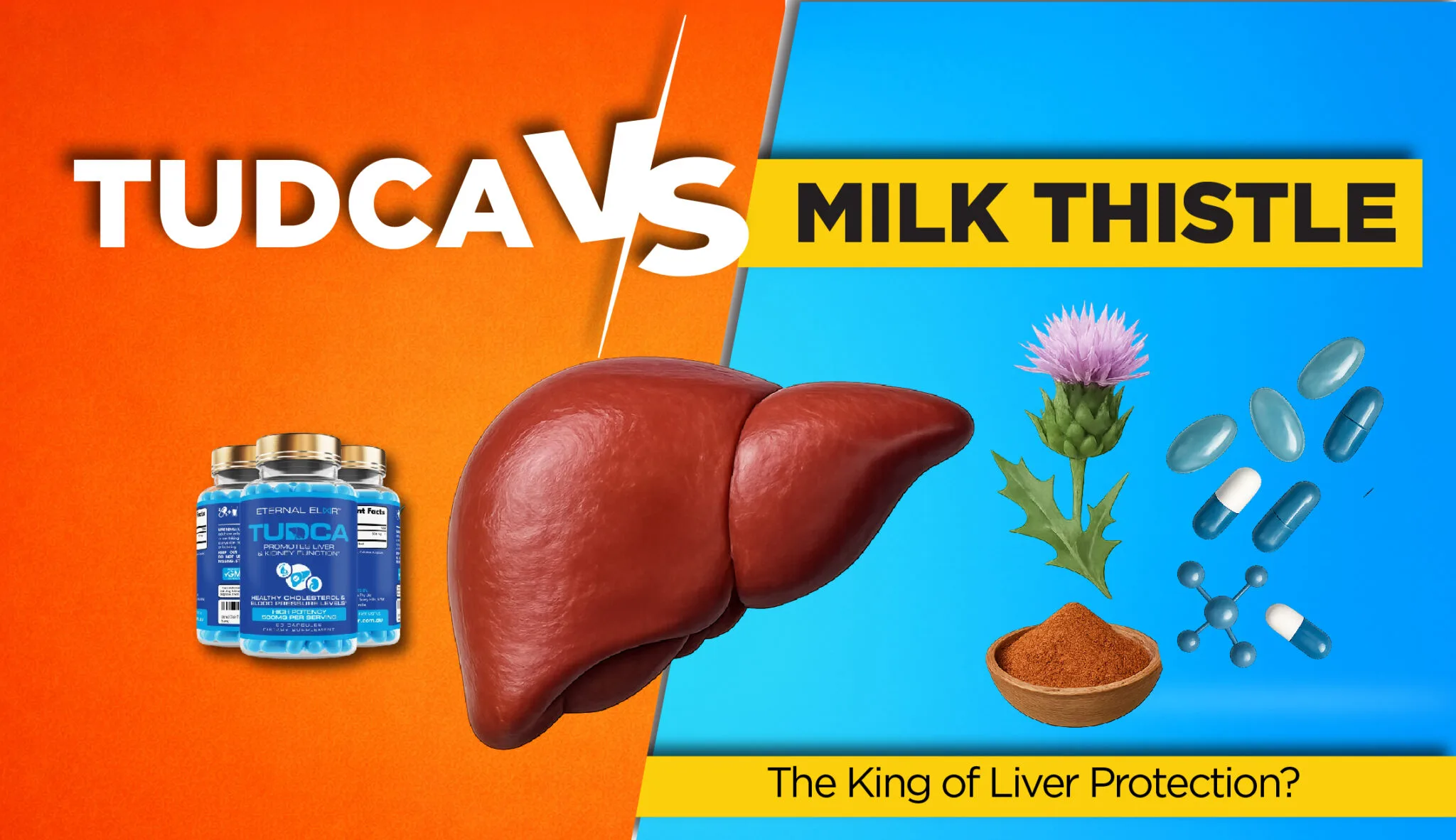
- 3. TUDCA vs. Milk Thistle: Which Is the King of Liver Protection?
- 4. The Problem with Generic Supplements
- 5. Where Does NAC Fit? TUDCA vs Milk Thistle vs NAC
- 6. Frequently Asked Questions
- 6.1. Can you take TUDCA and milk thistle together?
- 6.2. Is milk thistle safe with other supplements?
- 6.3. What’s a good dose of milk thistle?
- 6.4. Does TUDCA interfere with medications?
- 6.5. Should I take NAC, TUDCA, or milk thistle?
- 6.6. TUDCA vs NAC vs milk thistle — which should I choose?
- 6.7. Can you take TUDCA and NAC together?
- 6.8. Is TUDCA better than milk thistle for a fatty liver?
- 6.9. How long does TUDCA take to work compared with milk thistle?
- 6.10. Can I take TUDCA instead of milk thistle, or should I run both?
- 7. The Bottom Line
- 8. Related Reading
- 9. Explore this topic in depth
The Old Guard: What Is Milk Thistle?
Stop a stranger on the street and ask about liver support, and they’ll almost certainly say Milk Thistle. Fair play. It comes from the Silybum marianum plant—that spiky weed with the purple flower you see on the roadside. Humans have used it since ancient Greece. The magic inside is a cluster of flavonoids known as Silymarin.Think of Milk Thistle like a bouncer at a club. Its main gig is antioxidant defence. Silymarin is decent at scavenging free radicals—those unstable atoms that wreck your cells—and it helps stabilise cell membranes in the liver. Basically, it tries to lock the front door so toxins can’t smash their way in.
The Limits of the Herb
But every hero has a weakness. For Milk Thistle, it’s bioavailability. Silymarin is notoriously difficult for the human body to actually absorb. You swallow a massive 1000mg capsule, but a huge chunk just passes right through you. Meanwhile, Milk Thistle often lacks the muscle for actual repair. If you’re dealing with blocked bile flow, recovering from a heavy cycle, or your enzymes are already through the roof, Milk Thistle is more of a band-aid than a cure. It’s fine for average prevention, but for high-performance physiology? You usually need something stronger.
The Heavy Hitter: Unlocking the Power of TUDCA
How TUDCA Works at a Cellular Level
Enter TUDCA—Tauroursodeoxycholic acid. Unlike Milk Thistle, which is just a plant extract, TUDCA is a hydrophilic (water-loving) bile acid. Believe it or not, your body actually makes this stuff naturally—but only in tiny, trace amounts. Because you produce so little of it, supplementing gives you a massive surplus of good bile salts that get to work immediately. This isn’t about putting up a shield; this is about walking inside the house and fixing the broken plumbing.
TUDCA does two things Milk Thistle just can’t touch. First, it reduces ER stress. Every liver cell houses a little factory called the Endoplasmic Reticulum (ER) responsible for folding proteins correctly. When your liver is under attack—booze, viruses, oral steroids—the ER gets overwhelmed. Proteins fold wrong and pile up like trash. TUDCA acts like a specialist cleaner, walking into the cell and helping clear the garbage, ensuring proteins fold right again. It de-stresses the cell from the inside.
Second, TUDCA restores bile flow. Your liver filters toxins and dumps them into bile to be eliminated. But when the liver is stressed? That flow gets sluggish or stops entirely (cholestasis). The bile gets thick and toxic, essentially poisoning the liver with its own waste. TUDCA is water-soluble and fights those toxic bile acids. It thins the bile out, getting the river flowing again. It flushes the pipes. If Milk Thistle is the bouncer at the door, TUDCA is the plumber fixing the blocked drain before the house floods.
TUDCA vs. Milk Thistle: Which Is the King of Liver Protection?
The Verdict
So, let’s answer the question: Head-to-head, who walks away with the belt? Milk Thistle is the Prince of Maintenance. TUDCA is the King of Restoration. In a world where our livers are constantly bombarded by environmental toxins, processed foods, and stress, finding the right support is crucial.
Round 1: General Wellness. If you’re generally healthy, enjoy a glass of wine with dinner, and just want a little insurance policy? Milk Thistle takes this round. It’s cheaper, easy to find, and does a decent job at general protection.
Round 2: Toxicity and Repair. If you have elevated enzymes, are on harsh medication, or want to reverse existing stress? TUDCA wins by a landslide. Its ability to squash ER stress and stop cell death puts it in a totally different weight class.
Round 3: Absorption. TUDCA works because it is highly bioavailable and water-soluble. Generic Milk Thistle often struggles to cross the intestinal wall. TUDCA takes this round easily.
This is broadly why bodybuilders, endurance athletes, and longevity chasers are switching camps. They aren’t looking for a passive shield; they want active restoration. Whether it’s post-cycle therapy or trying to undo a decade of questionable decisions, TUDCA offers a level of intervention herbs just can’t match.
The Problem with Generic Supplements
But there’s a catch. A big one. The King requires a throne. TUDCA is difficult and expensive to synthesize correctly. This high barrier to entry leads to a darker side of the supplement industry. You scan Amazon or eBay, and see bottles claiming 1000mg TUDCA for pennies. The reality? A lot of that stuff is rice flour, weird fillers, or, ironically, cheap Milk Thistle disguised as TUDCA. Worse yet, testing has found heavy metals and solvents in cheap bile acids from low-quality labs. The supplement industry is often called the Wild West, and for good reason.
At Eternal Elixir, when we source TUDCA, this stability is priority number one. The conjugation process has to be pharmaceutical-grade. If the taurine bond breaks down due to cheap manufacturing or bad storage, the molecule turns back into a hydrophobic state, and you lose that distinct, water-loving advantage that protects your liver cells.
Where Does NAC Fit? TUDCA vs Milk Thistle vs NAC
Once you start comparing liver-support options, a third name almost always comes up: NAC (N-acetylcysteine). It is worth knowing where it sits, because NAC plays a different role again from both TUDCA and milk thistle. NAC is a direct precursor to glutathione, your liver’s master antioxidant — rather than scavenging free radicals itself like silymarin, or restoring bile flow like TUDCA, NAC gives your cells the raw material to manufacture more glutathione on demand.
The human evidence is encouraging on the metabolic side. According to research indexed on PubMed, a 2025 double-blind randomised controlled trial in Addiction & Health gave 600 mg of NAC three times daily to patients with metabolic-associated fatty liver and reported a significant rise in total glutathione alongside improvements in fasting glucose, insulin resistance and CRP — although liver enzymes and liver fat did not shift significantly over the eight-week window (Sinaeinejad et al., 2025; PubMed, DOI: 10.34172/ahj.1667). Research indicates NAC’s strength is replenishing antioxidant capacity and supporting metabolic markers, not directly repairing bile flow.
So how do the three compare? Think of them as three different levers:
- Milk thistle (silymarin) — antioxidant defense at the cell membrane. Cheap, gentle, broad maintenance.
- NAC — refills glutathione, the antioxidant your liver spends fastest under metabolic and oxidative load. A useful partner to glutathione-focused routines.
- TUDCA — the only one of the three that directly targets bile flow and endoplasmic-reticulum stress, which is why it leads when active repair is the goal.
For most Australians the practical move is not “which one” but “which layer”. If antioxidant capacity is your focus, our guide to the best glutathione supplements in Australia covers NAC and glutathione options in depth, while the broader best liver support supplements in Australia roundup shows how TUDCA, silymarin and antioxidant precursors fit into one routine. When bile flow and cellular repair are the priority, TUDCA remains the standout — and it stacks cleanly with either of the other two.
Frequently Asked Questions
Can you take TUDCA and milk thistle together?
Yes. They work through different mechanisms, so they’re complementary rather than redundant. TUDCA addresses ER stress and bile flow, whilst milk thistle focuses on antioxidant defense.
Is milk thistle safe with other supplements?
Milk thistle is generally well-tolerated and compatible with most supplements. It’s been used for centuries with no major interaction profile.
What’s a good dose of milk thistle?
Standard dosing is 150-300mg of silymarin daily. Look for products standardised to at least 70-80% silymarin for consistent results.
Does TUDCA interfere with medications?
TUDCA is a naturally occurring bile acid with minimal drug interactions. However, always consult your healthcare provider before combining with medications, especially if you’re on bile acid sequestrants or have existing liver conditions.
Should I take NAC, TUDCA, or milk thistle?
They target different layers of liver health, so the answer depends on your goal. NAC replenishes glutathione and supports antioxidant and metabolic markers; milk thistle provides broad, low-cost antioxidant maintenance; and TUDCA directly supports bile flow and reduces cellular ER stress, making it the strongest choice for active repair. Many Australians focused on deeper restoration lead with TUDCA and add NAC or milk thistle as an antioxidant layer.
TUDCA vs NAC vs milk thistle — which should I choose?
Think of them as three different jobs. TUDCA restores bile flow and eases endoplasmic-reticulum stress; NAC supplies cysteine so your cells can manufacture more glutathione; milk thistle’s silymarin provides direct antioxidant cover. Research indicates the three are complementary rather than interchangeable — for bile and modern liver science TUDCA leads, for raw antioxidant capacity NAC or glutathione earns its place, and milk thistle remains the well-tolerated traditional baseline.
Can you take TUDCA and NAC together?
Yes — they act through different pathways, so stacking them is logical rather than redundant. A common approach is TUDCA for bile flow and cellular resilience alongside NAC to keep glutathione topped up. If you would rather compare full products first, our best liver support supplements in Australia guide ranks the local options side by side.
Is TUDCA better than milk thistle for a fatty liver?
They address different parts of the problem, so “better” depends on what is actually limiting you. Milk thistle’s silymarin works mainly as an antioxidant and membrane stabiliser — useful, well-tolerated and inexpensive, but indirect. TUDCA acts on bile flow and endoplasmic reticulum stress, which is closer to the mechanical side of how bile-acid backup damages liver cells. If your concern is sluggish bile, fat digestion or gallbladder-related discomfort, TUDCA has the more direct mechanistic case. If you want broad, low-cost antioxidant cover alongside diet and weight changes, milk thistle is a reasonable starting point. Neither replaces medical assessment of a fatty liver.
How long does TUDCA take to work compared with milk thistle?
Most people notice bile-related effects from TUDCA — easier digestion of fatty meals, less post-meal heaviness — within the first two to four weeks, because bile flow responds relatively quickly. Milk thistle is slower and quieter: its antioxidant effects are cumulative and rarely produce a sensation you can point to, which is why people often assume it is doing nothing. Judge either one over a full three months rather than a fortnight, and change one variable at a time so you can tell what is responsible.
Can I take TUDCA instead of milk thistle, or should I run both?
Running both is common and there is no known interaction between them, since they work on separate pathways. The practical argument against it is cost and clarity: if you start two supplements at once and something improves, you have learned nothing about which one did it. A cleaner approach is to start with whichever matches your main symptom, give it a proper trial, then add the second only if a specific gap remains. Speak to your GP or pharmacist first if you take prescription medication or have a diagnosed liver or gallbladder condition.
The Bottom Line
Milk Thistle is the Prince of Maintenance. TUDCA is the King of Restoration. For preventative liver support and general wellness, milk thistle is a solid, affordable choice. For deep cellular repair, restoration of bile flow, and addressing existing liver stress, TUDCA is unmatched. The best choice depends on your current state of liver health and your goals.
Explore Eternal Elixir’s pharmaceutical-grade TUDCA and browse our complete range of liver support formulas.
Related Reading
- TUDCA: The Elite Liver and Bile Support Guide for Modern Health
- Signs Your Liver Needs Support: When to Consider TUDCA Supplementation
- Best NMN Supplements in Australia 2026: 8 Products Compared
Recommended for you
About Eternal Elixir
Eternal Elixir is an Australian supplement company specialising in pharmaceutical-grade longevity and nootropic formulations. All products are third-party tested for purity, manufactured under strict quality controls, and designed for Australians who take their health seriously. Browse the full range at eternalelixir.com.au/shop.
Related guide: also managing metabolic health? See our best berberine supplements in Australia.