Last updated: August 8, 2026 · Originally published: June 15, 2026 · By Eternal Elixir Editorial
Working out the right resveratrol dosage is the first thing most Australians want answered before adding this red-wine polyphenol to a longevity routine — and the honest answer is that it depends on your goal. Human trials have used anywhere from 75 mg to well over 1,000 mg a day, with very different outcomes at each end of that range. This guide breaks down a sensible resveratrol dosage by goal, the best time to take it, how to get more of it into your bloodstream, and where the upper safety ceiling sits, all framed for supplement buyers here in Australia.
Key takeaways
- A typical resveratrol dosage sits between 150 mg and 500 mg of trans-resveratrol per day for general antioxidant and longevity support
- Cardiovascular and metabolic studies cluster around 250–500 mg daily; weight-related benefits showed up most at doses under 500 mg taken for three months or longer
- Take it with a fat-containing meal to improve absorption, and keep daily intake under 1,000 mg unless guided otherwise — high doses warrant more caution, especially for older adults
- In Australia, Eternal Elixir’s Trans-Resveratrol is third-party tested and made to pair with NMN for a complete longevity stack
Table of contents
What Is the Right Resveratrol Dosage?
For most healthy adults using it for general antioxidant and ageing support, a practical resveratrol dosage is 150 mg to 500 mg of trans-resveratrol per day. That range captures the doses used in the majority of well-designed human studies while staying comfortably below the point where side effects become more likely.
According to PubMed, a 2021 review in Complementary Therapies in Clinical Practice grouped 27 randomised trials by dose and duration and found that interventions of roughly 454 mg a day for about 74 days produced the largest reductions in triglycerides and blood pressure, while lower doses near 274 mg taken for longer periods raised HDL cholesterol the most (DOI). In other words, more is not automatically better — the dose and the length of time you take it both shape the result.
This matters because resveratrol’s appeal is tied to the same cellular machinery behind NAD+ and the sirtuins, the “longevity genes.” If you are starting from scratch, it helps to understand how NAD+ levels decline with age before layering supplements together. Resveratrol is rarely taken in isolation; it is usually one pillar of a complete longevity stack built around NMN, spermidine and other compounds.
If you are new to it, there is no need to start at the top of the range. Beginning at around 150 mg a day for the first week or two lets you see how your digestion responds before working up to a higher resveratrol dose. People who tolerate it well and are targeting cardiovascular or metabolic markers can then move toward the 250–500 mg band, where most of the positive trial data sits.
Resveratrol Dosage by Goal
Because the evidence shifts depending on what you are targeting, the most useful way to set a resveratrol dosage is by outcome. The quick-reference table below summarises the daily ranges most commonly studied in adults.
| Goal | Typical daily dose | Notes |
|---|---|---|
| General antioxidant & longevity | 150–250 mg | Daily, ongoing; pairs with NMN |
| Cardiovascular support | 250–500 mg | Studied for triglycerides & blood pressure |
| Metabolic & weight management | Under 500 mg | Best results over three months or more |
| Longevity stack (with NMN) | 200–500 mg | Taken alongside an NAD+ precursor |
The metabolic figures are worth dwelling on. According to PubMed, a 2018 dose-response meta-analysis of 28 trials in Obesity Reviews reported small but significant reductions in body weight, BMI and waist circumference, with the clearest effects at doses below 500 mg a day sustained for three months or longer (DOI). For metabolic goals, consistency at a moderate resveratrol dosage beats chasing a bigger number.
Trying resveratrol in Australia? Eternal Elixir’s Trans-Resveratrol 1200mg ships locally with 90 capsules per bottle — twice the value of most competitors. Browse the longevity range →
How and When to Take Resveratrol for Best Absorption
Resveratrol is notoriously poorly absorbed. It is rapidly processed by the gut and liver, so the form you choose and the way you take it have a real impact on how much actually reaches your cells. Getting this right effectively raises the value of every milligram in your resveratrol dosage.
Trans-resveratrol versus ordinary resveratrol
Resveratrol exists in two forms: trans and cis. The trans-resveratrol form is the biologically active one used in nearly all human research, which is why a quality supplement should specify it on the label. Eternal Elixir uses standardised trans-resveratrol for exactly this reason. Its close chemical cousin, pterostilbene, carries two extra methyl groups that make it far more bioavailable — if absorption is your priority it is worth reading how pterostilbene compares to resveratrol before you decide, or considering Eternal Elixir’s trans-pterostilbene capsules as a more absorbable alternative.
Best time to take resveratrol
Take resveratrol with a meal that contains some fat. Because it is fat-soluble, dietary fat meaningfully improves uptake, so a breakfast with eggs, avocado or olive oil is a sensible anchor. Many people following longevity protocols take it in the morning alongside their NAD+ precursor. There is no strong evidence that splitting the dose helps, so a single daily serving with food keeps things simple and repeatable — and repeatability, as the research on duration shows, is what drives results.
If you spread your supplements across the day, keep resveratrol with whichever meal carries the most fat. There is no need to take it on an empty stomach or to time it around exercise — uptake is driven by the food it rides in on, not the clock. Building it into an existing daily habit, such as breakfast, is the simplest way to stay consistent over the months that the research suggests are needed for a benefit to show.
Resveratrol Dosage Safety: How Much Is Too Much?
Resveratrol has a reassuring safety record at the doses discussed here. Most people tolerate up to 500 mg a day without trouble, and the side effects that do appear — usually mild digestive upset, loose stools or nausea — tend to show up at the higher end of the range.
The ceiling is where caution belongs. According to PubMed, a 2023 systematic review and meta-analysis in Phytotherapy Research looking at liver biomarkers found that high-dose supplementation above 1,000 mg a day was associated with a rise in alkaline phosphatase, and that supplementation in older adults should be approached more carefully (DOI). For that reason, going past 1,000 mg daily is rarely justified for general use, and there is little to gain from megadosing.
Resveratrol can also have a mild blood-thinning effect and may interact with anticoagulant medicines, so if you take prescription medication or have a health condition, talk to your doctor before starting. None of this is cause for alarm at a moderate resveratrol dosage — it simply argues for the measured 150–500 mg range that the bulk of the research supports.
Pregnant or breastfeeding women, and anyone scheduled for surgery, should leave resveratrol out until they have spoken with a health professional, largely because of that mild effect on clotting. There is also no need to cycle resveratrol the way some people cycle stimulants. The trial evidence is built on continuous daily use, so steady, ongoing supplementation at a moderate resveratrol dosage is the pattern to follow rather than loading and then stopping.
Resveratrol Dosage for Australians: Pairing With NMN
Resveratrol earns its place in a longevity routine largely through its relationship with NAD+. The popular “Sinclair protocol” pairs trans-resveratrol with an NAD+ precursor on the logic that resveratrol helps activate sirtuins while NMN supplies the NAD+ those sirtuins need to function. You can read the reasoning behind the Sinclair protocol pairing of NMN and trans-resveratrol if you want the full picture.
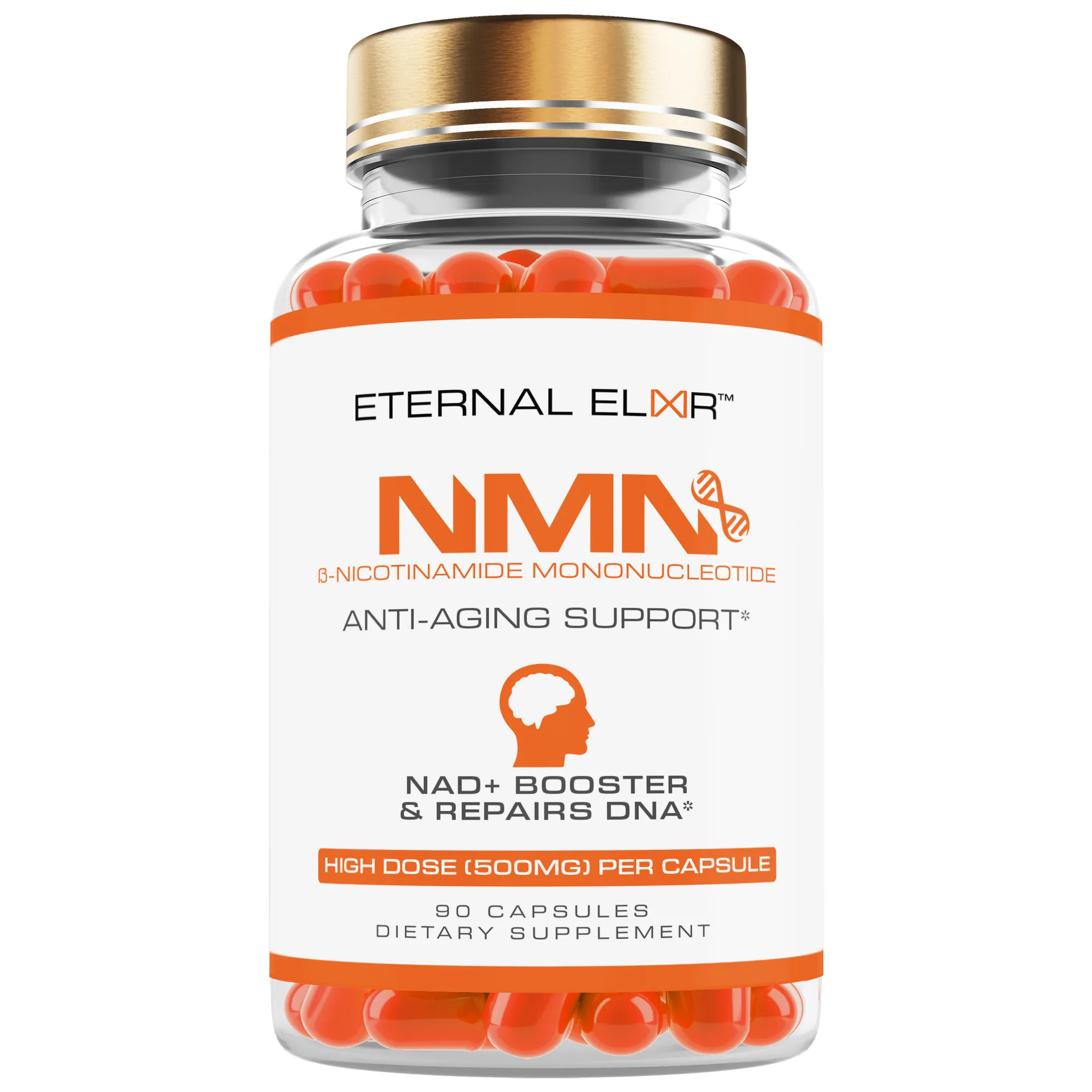
If you are stacking the two, a common starting point is 200–500 mg of resveratrol taken in the morning with food alongside your NMN. Dialling in the NMN side matters just as much, so it is worth checking a dedicated NMN dosage guide rather than guessing. For convenience, some Australians prefer NMN + resveratrol combination supplements that put both compounds in one regimen.
For Australian buyers, local supply and verified purity are the practical concerns. Eternal Elixir’s Trans-Resveratrol 1200mg is third-party tested, ships from within Australia, and comes in a 90-capsule bottle from $59.99 — enough for a full course at a sensible daily dose. Eternal Elixir formulates its NMN and resveratrol to work together, which removes the guesswork of sourcing two compatible products from different brands.
One last practical note for stacking: resveratrol and NMN are both best taken in the morning, so a single combined dose keeps the routine to one step. If you would rather not buy two products, a pre-formulated NMN and resveratrol option removes the matching problem entirely while still letting you keep an eye on the total resveratrol dose you are taking each day.
Frequently Asked Questions
How much resveratrol should I take per day?
For general antioxidant and longevity support, 150–500 mg of trans-resveratrol per day is the range most human studies have used. Cardiovascular and metabolic research clusters around 250–500 mg, so a daily resveratrol dosage in this band suits most healthy adults.
Is 1000mg of resveratrol too much?
For most people, 1,000 mg sits at the upper edge of what is sensible. Research links doses above 1,000 mg a day to changes in some liver markers and suggests extra caution in older adults, so there is rarely a reason to exceed it for general use.
Should I take resveratrol with NMN?
Many longevity routines pair the two, since resveratrol is thought to support sirtuin activity while NMN replenishes NAD+. A typical combined approach is 200–500 mg of resveratrol with a high-quality NMN supplement in the morning, taken with a fat-containing meal.
What is the best time of day to take resveratrol?
Morning, with food that contains some fat, is the most practical choice. Resveratrol is fat-soluble and poorly absorbed on its own, so taking it with a meal improves uptake. Consistency day to day matters more than the exact hour.
Ready to start your longevity stack?
90 capsules per bottle · Australian shipping · Third-party tested
Shop Eternal Elixir →Recommended for you
About Eternal Elixir
Eternal Elixir is an Australian supplement company specialising in longevity and nootropic formulations. All products are third-party tested for purity, manufactured under strict quality controls, and designed for Australians who take their health seriously. Browse the full range at the Eternal Elixir shop.