Last updated: May 30, 2026 · Originally published: December 28, 2025 · By Eternal Elixir Science Team
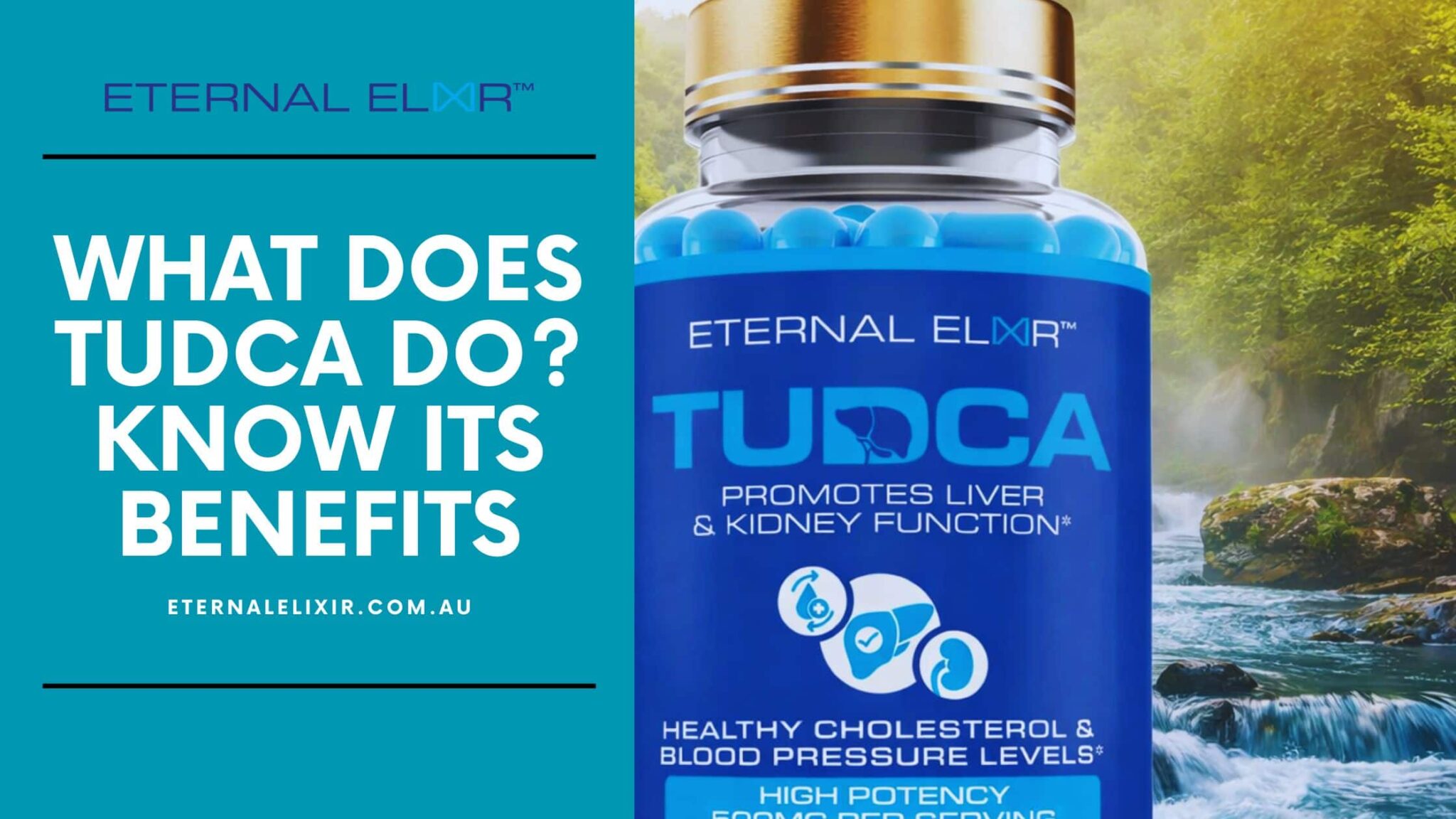
What does TUDCA do? TUDCA (tauroursodeoxycholic acid) is a hydrophilic bile acid that supports bile flow through the liver, reduces endoplasmic reticulum (ER) stress in cells, protects hepatocytes from oxidative injury, supports insulin sensitivity, reinforces gut barrier function, and crosses the blood-brain barrier to exert neuroprotective effects. It works by acting as a chemical chaperone — stabilising protein folding before cellular stress turns into inflammation or cell death.
This guide focuses on how TUDCA works at the cellular level. If you are after the practical payoff instead, see our dedicated breakdown of the 7 evidence-backed benefits of TUDCA.
If you have been researching liver health or longevity supplements, you have almost certainly come across TUDCA. The interest is well earned — TUDCA is one of the few bile-acid derivatives with a substantial peer-reviewed evidence base spanning liver function, metabolic health, and cellular stress response. But what TUDCA actually does at the cellular level is more interesting than the marketing usually conveys, and understanding the mechanisms helps you decide whether it belongs in your stack.
This guide walks through the six things TUDCA does inside the body, the human and preclinical evidence behind each one, and how to take it for measurable results.
1. TUDCA Improves Bile Flow Through the Liver
Bile is the liver’s primary export channel. It carries cholesterol, conjugated hormones, fat-soluble waste, and lipid-emulsifying acids out into the small intestine. When bile flow slows — a state called cholestasis — those substrates back up, hepatocytes accumulate toxic bile acids, and oxidative stress rises sharply.
According to PubMed, a comprehensive review in Handbook of Experimental Pharmacology describes how TUDCA stimulates hepatocellular secretion machinery, outcompetes more cytotoxic bile acids for transporter sites, and improves cholestatic markers in clinical and experimental settings (Cabrera, Arab & Arrese, 2019 — DOI: 10.1007/164_2019_241). Because TUDCA is hydrophilic, it dissolves cleanly in body fluids, reaches target cells without precipitating, and does so without the membrane disruption associated with more lipophilic bile acids.
2. TUDCA Reduces Endoplasmic Reticulum (ER) Stress
This is TUDCA’s signature mechanism — and the one that explains why its effects show up in so many different tissue types. The endoplasmic reticulum is the cellular compartment responsible for folding and quality-checking proteins. Under metabolic load, toxin exposure, or chronic glucose dysregulation, proteins begin to misfold inside the ER. The cell responds with the unfolded protein response, and if that response is not resolved quickly, it cascades into inflammation, mitochondrial dysfunction, and apoptosis.
TUDCA acts as a chemical chaperone — a small molecule that stabilises protein folding directly. By reducing the misfolded protein burden, it damps down PERK, IRE1α, and ATF6 signalling and suppresses caspase-12 activation, the proximate trigger for ER-stress-driven apoptosis. This protective effect has been documented in hepatocytes, retinal cells, dorsal root ganglion neurons, and cardiac tissue, which is why TUDCA’s benefits do not stop at the liver.
3. TUDCA Protects the Liver Directly
The liver handles biotransformation of medications, hormones, alcohol, and metabolic by-products. Hepatocytes carrying out that work depend on adequate mitochondrial energy, antioxidant capacity, and intact protein synthesis. TUDCA supports all three.
By reducing ER stress, TUDCA prevents activation of programmed cell death pathways inside hepatocytes — preserving the working liver cell population during periods of metabolic load. It also stabilises mitochondrial membranes, reducing cytochrome c release and the intrinsic apoptosis cascade. In NAFLD and cholestasis models, TUDCA reduces hepatic triglyceride content, improves liver function markers, and supports healthier gut microbiota composition — three changes that compound through the gut–liver axis.
4. TUDCA Supports Insulin Sensitivity
TUDCA’s effect on insulin sensitivity is one of the strongest pieces of human evidence outside the liver disease literature. According to PubMed, a randomised controlled trial in Diabetes gave 20 obese adults 1,750 mg of TUDCA daily for four weeks and measured insulin sensitivity using the gold-standard hyperinsulinaemic-euglycaemic clamp. Hepatic and muscle insulin sensitivity improved by approximately 30 per cent versus placebo, with corresponding increases in muscle insulin signalling protein phosphorylation (Kars et al., 2010 — DOI: 10.2337/db10-0308).
The mechanism is layered: TUDCA reduces hepatocyte ER stress (which directly improves insulin signalling), upregulates insulin-degrading enzyme expression, and activates the Nrf2 antioxidant pathway, which lowers reactive oxygen species that interfere with insulin receptor function. TUDCA also signals through bile-acid receptors TGR5 and S1PR2, modulating energy expenditure and glucose handling.
5. TUDCA Crosses the Blood–Brain Barrier
Most liver-support compounds work peripherally and stop there. TUDCA is unusual in that it crosses the blood–brain barrier and exerts its ER-stress-reducing and anti-apoptotic effects on neuronal tissue directly. Animal models of Alzheimer’s, Parkinson’s, Huntington’s disease, and amyotrophic lateral sclerosis show neuroprotective effects, and a small human trial in ALS reported slower functional decline on high-dose TUDCA. Human evidence in cognitive and neurodegenerative applications is still emerging, but the consistency of preclinical findings is notable.
6. TUDCA Reinforces Gut Barrier Function
Bile acids are signalling molecules that regulate gut barrier integrity, microbial composition, and intestinal inflammation. TUDCA reinforces the protective mucus layer, tightens epithelial junctions, and shifts microbiota toward Bifidobacterium and Allobaculum populations. In NAFLD models, gut barrier improvements appear before hepatic improvements — consistent with the gut-first hypothesis of metabolic liver disease, where reduced systemic endotoxin load is what allows the liver to recover.
How to Take TUDCA for Best Results
Standard research-aligned doses are 250–500 mg per day for general liver and metabolic support, with athletic and clinical contexts often using 500–1,000 mg in divided doses. Take TUDCA with food — particularly meals containing some fat — to match natural bile-flow timing and reduce the small chance of digestive looseness in the first week.
Most people need four to eight weeks of consistent dosing before they notice changes in digestion, energy, or metabolic markers. Cellular adaptations to ER-stress reduction develop gradually, so consistency beats heroic dosing. TUDCA pairs well with glutathione, milk thistle, NAC, and berberine for stacked liver and metabolic support.
If you take medications metabolised by the liver, are pregnant or breastfeeding, or have active gallbladder disease, consult your doctor before starting.
Browse our full range of evidence-based supplements in the Eternal Elixir shop.
Frequently Asked Questions
What does TUDCA do for the liver?
TUDCA improves bile flow, outcompetes more toxic bile acids for transporter sites, reduces ER stress in hepatocytes, stabilises mitochondrial membranes, and supports antioxidant capacity. Across NAFLD, cholestasis, and chemical injury models, this combination reduces hepatic fat content, improves liver function markers, and preserves the working hepatocyte population under metabolic stress.
Can TUDCA help with digestion?
Yes. By promoting healthy bile flow, TUDCA supports fat digestion and absorption of fat-soluble vitamins (A, D, E, K). Improved bile flow also helps the liver clear waste products through bile rather than recycling them. Many users report reduced bloating and better digestive comfort after several weeks of consistent use, though responses vary.
How long does it take for TUDCA to work?
Most users notice changes between four and eight weeks of consistent dosing. Some report digestive or energy improvements sooner; metabolic markers like fasting glucose or liver enzymes typically need 8–12 weeks of consistent supplementation and supportive diet changes to shift meaningfully.
Is TUDCA the same as UDCA?
No. UDCA (ursodeoxycholic acid) is the parent compound. TUDCA is the taurine-conjugated form, which is more water-soluble, crosses the blood-brain barrier more readily, and tends to show better tolerability profiles in human studies.
Can I take TUDCA every day?
Yes. Human trials at doses up to 1,750 mg daily for weeks to months have reported good tolerance. TUDCA is produced endogenously as part of normal bile-acid metabolism, not a novel synthetic agent.
Related Reading
- What Are the Benefits of TUDCA Supplement?
- TUDCA: The Elite Liver and Bile Support Guide for Modern Health
- TUDCA vs UDCA: Understanding the Chemical Differences
- TUDCA and Gut Health: Bile Flow and the Microbiome
- TUDCA Dosage Guide Australia: How Much, When, and How Long
7. TUDCA and Neurodegenerative Protection — What the Evidence Shows
One of the most interesting research strands on TUDCA is its potential role in neurodegenerative disease. Because TUDCA crosses the blood-brain barrier, reduces endoplasmic reticulum stress, and stabilises mitochondrial membranes, it has been investigated in preclinical models of Alzheimer’s, Parkinson’s, Huntington’s, and amyotrophic lateral sclerosis (ALS) for more than two decades.
According to PubMed, a 2021 review in Life Sciences consolidated this evidence and described how TUDCA’s three core mechanisms — inhibition of apoptosis, attenuation of oxidative stress, and reduction of ER stress — converge on the cellular failure modes common to multiple neurodegenerative conditions. In animal and cell models, TUDCA preserved dopaminergic neurons in Parkinson’s models, reduced amyloid-beta toxicity in Alzheimer’s models, and slowed motor decline in Huntington’s models (Zangerolamo et al., 2021; DOI: 10.1016/j.lfs.2021.119252).
An honesty caveat worth holding onto: most of this work is preclinical. Translation from rodent models to human neurological outcomes has historically been difficult in this field. What the literature does support, however, is the mechanistic plausibility for TUDCA as a general-purpose chemical chaperone with central-nervous-system reach — and it explains why the molecule keeps showing up in longevity protocols built around cellular-stress resilience rather than any single named condition.
8. TUDCA and Retinal Health
The retina is one of the most metabolically demanding tissues in the body, and a recurring target in TUDCA research. A 2024 systematic review in Current Neuropharmacology screened 423 studies and identified 24 that met inclusion criteria, covering TUDCA’s effects across retinitis pigmentosa, diabetic retinopathy, retinal degeneration, retinal ganglion cell injury, Leber’s hereditary optic neuropathy, choroidal neovascularisation, and retinal detachment models. Across the body of work, TUDCA consistently delayed retinal cell degeneration and apoptosis, preserved retinal structure and function, and acted through the same ER-stress, oxidative-stress, and anti-apoptotic mechanisms documented in liver and brain tissue (Li et al., 2024; DOI: 10.2174/1570159X21666230907152207).
The authors are explicit that the human clinical-trial evidence base for retinal indications is still small, and they call for well-designed trials to confirm efficacy in clinical settings. For now this is a “watch this space” area — mechanistically supported, increasingly replicated in animal models, but not yet a primary reason to start TUDCA. If you take TUDCA for liver and metabolic support, the retinal-protection literature is a plausible secondary upside rather than a primary claim.
How to Take TUDCA — Practical Stacking Notes
Standard dosing for general liver and metabolic support is 250–500 mg once daily. Most people take TUDCA in the morning with food, since bile-acid signalling integrates with the meal-driven cycle of bile release. If you are using TUDCA at the higher end (500–1,000 mg/day), splitting the dose between breakfast and dinner can reduce the chance of mild gastrointestinal looseness, which is the most commonly reported tolerability issue.
TUDCA stacks naturally with:
- Reduced L-glutathione — for phase-II conjugation and antioxidant support of the same hepatocytes TUDCA protects. See our best glutathione supplements in Australia guide for product-level picks.
- Berberine — addresses metabolic dysfunction (glycaemic control, lipid signalling) that often co-occurs with cholestatic and fatty-liver patterns.
- NMN — mitochondrial energy support that complements TUDCA’s mitochondrial-membrane stabilisation.
If you are new to TUDCA, start at 250 mg/day for 14 days and step up to 500 mg/day if well tolerated. Most users notice digestive comfort changes inside 2–4 weeks; metabolic and liver-enzyme markers typically need 8–12 weeks to shift meaningfully on a follow-up blood panel. For a deeper buyer’s guide and direct comparisons of Australian TUDCA brands, see our best TUDCA supplements in Australia guide. To browse the full Eternal Elixir liver and longevity range, visit our shop.
Eternal Elixir is an Australian supplement company focused on premium, science-backed formulas for liver, nootropic, and longevity support. Every product is third-party tested for purity and potency, with 90 capsules per bottle for a full three-month supply. We source pharmaceutical-grade ingredients and publish independent lab results for every batch.
Last updated: 31 May 2026