Last updated: August 8, 2026 · Originally published: March 21, 2026 · By Eternal Elixir Editorial
If you follow the supplement conversation in natural bodybuilding and athletic performance circles, two compounds come up again and again: creatine monohydrate, the benchmark of sports nutrition, and turkesterone, the ecdysteroid from Ajuga turkestanica sold as a plant-based alternative to anabolic hormones.
The comparison is inevitable: both support muscle growth and athletic performance through natural processes. But they work entirely differently, have very different evidence bases, and serve different roles in a training stack. This article breaks down each compound to help you decide how they fit your goals. Short version: creatine has far more evidence, and turkesterone is still an experiment.
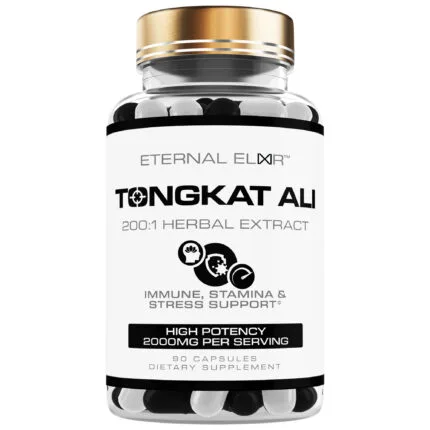
Eternal Elixir doesn’t currently stock turkesterone or creatine. Our in-stock pick for the same strength and training goal is Tongkat Ali 200:1 Extract 2000mg.
Table of contents
- 1. Creatine: The Evidence-Based Benchmark
- 2. Turkesterone: The Rising Contender
- 3. Direct Comparison: Creatine vs Turkesterone
- 4. Can You Use Both?
- 5. 2026 Research Update: What the Evidence Actually Says
- 6. How to Stack Turkesterone and Creatine Effectively
- 7. 2026 Research Update: The Honest Read on Phytosteroids
- 8. Frequently Asked Questions
- 8.1. Will turkesterone fail a drug test?
- 8.2. Will turkesterone fail a drug test in Australia?
- 8.3. Can you take turkesterone and creatine together?
- 8.4. Is more expensive turkesterone better?
- 8.5. Is turkesterone legal in Australia?
- 8.6. How long does it take for turkesterone to work?
- 8.7. Does turkesterone affect testosterone levels?
- 8.8. Is creatine better than turkesterone for beginners?
- 9. The Bottom Line
- 10. Explore this topic in depth
Creatine: The Evidence-Based Benchmark
What Is Creatine?
Creatine monohydrate is one of the most studied supplements there is: more than 1,000 studies have been run on it since it became popular in the early 1990s (Kreider and colleagues, 2017). It is a naturally occurring compound made in the liver, kidneys, and pancreas from amino acids arginine, glycine, and methionine, and is found in dietary meat sources.
How Creatine Works
Creatine’s main mechanism involves the phosphocreatine energy system. In muscle tissue, phosphocreatine donates its phosphate group to ADP to rapidly regenerate ATP, the immediate fuel for muscular contraction. By raising muscle creatine and phosphocreatine stores by 20 to 40% (Kreider and colleagues, 2017), creatine extends the duration of high-intensity effort before fatigue sets in.
The International Society of Sports Nutrition’s 2017 position stand concludes that creatine monohydrate is the most effective nutritional supplement currently available to athletes for increasing high-intensity exercise capacity and lean body mass during training (Kreider and colleagues, 2017).
Practical Dosing for Creatine
Loading phase (optional): 5g four times a day (20g) for 5 to 7 days. Maintenance: 3 to 5g per day. Skipping the load and taking 3 to 5g a day fills muscle stores over 3 to 4 weeks instead. Timing: Taking it with a carbohydrate or carbohydrate-and-protein meal may help retention, though consistency matters more than timing. Cost: One of the least expensive supplements per gram.
Turkesterone: The Rising Contender
What Is Turkesterone?
Turkesterone is a phytoecdysteroid, a plant-derived steroid found mainly in Ajuga turkestanica. Ecdysteroids are structurally similar to anabolic hormones like testosterone but bind to different receptors. Research on its close relative ecdysterone suggests the effect runs through oestrogen receptor binding (Isenmann and colleagues, 2019).
How Turkesterone Works
The proposed mechanisms, mostly from cell and animal studies, include: (1) Stimulation of muscle protein synthesis through oestrogen receptor beta activation and mTOR signalling. (2) Leucine incorporation boost. (3) Boosted nitrogen retention. (4) Enhanced cell volumisation. (5) Possible anti-catabolic effects reducing muscle protein breakdown during caloric restriction.
Turkesterone research is at a much earlier stage than creatine science. The best human result belongs to ecdysterone: in a 10-week strength-training study of 46 young men, those given ecdysterone-containing supplements gained significantly more muscle mass and bench-press strength (Isenmann and colleagues, 2019). The only published human study of turkesterone itself was small and short. In 11 healthy young men, single doses didn’t significantly change IGF-1 or resting metabolic rate compared with placebo (Harris and colleagues, 2024).
Worth noting: turkesterone-specific human trials are limited. The compound is highly promising but not yet backed by the volume of evidence behind creatine.
Practical Dosing for Turkesterone
Daily dose: follow your product’s label. Our former Turkesterone label, for example, gave 500mg per capsule at 1 to 2 capsules a day with meals. Cycle: 8 to 12 weeks on, 4 weeks off is common practice, though no study has tested cycling. Timing: With meals. Cost: Significantly more expensive than creatine, particularly high-purity standardised formulas. Quality: Look for a stated turkesterone content and a certificate of analysis for the batch you buy.
Direct Comparison: Creatine vs Turkesterone
Evidence Base
Creatine: More than 1,000 studies with consistent results. Turkesterone: Mainly animal data with limited but promising human evidence. Creatine wins decisively on evidence strength. For Australian athletes seeking evidence-backed performance, creatine remains the stronger choice. Turkesterone is a plant-based option to watch as evidence grows.
Mechanism of Action
Creatine operates through the ATP-PCr energy system, with secondary protein synthesis effects. Turkesterone acts through protein synthesis pathways (mTOR, leucine incorporation) without touching the energy system. They operate at fundamentally different biological levels.
Timeline of Effect
Creatine: A loading phase fills muscle stores within 5 to 7 days, and 3 to 5g a day gets there over 3 to 4 weeks. Turkesterone: Muscle protein synthesis effects build over weeks and are best evaluated over an 8 to 12 week cycle.
Side Effects Profile
Creatine: Well tolerated. The only consistently reported side effect is weight gain, partly from water held in muscle, and studies haven’t found more cramping in creatine users (Kreider and colleagues, 2017). Turkesterone: Short studies report no rise in liver or kidney markers with ecdysterone over 10 weeks, and good stomach tolerance with single turkesterone doses. Long-term human safety data doesn’t exist yet.
Can You Use Both?
Yes, and the pairing makes sense on paper. They work through entirely different pathways and are complementary: Creatine supports the energy system and acute training results, driving higher training volume. Turkesterone supports protein synthesis pathways governing long-term muscle adaptation. Together, they may produce more muscle growth than either alone, although no study has tested the two together.
Creatine is the most evidence-backed performance supplement in sports nutrition history. Turkesterone is a plausible newer compound whose evidence base is still thin. For a natural athlete, creatine is the foundation, and turkesterone is an optional addition once the basics are in place.
2026 Research Update: What the Evidence Actually Says
The most-cited human trial on ecdysterone (a close relative of turkesterone, and an ingredient in many products marketed alongside it) remains the 2019 Berlin study published in Archives of Toxicology. Over 10 weeks of resistance training in 46 young men, participants given ecdysterone-containing supplements recorded significantly greater increases in muscle mass and one-repetition bench press performance, with no rise in biomarkers of liver or kidney toxicity. The authors concluded the effect was large enough that they recommended ecdysterone be added to the list of prohibited substances in sport, in the “other anabolic agents” class (Isenmann et al., 2019; DOI: 10.1007/s00204-019-02490-x). That single trial is why turkesterone gets the “natural but potentially performance-enhancing” label, and why Australian athletes in tested sports need to read our turkesterone drug-testing guide before cycling it.
Creatine monohydrate sits on a much larger evidence base. It is the single most-studied legal sports supplement in the world, with hundreds of randomised trials showing consistent improvements in strength, power output and lean mass when combined with resistance training. The International Society of Sports Nutrition reports that short- and long-term use, up to 30g a day for 5 years, has been safe and well tolerated in healthy people (Kreider et al., 2017). If you are purely asking “which compound has more evidence behind it”, creatine wins by a wide margin. Turkesterone’s family has one good trial behind it. Creatine has more than a thousand.
The practical takeaway for 2026: treat turkesterone as an interesting adjunct with emerging data, and treat creatine as the non-negotiable foundation. Stacking both is reasonable for natural lifters, but it is not a substitute for training intensity, protein intake or sleep. For an Australian brand breakdown, see our Best Turkesterone Supplements in Australia 2026 comparison.
The turkesterone evidence base is younger than creatine’s, but the quality of the recent human data is improving. The most-cited paper in the space is that 2019 study in Archives of Toxicology, which tested ecdysterone supplementation in healthy young men undertaking resistance training and reported significant increases in muscle mass and one-rep max performance in those dosed with ecdysterone (PMID 31123801). That study is the reason ecdysteroids entered mainstream strength-training conversations and is still the strongest standalone human result published to date.
Since then, the picture has become more nuanced. A 2025 randomised, double-blind 12-week training study in the Journal of the International Society of Sports Nutrition tested a commercial phytosteroid product against placebo and found no difference between groups. Lab analysis then showed the capsules held less than 1% of the claimed 20-hydroxyecdysone and 10.4% of the claimed diosgenin (PMID 40781783). That was one product, so it doesn’t tell you how common the problem is. It is a good reason to ask for a certificate of analysis before you buy any phytosteroid.
For creatine, the evidence picture is the opposite — saturated with high-quality data. The International Society of Sports Nutrition’s position stand on creatine remains the authoritative summary, and concludes that creatine monohydrate is the most effective ergogenic nutritional supplement currently available to athletes, and that 3 to 5 g a day maintains muscle stores once they are full (PMID 28615996).
How to Stack Turkesterone and Creatine Effectively
Because creatine and turkesterone act on different biological systems, stacking them is mechanistically logical rather than redundant. Creatine refills the phosphocreatine energy system, increasing the total work you can complete in each training session. Turkesterone appears to influence muscle protein synthesis and nitrogen retention downstream of that work. If the training stimulus is the ceiling on your results, creatine raises the ceiling and turkesterone helps you capture more of the adaptation underneath it.
Practical template for Australian lifters: Start creatine monohydrate at 5 g per day, taken post-workout with carbohydrates or at any consistent time. No loading phase is required: 3 to 5 g a day fills muscle stores over 3 to 4 weeks. Layer in turkesterone at the dose on your product’s label, with meals, for an 8 to 12 week block that aligns with a defined training goal (for example, a hypertrophy phase or a return from deload). Off-cycle turkesterone for 4 weeks between blocks; keep creatine continuous.
What to track. Weekly body weight, waist measurement, and two compound lifts (typically bench press and squat or deadlift). The creatine contribution usually shows up in the first two to four weeks as increased training volume and a small water-weight gain. Any turkesterone effect will be slower, so judge it over the full 8 to 12 week block, and only once your protein intake, sleep and training volume are already consistent. No supplement makes up for short nights or a low-protein diet.
What to avoid. Stacking multiple phytoecdysteroid products on top of each other to “hit” a higher dose. No study supports going past the label dose, and label accuracy is inconsistent. Choose one product, ask for its certificate of analysis, and stay at the label dose.
2026 Research Update: The Honest Read on Phytosteroids
A 12-week double-blind RCT published in the Journal of the International Society of Sports Nutrition (August 2025) tested a commercial phytosteroid product containing 20-hydroxyecdysone (the active class behind turkesterone) plus diosgenin against placebo in 28 resistance-trained men. Both groups improved 1-RM squat, bench press and lean mass, but there was no group difference. Crucially, lab analysis revealed the supplement contained less than 1% of the labelled 20E concentration (Dissemond et al., 2025; DOI · PubMed).
The takeaway: at least one commercial phytosteroid product held a tiny fraction of what its label claimed, which may explain why anecdotal results vary so much. If you’re buying turkesterone, ask for assay data, not just a label number. Creatine monohydrate, by contrast, has more than 1,000 studies behind it.
Our position remains: creatine first for verified results, turkesterone second only if you can verify the actual ecdysteroid content of the product you’re buying.
Research indicates these findings in resistance-trained populations. Always verify supplement content via certificates of analysis before relying on label claims.
Frequently Asked Questions
Will turkesterone fail a drug test?
Turkesterone isn’t named on WADA’s 2026 lists. Its close relative ecdysterone is on WADA’s 2026 Monitoring Program, which covers substances that are not on the Prohibited List but are watched for patterns of misuse. Supplements can be contaminated with prohibited substances, so tested athletes should check their sport’s rules and use batch-tested products.
Will turkesterone fail a drug test in Australia?
Turkesterone itself isn’t on the 2026 Prohibited List that tested Australian sport follows, and ecdysterone is monitored rather than prohibited. The real risk is a contaminated product, so read our turkesterone drug-testing guide before using it in a tested sport.
Can you take turkesterone and creatine together?
Yes. They work through different processes and no interaction between them has been reported, although no study has tested the two together. Start creatine first, then add turkesterone once you know how you respond.
Is more expensive turkesterone better?
Not necessarily. Price doesn’t prove content. In a 2025 study, one commercial phytosteroid product held less than 1% of its claimed 20-hydroxyecdysone. Look for a stated turkesterone content and a certificate of analysis for your batch.
Is turkesterone legal in Australia?
Turkesterone capsules are sold openly in Australia by supplement brands and retailers, including Emrald Labs and Nutrition Warehouse. It is a plant-derived ecdysteroid, not an anabolic steroid, and it isn’t on the 2026 Prohibited List used in sport. Eternal Elixir doesn’t currently stock turkesterone. Our in-stock pick for the same strength and training goal is Tongkat Ali 200:1 Extract 2000mg.
Add Tongkat Ali 200:1 to cart · $39.99
How long does it take for turkesterone to work?
No human study has followed turkesterone over weeks of training, so nobody can give you a reliable timeline. The ecdysterone study measured its results after 10 weeks. Judge it over a full 8 to 12 week block, and if nothing has changed, check the product’s certificate of analysis rather than raising the dose.
Does turkesterone affect testosterone levels?
No human study has shown turkesterone lowering your own testosterone, but none has run long enough to rule it out. Research on ecdysterone points to oestrogen receptor binding rather than the androgen receptor, which is why ecdysteroids aren’t treated like anabolic steroids.
Is creatine better than turkesterone for beginners?
Yes. Creatine is cheaper, better studied, and produces faster and more reliable results for a novice lifter. Beginners generally capture the bulk of available adaptation from training alone plus creatine; turkesterone becomes a sensible addition once training consistency, nutrition, and sleep are already in place.
The Bottom Line
Both creatine and turkesterone have legitimate places in a natural athlete’s supplement arsenal. Creatine is proven, affordable, and backed by decades of research. Turkesterone is promising and plant-based, but needs more human trials. Start with creatine as the foundation. Add turkesterone once training, nutrition, and recovery are dialled in. Eternal Elixir doesn’t currently stock turkesterone; our in-stock pick for the same strength and training goal is Tongkat Ali 200:1 Extract 2000mg. For how the two compare, read Tongkat Ali vs Turkesterone, and for turkesterone amounts see our turkesterone dosage guide. You can also browse our full range of research-backed supplements.
Related Reading
- Pterostilbene vs Resveratrol: Why This Polyphenol Outperforms Its Famous Cousin
- Best NMN Supplements in Australia 2026: 8 Products Compared
- Natural Testosterone Optimisation for Men Over 35
Eternal Elixir doesn’t currently stock turkesterone. Our in-stock pick for the same strength and training goal is Tongkat Ali 200:1 Extract 2000mg: 2,000mg per three-capsule serve, 90 capsules per bottle, taken on an empty stomach. Browse the full Eternal Elixir range for performance and recovery products.
About Eternal Elixir: Eternal Elixir is an Australian longevity and performance supplement company. You can request the current batch certificate of analysis for any of our products.
If you’re weighing up other natural options for strength and vitality, see our comparison of the best testosterone boosters in Australia.