Last updated: November 14, 2026 · By Eternal Elixir Editorial
Last updated: November 14, 2026 · By Eternal Elixir Editorial · 5 products compared
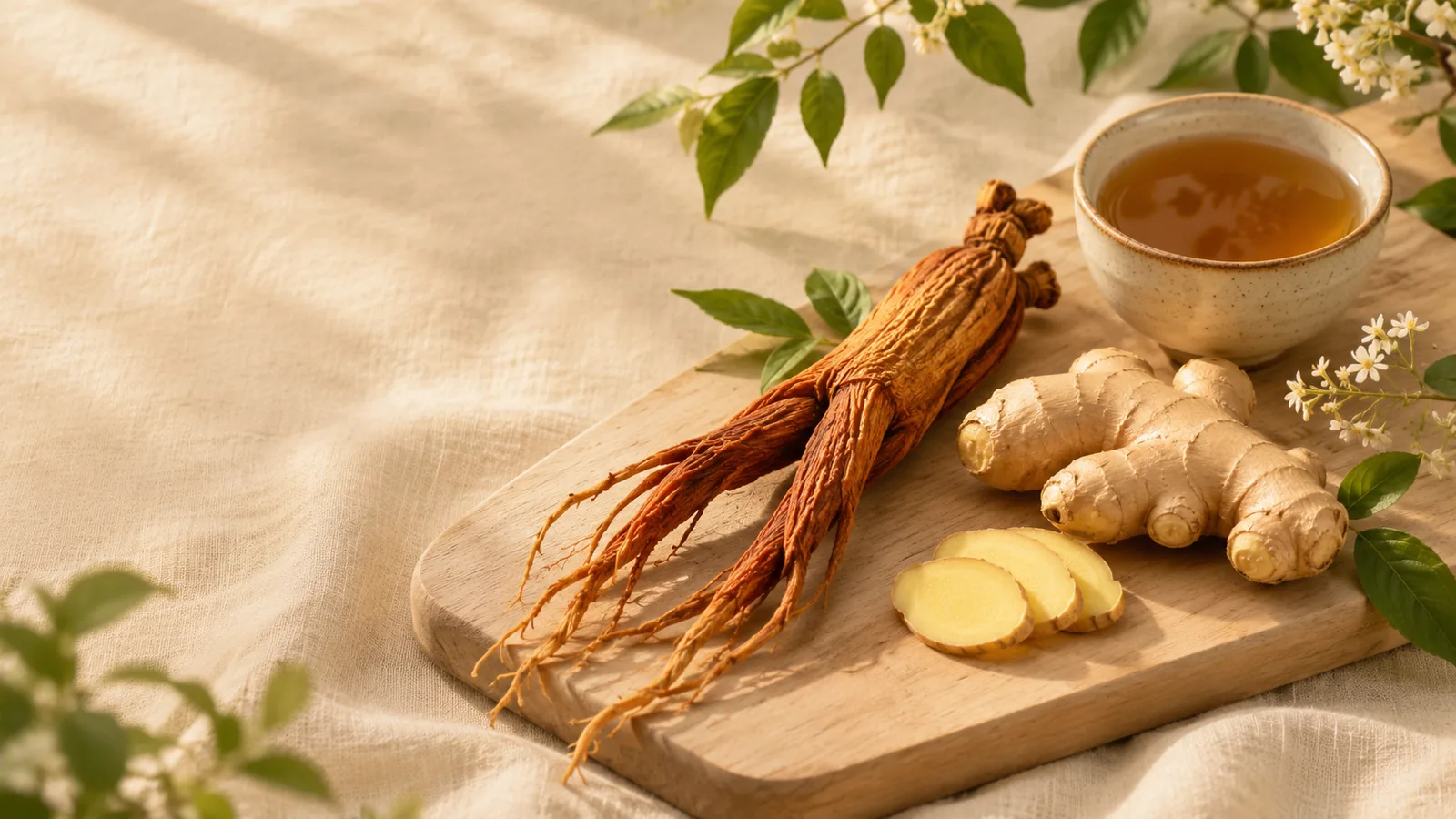
Ginseng and ginger are two different plants that happen to share a shelf. In the ginseng vs ginger question, ginseng is the root of a Panax plant, taken mostly as a daily capsule or extract for energy and focus, and ginger is a spicy rhizome that most Australians use as food, tea or an occasional capsule for digestion. Their active compounds, taste, dose and daily cost are all different.
This page sets the two roots side by side, then compares five products you can buy in Australia: three ginseng products and two ginger products. Every price is a live AUD price we read on 14 November 2026, and every ingredient amount comes from the product label as published by the retailer or by us.
Eternal Elixir makes Korean Panax Ginseng 1600mg; it is our pick, and every figure for the other products is taken from their own labels and retailer pages.
Quick Answer
Eternal Elixir Korean Panax Ginseng 1600mg is our top pick in the ginseng vs ginger choice for Australians who want daily energy support, because it gives 1,600 mg of steamed Korean red Panax ginseng, standardised to at least 5% ginsenosides, in two capsules a day for $1.00. If you want ginger for digestion instead, Wagner Ginger had the lowest daily cost in this comparison at $0.18.
Based on labels and live AUD prices for 5 products sold in Australia, checked 14 November 2026
Not sure what to take? Take our 8-question quiz
to unlock 20% OFF your entire first order
+ a FREE gift worth up to $59.99
Choose your goal to start the quiz
Not sure which suits you? Take the 60-second quiz and see the one Eternal Elixir product matched to low energy, with its daily cost and how to take it.
We do not sell ginger supplements.
Table of contents
- 1. Ginseng vs Ginger at a Glance
- 2. Ginseng and Ginger Products Compared
- 3. Two Plants From Two Different Families
- 4. Ginsenosides vs Gingerols: What Each Root Contains
- 5. #1. Eternal Elixir Korean Panax Ginseng 1600mg — Best overall for daily energy support
- 6. #2. Caruso's One a Day Ginseng 5500 — Best for the lowest cost per mg of ginsenosides
- 7. #3. Nature's Own Korean Ginseng 500mg — Best for an Australian-made vegan tablet
- 8. #4. Wagner Ginger — Best for the lowest daily cost
- 9. #5. Caruso's Ginger — Best for flexible, as-needed ginger
- 10. Actives per Day and per Dollar: The Label Numbers Side by Side
- 11. Taste, Forms and How Australians Use Each Root
- 12. What the Research Says About Ginseng for Energy
- 13. Can You Take Ginseng and Ginger Together?
- 14. Which Root Suits Which Goal
- 15. How We Evaluated These Ginseng and Ginger Products
- 16. Ginseng vs Ginger: Frequently Asked Questions
- 16.1. Are ginger and ginseng the same?
- 16.2. What does ginseng taste like?
- 16.3. What should you not mix ginseng with?
- 16.4. Which is better for energy, ginseng or ginger?
- 16.5. Can you take ginger and ginseng together?
- 16.6. Is Siberian ginseng real ginseng?
- 16.7. When is the best time to take ginseng?
- 16.8. Is ginger tea as good as a ginger supplement?
- 17. Our Verdict on Ginseng vs Ginger
Ginseng vs Ginger at a Glance
The short version fits in one table. The two plants are related only in the loose sense that both are underground parts of a plant used in Asian cooking and herbal traditions.
| Feature | Ginseng (Panax) | Ginger |
|---|---|---|
| Botanical name | Panax ginseng (Korean or Asian), Panax quinquefolius (American) | Zingiber officinale |
| Plant family | Araliaceae | Zingiberaceae |
| Part used | Root | Rhizome (underground stem) |
| Main active compounds | Ginsenosides | Gingerols and shogaols |
| Taste | Earthy, mildly bitter | Hot, sharp, citrusy |
| Common forms in Australia | Capsules, tablets, extracts, tea | Fresh root, tea, crystallised ginger, capsules |
| Capsule cost per day (AUD, products compared below) | A$0.52 to A$1.00 | A$0.18 to A$0.41 |
| How people mostly use it | A daily supplement for energy and focus | Food and tea, or a capsule for digestion |
| Typical timing | Morning, every day | With meals, daily or as needed |
| Main caution | Can affect sleep; may interact with some medicines | Can upset the stomach in larger amounts |
If you landed here after seeing both roots in the same tea blend, that is common. Ginger brings the heat, and ginseng brings a slow, earthy bitterness. As supplements, though, they are bought for different reasons. For a deeper look at ginseng on its own, our Korean Panax ginseng benefits guide covers what the research says about energy, focus and stress.
Ginseng and Ginger Products Compared
Price per day uses each label's own daily amount. Competitor prices are the current prices at Chemist Warehouse on 14 November 2026. The Eternal Elixir price is our own store price that day.
| Rank | Product | Root | Main active per day (label) | Price AUD | Price per day | AU Shipping | Best For |
|---|---|---|---|---|---|---|---|
| #1 | Eternal Elixir Korean Panax Ginseng 1600mg | Ginseng | 1,600 mg Korean red Panax ginseng, at least 80 mg ginsenosides | $44.99 (90 capsules, 45 serves) | $1.00 | Ships from Australia, free over $100 | Best overall: the highest Panax ginseng dose here |
| #2 | Caruso’s One a Day Ginseng 5500 | Ginseng | 250 mg Korean + 50 mg American ginseng extract (70 mg ginsenosides) + Siberian ginseng | $31.49 (60 tablets) | $0.52 | Chemist Warehouse | Lowest cost per mg of ginsenosides |
| #3 | Nature’s Own Korean Ginseng 500mg | Ginseng | 200 mg Panax ginseng extract (from 1 g dry root); ginsenosides not stated | $25.49 (60 tablets, 30 days) | $0.85 | Chemist Warehouse | Made in Australia, vegan |
| #4 | Wagner Ginger | Ginger | 100 mg ginger extract (5 mg gingerols) | $11.04 (120 capsules, 60 days) | $0.18 | Chemist Warehouse | Lowest daily cost in this comparison |
| #5 | Caruso’s Ginger | Ginger | 50 mg ginger extract (5 mg gingerols) at 2 tablets | $20.49 (100 tablets) | $0.41 | Chemist Warehouse | Flexible, as-needed ginger |
Our ginseng costs the most per day in this list. Caruso’s ginseng tablet gives more ginsenosides per dollar, and both ginger products cost less per day than any ginseng. We explain in each entry what the extra money buys and where the cheaper options make more sense.
Two Plants From Two Different Families
The confusion is mostly about the word root. Ginseng is a true root from slow-growing plants in the genus Panax, part of the Araliaceae family. The US National Center for Complementary and Integrative Health lists Korean ginseng, red ginseng and white ginseng as common names for Panax ginseng, which grows natively in Korea, northeastern China and far-eastern Siberia. American ginseng (Panax quinquefolius) is a close cousin grown in North America.
Ginger is a rhizome, a creeping underground stem, from Zingiber officinale in the Zingiberaceae family, the same family as turmeric and cardamom. The same NCCIH service notes that ginger is native to the warm parts of Asia and its rhizome is used in food.
One more name causes trouble on Australian shelves: Siberian ginseng. It is Eleutherococcus senticosus, a separate plant that does not belong to the Panax genus and is standardised to different compounds. Some ginseng blends contain it alongside Panax ginseng, so read the label if you want true Panax ginseng only.
Ginsenosides vs Gingerols: What Each Root Contains
Ginseng's active compounds are called ginsenosides. A 2021 review in the Journal of ginseng research by Ratan and colleagues describes them as steroidal saponins, grouped as protopanaxadiols and protopanaxatriols, and notes that ginseng has been studied for energy, immunity and sexual health in both basic and clinical research. The same review is careful to say that higher quality evidence is still needed, and that ginseng may interact with some medicines even though it appears relatively safe.
Ginger's main active compounds are phenolics. A 2019 review in Foods (Basel, Switzerland) by Mao and colleagues lists ginger's constituents as phenolic compounds, terpenes, polysaccharides, lipids, organic acids and fibre, and credits most of its studied health effects to two phenolic groups, gingerols and shogaols. Those compounds give ginger its heat on the tongue.
Processing changes both roots. Red ginseng is fresh ginseng that has been steamed and dried. Researchers at the Korea Ginseng Research Institute sampled the same roots before, during and after steaming in a 2017 study in the Journal of ginseng research. Six malonyl-ginsenosides and 15 amino acids fell during steaming, while ginsenosides Rh1, Rg2 and Rg3 were newly formed or rose, along with browning products such as maltol. That is why red ginseng and white ginseng are not interchangeable on a label.
So when you compare a ginseng product with a ginger product, you are comparing different chemistry. A milligram of ginsenosides and a milligram of gingerols are not the same kind of thing, and neither replaces the other.
#1. Eternal Elixir Korean Panax Ginseng 1600mg — Best overall for daily energy support
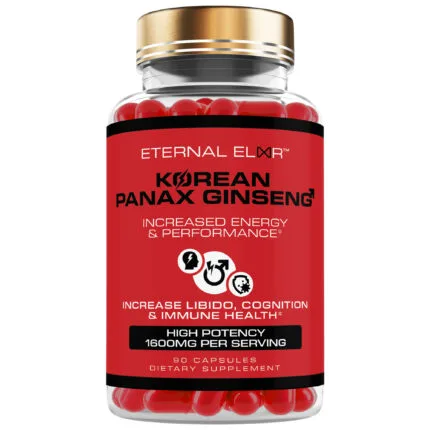
Eternal Elixir Korean Panax Ginseng 1600mg is our top pick, and the one we would point you to if the reason you are comparing ginseng vs ginger is steady daytime energy. Each serve of two capsules gives 1,600 mg of Korean red Panax ginseng root, standardised to a minimum of 5% ginsenosides. That works out to at least 80 mg of ginsenosides a day, the highest stated amount of Panax ginsenosides in this comparison. The only other ingredients are rice flour and a cellulose capsule.
It is the only product here that states it uses red ginseng, the steamed form prized in Korea, and it uses the true Panax species with no Siberian or American ginseng added. A bottle of 90 capsules holds 45 serves for $44.99, or $1.00 a day, and buying two bottles saves 10%. The label serve is two capsules a day on an empty stomach with water, taken in the morning. Our Korean red Panax ginseng comparison sets it against eight other ginseng products sold in Australia.
Orders ship from Australia, and are dispatched within 24 hours on business days. Every order has a 30-day money-back guarantee, and Afterpay is available at checkout. If you want ginseng as part of a wider routine, our adaptogen supplements comparison shows how it sits beside other adaptogens.
Key specs: 1,600 mg Korean red Panax ginseng per 2-capsule serve · standardised to at least 5% ginsenosides · 90 capsules (45 serves) · $44.99 AUD · ships from Australia · free shipping over $100
Pros:
- Highest Panax ginseng extract dose and stated ginsenoside amount in this comparison
- Steamed red ginseng, with no Siberian or American ginseng in the mix
- Only two other ingredients, rice flour and the capsule
Cons:
- The highest daily cost in this list, at $1.00
- Two capsules per serve
- Not a ginger product, so it does not suit digestion-focused buyers
Best for: adults who want a full daily dose of true Korean red ginseng for energy and focus. Buy Eternal Elixir Korean Panax Ginseng 1600mg.
#2. Caruso's One a Day Ginseng 5500 — Best for the lowest cost per mg of ginsenosides
Caruso's One a Day Ginseng 5500 is a three-ginseng blend in one tablet. The Chemist Warehouse listing shows 250 mg of Korean ginseng extract (from at least 2 g of dry root, standardised to 62.5 mg of ginsenosides), 166.67 mg of Siberian ginseng extract (from 2.17 g of dry root) and 50 mg of American ginseng extract (from 400 mg of dry root, standardised to 7.5 mg of ginsenosides). The dose is one tablet a day with food.
It was $31.49 for 60 tablets against an RRP of $39.95, which is $0.52 a day. That gives about 135 mg of Panax ginsenosides per dollar, more than our capsule gives per dollar, so it is the value pick if ginsenosides per dollar is your main measure. The trade-off is a smaller Korean ginseng dose and a blend that includes Siberian ginseng, which is a different plant. The 5500 in the name is not explained on the listing; the three dry-root equivalents on the label add up to about 4.6 g.
Key specs: 250 mg Korean ginseng extract + 50 mg American ginseng extract (70 mg ginsenosides) + 166.67 mg Siberian ginseng extract per tablet · 1 a day · 60 tablets · $31.49 AUD (RRP $39.95)
Pros:
- Lowest cost per mg of ginsenosides in this comparison
- One tablet a day
- Stated ginsenoside amounts for both Panax species
Cons:
- Korean ginseng dose is about a sixth of our capsule's
- Mixes in Siberian ginseng, which is not a Panax species
Best for: budget buyers who are happy with a mixed ginseng tablet.
#3. Nature's Own Korean Ginseng 500mg — Best for an Australian-made vegan tablet
Nature's Own Korean Ginseng 500mg is a single-ingredient Panax ginseng tablet. The Chemist Warehouse listing gives 100 mg of Panax ginseng dry root extract per tablet, made from 500 mg of dry root, and the adult dose is one tablet twice a day with food. That is 200 mg of extract a day from 1 g of dry root. The listing describes it as vegan and made in Queensland.
A 60-tablet pack was $25.49 against an RRP of $29.49 and lasts 30 days at the label dose, so it costs $0.85 a day. The listing did not state a ginsenoside content at the time of writing, so we have not ranked it on that measure. It is a fair option if you want a plain Korean ginseng tablet from a pharmacy shelf, and our guide to Korean red ginseng at Chemist Warehouse covers the other pharmacy choices.
Key specs: 100 mg Panax ginseng extract (500 mg dry root) per tablet · 2 a day · 60 tablets (30 days) · $25.49 AUD (RRP $29.49) · vegan
Pros:
- Single-ingredient Panax ginseng
- Made in Australia and vegan
Cons:
- Ginsenoside content not found on the listing at the time of writing
- Two tablets a day, and the pack lasts a month
Best for: shoppers who want an Australian-made ginseng tablet in a vegan form.
#4. Wagner Ginger — Best for the lowest daily cost
Wagner Ginger is the ginger capsule to look at if your interest is digestion and you want it cheap. The Chemist Warehouse listing shows 50 mg of ginger rhizome dry extract per capsule, equivalent to 550 mg of dry rhizome and standardised to 2.5 mg of gingerols. For digestive support the label directions are two capsules a day, which gives 5 mg of gingerols from 1.1 g of dry rhizome.
It was $11.04 for 120 capsules against the store’s everyday price of $16.99. At two a day the pack lasts 60 days, so the daily cost is $0.18, the lowest in this comparison. The directions also cover occasional travel use, with a cap of four capsules in 24 hours. The listing marks it as a Chemist Warehouse exclusive.
Key specs: 50 mg ginger extract (550 mg dry rhizome, 2.5 mg gingerols) per capsule · 2 a day for digestive support · 120 capsules (60 days) · $11.04 AUD (everyday price $16.99)
Pros:
- Lowest daily cost in this comparison
- Stated gingerol content per capsule
- A two-month pack
Cons:
- Listed as a Chemist Warehouse exclusive
- A ginger product, so it does not stand in for ginseng
Best for: people who want a low-cost daily ginger capsule for digestion.
Skip the comparison and buy direct. Eternal Elixir's Korean Panax Ginseng 1600mg ships from Australia in 90-capsule bottles. Browse the range →
#5. Caruso's Ginger — Best for flexible, as-needed ginger
Caruso's Ginger is a small ginger tablet written for occasional use. The Chemist Warehouse listing gives 25 mg of Zingiber officinale extract per tablet, from at least 500 mg of dry root, standardised to 2.5 mg of gingerols. Most of the label directions are for use when required, up to four tablets a day with food. The lowest set daily amount in the directions is two tablets, so we compared it at two a day.
A 100-tablet pack was $20.49 against an RRP of $24.95. At two tablets a day that is 50 days and $0.41 a day, for 5 mg of gingerols from 1 g of dry root. Wagner gives the same gingerols for less than half the daily cost, so Caruso's suits people who want a smaller tablet they can take a half or one at a time when they need it.
Key specs: 25 mg ginger extract (500 mg dry root, 2.5 mg gingerols) per tablet · as required, up to 4 a day · 100 tablets · $20.49 AUD (RRP $24.95)
Pros:
- Small tablet that can be split for a lower amount
- A 100-tablet pack
Cons:
- More than twice Wagner's daily cost for the same gingerols
- Directions are mostly for occasional use, so daily cost depends on how you take it
Best for: people who use ginger now and then rather than every day.
Actives per Day and per Dollar: The Label Numbers Side by Side
Front-of-pack numbers on both roots usually describe dry root, not what the extract gives you. We pulled the standardised active content from each label and worked out how much you get per day and per dollar at the prices above.
| Product | Extract per day | Dry root equivalent per day | Standardised actives per day | Price per day | Actives per $1 |
|---|---|---|---|---|---|
| Eternal Elixir Korean Panax Ginseng 1600mg | 1,600 mg | not stated | at least 80 mg ginsenosides | $1.00 | at least 80 mg |
| Caruso’s One a Day Ginseng 5500 | 466.67 mg (three ginsengs) | about 4.6 g | 70 mg ginsenosides | $0.52 | about 135 mg |
| Nature’s Own Korean Ginseng 500mg | 200 mg | 1 g | not stated | $0.85 | not calculated |
| Wagner Ginger (2 a day) | 100 mg | 1.1 g | 5 mg gingerols | $0.18 | about 27 mg |
| Caruso’s Ginger (2 a day) | 50 mg | 1 g | 5 mg gingerols | $0.41 | about 12 mg |
Three things stand out. Our capsule gives the most Panax ginseng extract and the most stated ginsenosides per day, at a higher daily price. Caruso’s ginseng blend gives the most ginsenosides per dollar, but only 62.5 mg of that comes from Korean ginseng. And both ginger products give the same 5 mg of gingerols a day at the doses we used, so the cheaper one is simply the better buy.
The ginsenoside and gingerol columns cannot be compared with each other. They measure different compounds with different jobs, which is the whole point of the ginseng vs ginger choice: pick the root for what you want it to do, then compare products within that root.
Taste, Forms and How Australians Use Each Root
Ginger is a kitchen staple long before it is a supplement. Most people get it grated into stir-fries and curries, sliced into hot water with lemon and honey, in ginger beer, or as crystallised ginger. That everyday use is cheap and pleasant, and for many people it is all the ginger they need. Ginger capsules make sense when you want a set amount each day or find the taste too strong.
Ginseng is the other way around. Its earthy, slightly bitter taste does not suit most cooking, so people usually take it as a capsule, a tablet, a liquid extract or a strong tea. In Korea, red ginseng is also sold as concentrated paste and single-serve sticks. The daily amounts used in research run into hundreds of milligrams or more of extract, which is hard to reach from tea alone.
Timing differs too. Ginger is usually taken with meals. Ginseng is best taken in the morning, every day, because its effects in trials were measured over weeks of steady use. If your interest is focus at work, our memory and focus supplements comparison covers other options that pair with a morning ginseng dose.
What the Research Says About Ginseng for Energy
The trial most often cited for ginseng and tiredness is a 2013 randomised, double-blind, placebo-controlled study in PLoS One by Kim and colleagues. It enrolled 90 adults (21 men and 69 women) with long-running fatigue that had no identified cause, and gave them 1 g or 2 g a day of a Panax ginseng extract or a placebo for four weeks.
The results were mixed in an informative way. The total fatigue score did not differ significantly from placebo. The mental fatigue score did improve with ginseng at both doses, and only the 2 g group rated their fatigue significantly lower on a visual scale, from 7.3 to 4.4, against 7.1 to 5.8 on placebo. The trial used its own ethanol extract, so the doses are not a direct match for any product here, including ours at 1,600 mg.
We read that as a reasonable case for trying ginseng for daytime energy over a month, with honest limits. Ginger has not been studied for energy in the same way; its research centres on digestion and comfort. If tiredness is your main concern, start with sleep, food and movement, and see your GP if it persists. Our fatigue supplements comparison looks at the wider evidence across ingredients.
Can You Take Ginseng and Ginger Together?
Plenty of teas blend the two, and many people take a ginseng capsule while eating ginger in their food. We found no trial that tested the pair together, so there is no evidence for a special combined effect. There is also no specific reason to keep them apart for most healthy adults. The sensible approach is to start one product at a time, so you can tell how each one suits you.
Each root has its own cautions. The US National Center for Complementary and Integrative Health says short-term use of Asian ginseng in recommended amounts appears to be safe for most people, lists trouble sleeping as its most common side effect, and notes it might interact with certain medicines and affect blood clotting. For ginger, the same service lists abdominal discomfort, heartburn, diarrhoea and mouth or throat irritation as possible side effects.
If you take regular medicines, including blood-thinning medicines or medicines that lower blood sugar, ask your GP or pharmacist before adding either one. Some experts advise against ginseng in pregnancy, while breastfeeding or for children. If stress rather than energy is your main reason for looking, Eternal Elixir Saffron Extract 30mg (affron®) is our mood product, one capsule a day at $49.99 for 90 capsules, and our stress supplements comparison and our guide on lowering cortisol naturally are better starting points.
Which Root Suits Which Goal
Pick ginseng if you want a daily supplement for energy and focus and are happy to take it every morning for at least a month. Look for Panax ginseng with a stated ginsenoside amount, and decide whether you want red (steamed) ginseng or a mixed blend. Our capsule gives the highest Panax ginseng dose in this list. Caruso's gives the most ginsenosides per dollar.
Pick ginger if your goal is digestion, comfort after meals or an occasional travel aid, or if you simply like the taste. Fresh ginger in food and tea is the cheapest route. If you want a set daily amount, Wagner gives the same gingerols as Caruso's for less than half the daily cost.
Pick both if you want both jobs done: a morning ginseng capsule and ginger in your cooking cover them without any overlap. Men who want more than ginseng sometimes add Eternal Elixir Tongkat Ali 200:1 Extract 2000mg, three capsules a day at $39.99 for 30 serves; our tongkat ali comparison explains it. The Eternal Elixir Daily Energy & Vitality Stack bundles our Korean Panax Ginseng, Shilajit 1000mg and Tongkat Ali for $109.99, which is $19.98 less than buying the three bottles at today's prices. Our shilajit comparison covers the third product.
How We Evaluated These Ginseng and Ginger Products
We started from the two roots and looked for products an Australian buyer could pick up for each. We searched Chemist Warehouse, a national pharmacy chain that stocks both, and kept single-root products with a published label and a current price. For each product we read the ingredients and dose from the label as published by the retailer, and the price on 14 November 2026. Eternal Elixir figures come from our own product page and label on the same day.
We then ranked the five products on these criteria, weighted for an Australian buyer:
- Stated amount and type of the main active ingredient (30%)
- Australian availability and shipping (20%)
- Price per day in AUD at the label dose (20%)
- Label clarity, including a stated standardised amount (15%)
- Range for building a routine (15%)
We did not test the other products ourselves, and we do not score them on taste or results. Eternal Elixir ranks first because we make the product and stand behind it, and because it gives the highest stated Panax ginseng dose here. Caruso’s ginseng gives more ginsenosides per dollar, and both ginger products cost less per day, and we say so in each entry. The ginger products rank below the ginseng products because this comparison is anchored on ginseng, the root we sell.
Editor’s Choice
Eternal Elixir Korean Panax Ginseng 1600mg: 1,600 mg of steamed Korean red Panax ginseng with at least 80 mg of ginsenosides per serve, 45 serves per bottle at $1.00 a day.
Try Eternal Elixir Korean Panax Ginseng 1600mg · $44.99 AUD · 90 capsules, ships from Australia
Ginseng vs Ginger: Frequently Asked Questions
Are ginger and ginseng the same?
No. They come from different plant families. Ginseng is the root of a Panax plant in the Araliaceae family, and ginger is the rhizome (an underground stem) of Zingiber officinale in the Zingiberaceae family. Ginseng’s main active compounds are ginsenosides, and ginger’s are gingerols and shogaols. The two look a little alike as dried roots, which is where the mix-up starts.
What does ginseng taste like?
Ginseng tastes earthy and mildly bitter, with a faint sweetness that comes through in red ginseng, which is steamed and dried before sale. Ginger is hot, sharp and a little citrusy. That taste difference is one reason ginger is mostly eaten as food or brewed as tea, while ginseng is more often taken as a capsule, an extract or a strong tea.
What should you not mix ginseng with?
The US National Center for Complementary and Integrative Health says Asian ginseng might interact with certain medicines, may interfere with blood clotting and might lower blood sugar. If you take any regular medicine, including blood-thinning medicines or medicines that lower blood sugar, ask your GP or pharmacist before you start. Some experts also advise against ginseng during pregnancy or breastfeeding and for children.
Which is better for energy, ginseng or ginger?
For daytime energy, ginseng has the more direct research. A four-week placebo-controlled trial of Panax ginseng in 90 adults with long-running tiredness found improved mental fatigue scores, and the 2 g a day group rated their fatigue lower on a visual scale. Ginger is studied mainly for digestion and comfort, so it suits a different job.
Can you take ginger and ginseng together?
Many people do, most often in a hot tea or as a capsule alongside ginger in food. We found no trial that tested the two together, so there is no evidence for a special combined effect. Start one product at a time so you can tell how each suits you, take ginseng in the morning, and check with your GP or pharmacist if you take regular medicines.
Is Siberian ginseng real ginseng?
Siberian ginseng is Eleutherococcus senticosus, a different plant from the Panax ginsengs. It does not contain the same ginsenosides, and labels standardise it to other compounds, such as syringaresinol diglucosides. Korean (Asian) ginseng is Panax ginseng and American ginseng is Panax quinquefolius. Eternal Elixir Korean Panax Ginseng 1600mg uses Panax ginseng only.
When is the best time to take ginseng?
Most people take ginseng in the morning. The US National Center for Complementary and Integrative Health lists trouble sleeping as Asian ginseng’s most common side effect, so a morning dose keeps it well away from bedtime. Our label serve is two capsules a day on an empty stomach with water, and the product page suggests giving it at least four weeks of daily use.
Is ginger tea as good as a ginger supplement?
They are different amounts of the same plant. A ginger capsule states its extract and gingerol content, so you know what you take each day. Fresh ginger tea varies with how much root you grate and how long it steeps. For flavour and everyday use, the kitchen is the simplest and cheapest way to have ginger. A capsule suits people who want a set daily amount.
Our Verdict on Ginseng vs Ginger
Ginseng and ginger are different plants for different jobs. If you want a daily supplement for energy and focus, choose ginseng, and our pick is Eternal Elixir Korean Panax Ginseng 1600mg for its full dose of steamed Korean red Panax ginseng and stated ginsenosides. If price per ginsenoside matters most, Caruso’s One a Day Ginseng 5500 is the value option, and Nature’s Own suits shoppers who want an Australian-made vegan tablet.
If you want ginger for digestion, start in the kitchen, and if you want a capsule, Wagner Ginger gives a set daily amount for $0.18. Many people end up with both: a morning ginseng capsule and plenty of ginger in their food. The ginseng vs ginger question then stops being a choice at all.
More buying guides
Korean Red Panax Ginseng in Australia Compared → Adaptogen Supplements in Australia Compared → Korean Panax Ginseng Benefits for Energy, Focus and Stress →Start your ginseng routine today
90 capsules per bottle · Australian shipping · 30-day money-back guarantee
Find your routine in 60 seconds →Finish the quiz for 20% off your first order. Or Shop Eternal Elixir →
Recommended for you
About Eternal Elixir
Eternal Elixir is an Australian supplement company specialising in longevity and nootropic formulations. Orders ship from Australia. Browse the full range at eternalelixir.com.au/shop.
Not sure what to take? Take our 8-question quiz
to unlock 20% OFF your entire first order
+ a FREE gift worth up to $59.99