Last updated: October 23, 2026 · Originally published: October 20, 2026 · By Eternal Elixir Editorial
Finding the best supplements for women over 50 Australia has to offer comes down to a short list of evidence-backed options that support energy, sleep quality, skin health and healthy ageing. After comparing label facts, doses and value across the Australian market, our top pick is the Eternal Elixir Trans-Resveratrol 1200mg, a high-strength antioxidant capsule that fits a daily healthy-ageing routine. Eternal Elixir makes Trans-Resveratrol Capsules. It is our pick for women over 50 because each capsule carries 600mg of trans-resveratrol, the 90-capsule bottle covers 45 serves, and the label is simple: 2 capsules daily, with or without food.
Quick answer: Eternal Elixir Trans-Resveratrol 1200mg is the best overall supplement for women over 50 in Australia, at $59.99 for 90 capsules ($1.33 per serve). Eternal Elixir Magnesium L-Threonate 2000mg is the best pick for sleep quality and evening calm at $59.99 for 90 capsules ($2.00 per serve). The rest of this guide ranks five options, including generic vitamin D3, calcium with K2 and omega-3, and explains who each suits.
If you are under 50 or shopping for a younger reader, our separate guide to the best supplements for women over 40 in Australia covers cellular health and skin picks for that decade. This page focuses only on what changes at 50 and beyond: steadier energy, deeper sleep, muscle maintenance and skin that holds up through Australian summers.
Table of contents
- 1. Best supplements for women over 50 in Australia compared
- 2. What changes for women after 50
- 3. How we ranked the best supplements for women over 50 in Australia
- 4. 1. Eternal Elixir Trans-Resveratrol 1200mg: best for healthy ageing overall
- 5. 2. Eternal Elixir Magnesium L-Threonate 2000mg: best for sleep quality and evening calm
- 6. 3. Vitamin D3: best for winter sun gaps
- 7. 4. Calcium with vitamin K2: best for daily mineral top-up
- 8. 5. Omega-3 fish oil: best everyday heart and brain support pick
- 9. Safety notes for supplements after 50
- 10. Frequently asked questions
- 10.1. What supplements do women over 50 really need?
- 10.2. What is the best supplement for a 50-year-old woman in Australia?
- 10.3. What is the best anti-ageing supplement in Australia?
- 10.4. Which supplement makes you look younger than your age?
- 10.5. Are there anti-ageing supplements that actually work?
- 10.6. Can I take resveratrol and magnesium together?
- 10.7. Do I need a multivitamin after 50?
- 10.8. Do women over 50 need iron or vitamin B12?
- 10.9. How long before I notice a difference from supplements?
- 11. The verdict: which supplement is right for you
- 12. Disclaimer
- 13. Sources
Best supplements for women over 50 in Australia compared
The comparison table below puts both Eternal Elixir products first, then three common non-brand categories. Prices are as of Oct 2026 and come from current product pages. The cost per day column uses the full label dose, and the pack size column shows how long one bottle lasts at that dose.
| Rank | Supplement | Dose per serve | Pack | Serves | Price (AUD) | Cost per day | Buy |
|---|---|---|---|---|---|---|---|
| #1 | Eternal Elixir Trans-Resveratrol 1200mg | 1,200mg (2 capsules) | 90 capsules | 45 | $59.99 | $1.33 | Shop |
| #2 | Eternal Elixir Magnesium L-Threonate 2000mg | 2,000mg (3 capsules) | 90 capsules | 30 | $59.99 | $2.00 | Shop |
| #3 | Vitamin D3 (generic) | Varies by product | Varies | Varies | Varies | Varies | Pharmacies and supermarkets |
| #4 | Calcium with vitamin K2 (generic) | Varies by product | Varies | Varies | Varies | Varies | Pharmacies and supermarkets |
| #5 | Omega-3 fish oil (generic) | Varies by product | Varies | Varies | Varies | Varies | Pharmacies and supermarkets |
Prices for Eternal Elixir products checked as of Oct 2026. Generic categories vary by brand and retailer. The figures in the Eternal Elixir rows come from the label and product page.
Add Trans-Resveratrol to cart · $59.99What changes for women after 50
The decade after 50 brings shifts in energy, sleep architecture, muscle maintenance and skin. Oestrogen decline affects how the body regulates temperature at night, which is why many women notice lighter, more broken sleep even when they are tired. Daytime energy can dip for the same reason, and the afternoon slump that used to be a coffee problem starts to feel like a recovery problem.
Muscle mass naturally declines with age, which is why protein intake and resistance training matter more now than they did at 30. Skin loses some of its natural moisture barrier function, and fine lines deepen faster after sun exposure. None of these shifts are problems to fix. They are changes to support with better daily inputs.
The most useful first step is a conversation with your GP and a basic blood test. Vitamin D, B12, iron studies, thyroid function and fasting glucose are all worth checking before you spend money on supplements, because a deficiency is easier to correct than a vague feeling of being run down. A GP can also flag interactions with any prescription medicines you take.
Supplements work alongside the basics: protein at each meal, resistance exercise two to three times a week, morning daylight and a consistent bed time. Eternal Elixir formulates for people who already have those in place and want an extra edge in the two areas where diet is hardest to optimise: cellular antioxidant status and evening calm.
How we ranked the best supplements for women over 50 in Australia
The ranking weighs five factors. Dose per serve comes first, because a capsule that delivers a meaningful amount of active ingredient beats one padded with fillers. Value per day comes second, calculated at the full label dose. Label clarity comes third: the dose per capsule and per serve should be stated plainly, with no proprietary blend hiding the amounts.
Fourth is practicality: how many capsules per serve, whether the label asks for food or an empty stomach, and how long a bottle lasts. Fifth is the strength of evidence for the specific health goal a woman over 50 is most likely to care about: healthy ageing, sleep quality, steadier energy and skin. Eternal Elixir products rank first and second because they score well on dose, label clarity and value in their categories.
Generic vitamins D3, K2, calcium and omega-3 rank lower only because no single brand stands out on the label facts that matter. The categories themselves are worth considering. The order reflects how directly each option supports the priorities above. For a broader comparison of energy-focused formulas, the fatigue supplements guide covers options for persistent tiredness at any age.
1. Eternal Elixir Trans-Resveratrol 1200mg: best for healthy ageing overall
Best for: daily antioxidant support and healthy ageing.
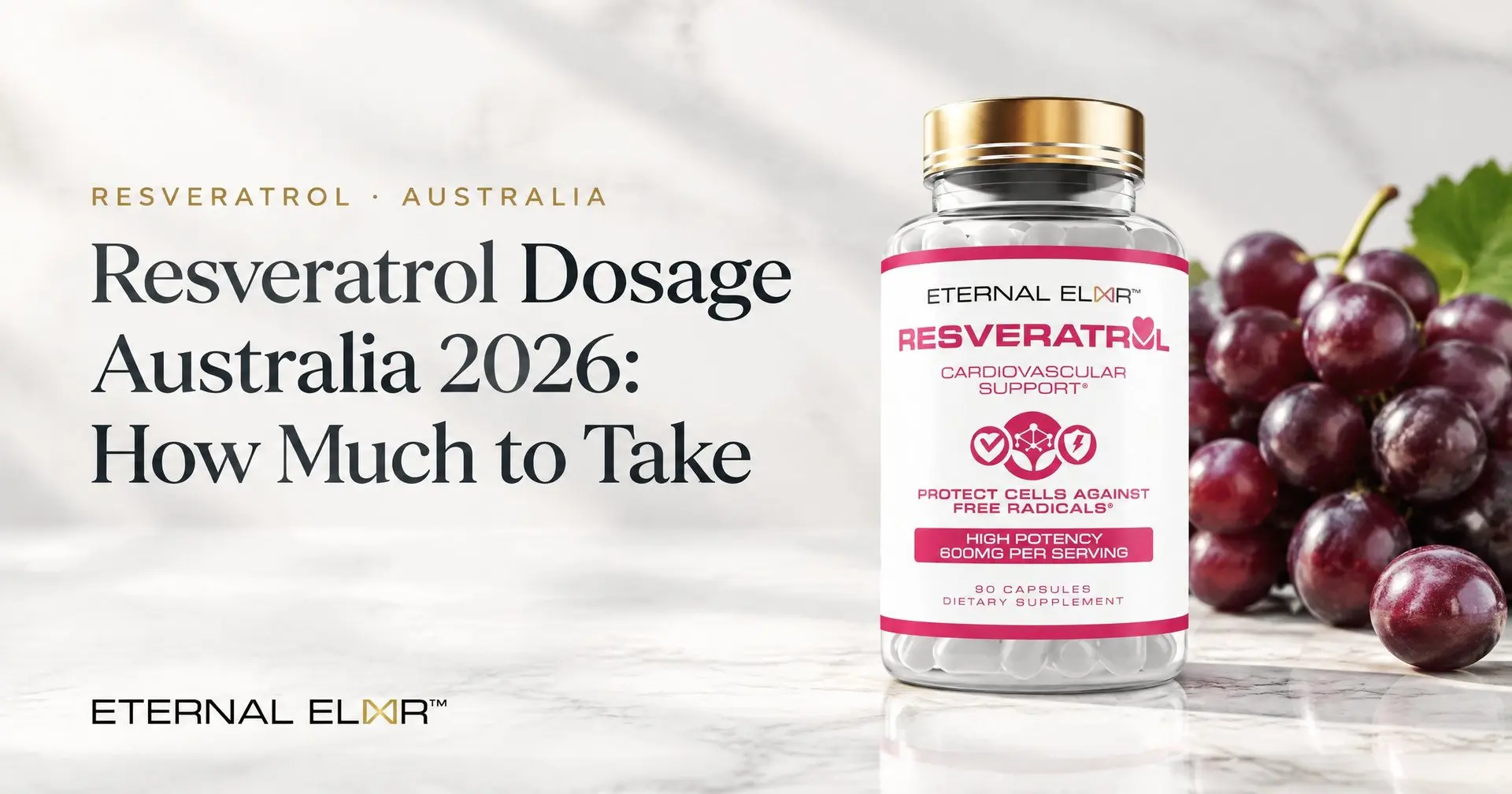
Eternal Elixir makes Trans-Resveratrol Capsules. It is our pick for women over 50 who want a single, high-impact daily habit. Each capsule delivers 600mg of trans-resveratrol, the form studied in longevity research, and the label directs two capsules daily for 1,200mg total. That per-capsule strength means fewer capsules than many lower-dose products require to hit a meaningful serve.
The 90-capsule bottle covers 45 days at the full dose, priced at $59.99, which works out to $1.33 per day. The label says take with or without food, so you can anchor it to breakfast or dinner. At the label rate one bottle lasts about six weeks, and bundle pricing on the product page lowers the cost per serve if you buy two or more.
Resveratrol is a polyphenol found in grape skins and berries. In cell and animal research it interacts with sirtuins, proteins involved in cellular maintenance. Human pharmacokinetic work, including a 2010 study by la Porte and colleagues, has tested trans-resveratrol at doses well above a typical capsule, with digestive upset the most common complaint. That study covers tolerability, not ageing outcomes. The ranking rests on dose per capsule, label clarity and value.
Who it suits: women over 50 who want a daily antioxidant habit with a label they can verify, and who prefer one capsule-strength product over a handful of low-dose tablets.
Who it does not suit: anyone taking blood-thinning medication should check with their GP first, since resveratrol can have a mild blood-thinning effect at higher doses. It is also not the right pick if your priority is sleep rather than daytime cellular support. For sleep, see pick two below.
Pros: 600mg per capsule and 45 serves per bottle. Take it with or without food. Ships within 24h on business days, with Afterpay available.
Cons: $59.99 is a premium over basic multivitamins, though the per-day cost is comparable to a coffee. Two capsules per serve means the bottle lasts 45 days, not three months.
2. Eternal Elixir Magnesium L-Threonate 2000mg: best for sleep quality and evening calm
Best for: winding down at night and supporting deeper sleep.
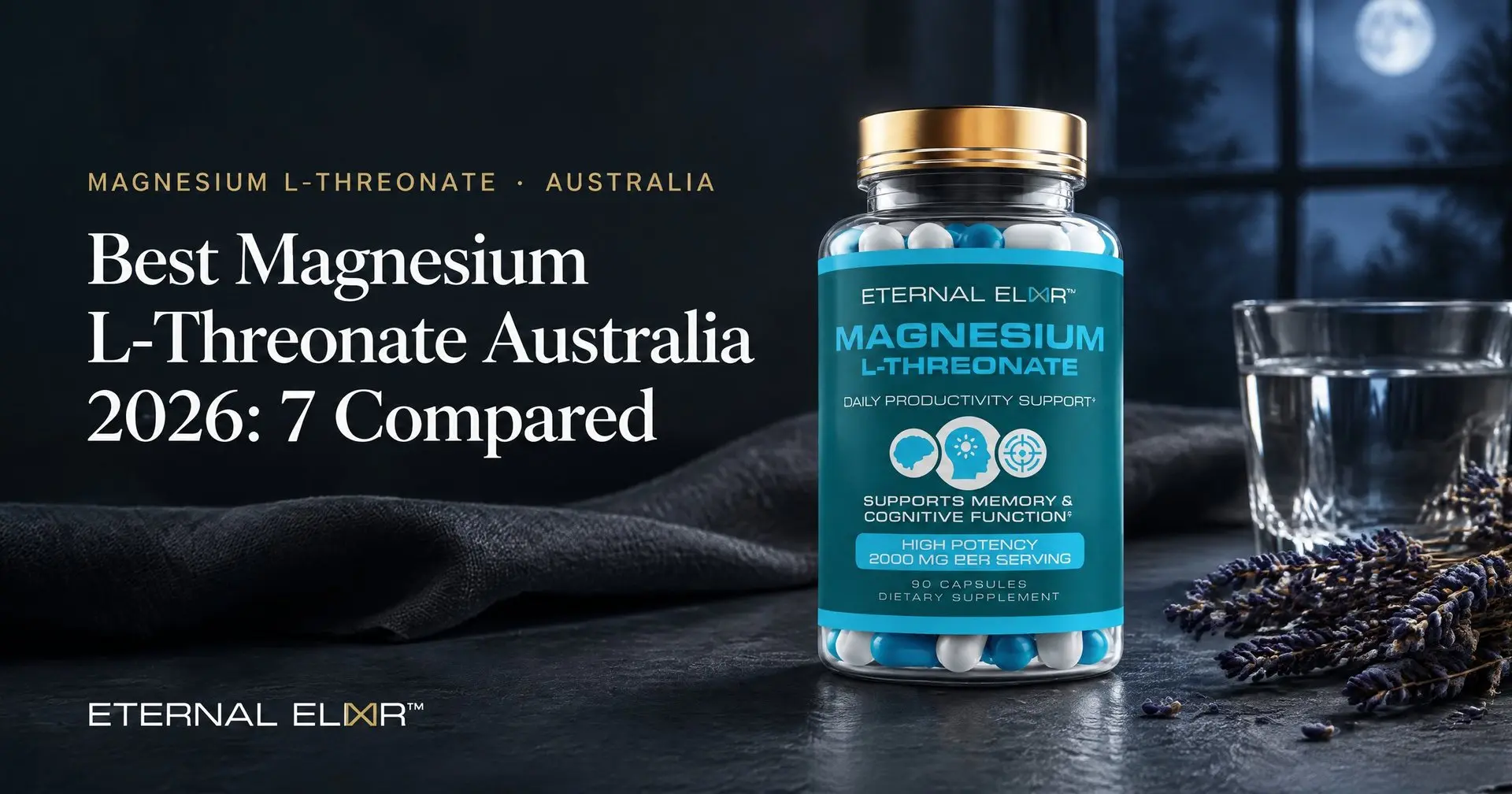
Eternal Elixir makes Magnesium L-Threonate Capsules. It is our pick for sleep quality because magnesium L-threonate is the form developed to raise magnesium levels in the brain in animal research, and it now has a human sleep trial behind it. Each three-capsule serve delivers 2,000mg of magnesium L-threonate, and the label says take with a meal, which makes an early-dinner habit an easy anchor.
The 90-capsule bottle covers 30 days at the full dose, priced at $59.99, or $2.00 per day. Both Eternal Elixir products come with a 30-day money-back guarantee, ship within 24h on business days, and have Afterpay available.
Magnesium L-threonate has been studied in animal models and in a small number of human trials. A 2024 randomised controlled trial by Hausenblas and colleagues in Sleep Medicine: X found improvements in sleep quality and daytime functioning over 21 days in adults with self-reported sleep problems. One proposed link to sleep is magnesium’s role in GABA signalling, the neurotransmitter system that helps the brain downshift into rest.
Many women over 50 notice lighter sleep and more night waking. A magnesium form chosen with the brain in mind is a reasonable support for a calmer evening routine, which is why the Eternal Elixir 2,000mg serve takes the sleep slot in this ranking.
Who it suits: women over 50 whose priority is falling asleep faster and waking less, and who want a form of magnesium with cognitive-support research behind it.
Who it does not suit: anyone with kidney impairment should clear magnesium supplements with their GP first. If you already take a magnesium oxide or citrate product and sleep fine, switching may not add much.
Pros: 2,000mg per serve. Taken with a meal. 90 caps per bottle. $2.00 per day at full dose.
Cons: Three capsules per serve is more pills than some prefer. $59.99 per month adds up over a year. The sleep evidence rests on small human trials and animal work.
For more on sleep, the REM vs deep sleep guide explains which stages matter, and our guide on how to get more deep sleep covers the daily habits.
Add Magnesium L-Threonate to cart · $59.993. Vitamin D3: best for winter sun gaps
Best for: topping up when sun exposure drops.
Vitamin D3 is the form your skin makes from sunlight and the form most supplements use. In Australia, deficiency is more common in winter and among people who work indoors, cover up in the sun, or have darker skin. A GP can order a simple blood test to check your level before you start supplementing.
The research base for vitamin D3 in older adults covers bone density markers, muscle function and immune signalling, though trials on supplementation in people with adequate levels show smaller effects. The safest approach is to test first, supplement if your GP advises, and recheck after three to six months. Doses vary widely by product and by individual need, so there is no single figure to quote here.
Look for a product that lists the exact microgram or IU dose per capsule, uses D3 (cholecalciferol) rather than D2, and is third-party tested or carries a batch certificate. Australian pharmacy brands and supermarket own-labels all meet basic label requirements, so the differentiators are dose transparency, capsule count and price per day.
Who it suits: women over 50 with a confirmed low level on a blood test, or those with limited sun exposure in winter months.
Who it does not suit: anyone already at an adequate level confirmed by testing. More is not always better with fat-soluble vitamins, and your GP can advise on a safe ceiling.
Pairing vitamin D with a general antioxidant like the Eternal Elixir resveratrol pick above covers two different angles: the vitamin addresses a common nutritional gap, while resveratrol supports cellular maintenance pathways. Your pharmacist can help you compare D3 products on dose per capsule.
4. Calcium with vitamin K2: best for daily mineral top-up
Best for: topping up dietary calcium and supporting bone maintenance.
Food first: dairy, tinned salmon with bones, tahini, almonds and leafy greens all contribute calcium. A supplement is a top-up when diet falls short, not a replacement for it. Women over 50 need around 1,300mg of calcium daily per the Australian nutrient reference values, and many diets fall short of that, which is where a gap appears.
Vitamin K2 works alongside calcium by supporting the proteins that direct calcium into bone tissue. The combination appears in a number of Australian products aimed at bone maintenance in later life, usually as calcium citrate or carbonate paired with menaquinone-7 (K2 MK-7). Look for a label that states the elemental calcium amount per capsule, not just the compound weight, and check that the K2 dose is stated clearly.
As with vitamin D, a blood test and a conversation with your GP come before a bottle. Kidney function, existing kidney stones and some medications all affect how much supplemental calcium is wise. The safest pattern is to calculate your dietary intake first, then supplement only the gap, split across meals for better absorption.
Who it suits: women whose diet is light on dairy, tinned fish or leafy greens, and who want to support bone maintenance alongside resistance exercise.
Who it does not suit: anyone with kidney disease, a history of kidney stones, or hypercalcaemia, all of which need GP input before supplementing.
The antioxidant comparison and the resveratrol pick above cover the cellular maintenance side of ageing, which pairs well with the structural support calcium and K2 offer.
5. Omega-3 fish oil: best everyday heart and brain support pick
Best for: general cardiovascular and cognitive maintenance.
Omega-3s EPA and DHA are the long-chain fatty acids in oily fish. Many adults eat oily fish less than twice a week, which is why fish oil remains one of the most commonly bought supplements in the country.
Look for a product that states the EPA and DHA content per capsule explicitly, not just total fish oil, and that names the oil form on the label. A third-party tested or batch-certified product matters here more than with most categories, because oxidation and heavy metal content vary between raw material sources.
Large omega-3 trials have produced mixed results that vary by dose, formulation and the people studied, so treat fish oil as everyday maintenance rather than a guarantee. Compare products on the combined EPA and DHA per serve and the price per day.
Who it suits: women over 50 who eat little oily fish and want a broad, well-tolerated daily support for heart and brain maintenance.
Who it does not suit: anyone on anticoagulant medication should check with their GP, since high-dose omega-3 can add to a blood-thinning effect. Fish burps and reflux are the most common practical complaint. An enteric-coated capsule or taking it with a meal reduces both.
The brain fog comparison covers cognitive-support options in more depth, including nootropic stacks that pair with a basic fish oil.
Safety notes for supplements after 50
Start with a GP conversation and a basic blood panel before adding anything new. Kidney function, liver enzymes, thyroid status and a full blood count all change what is wise to take. Prescription medicines interact with supplements in ways that are easy to miss. Warfarin, blood pressure tablets and thyroid medication are the most common examples.
Introduce one supplement at a time and give it two to four weeks before judging the effect. Keep the dose at the label level unless a doctor advises otherwise, and stop if you notice digestive upset, headaches or a rash. Pregnant or breastfeeding women, and anyone with a chronic condition, should always clear supplements with their GP or pharmacist first.
If you feel palpitations, unusual fatigue or any new symptom after starting a supplement, see your doctor promptly rather than pushing through. This article is general information, not personal medical advice, and does not replace a consultation.
The Eternal Elixir 30-day money-back guarantee covers both picks above, so if a product does not agree with you, the risk of trying is capped at a month. If you take prescription medicines, take the product label to your pharmacist before you start.
Frequently asked questions
What supplements do women over 50 really need?
The honest answer depends on your diet, sun exposure and blood test results. The most commonly deficient nutrients at this age are vitamin D, B12, iron and magnesium, so those are the first to check with a GP. Beyond correcting gaps, a daily polyphenol like trans-resveratrol supports the cellular maintenance pathways tied to healthy ageing. Food first, supplements second, and testing before both.
What is the best supplement for a 50-year-old woman in Australia?
There is no single best for everyone, but if we narrow to one pick for healthy-ageing support, Eternal Elixir Trans-Resveratrol 1200mg leads this ranking. Each capsule carries 600mg of trans-resveratrol, the 90-capsule bottle lasts 45 days at the full serve, and at $59.99 it costs $1.33 per day.
Shop Trans-Resveratrol 1200mg · $59.99What is the best anti-ageing supplement in Australia?
Trans-resveratrol is one of the most researched polyphenols for its interaction with sirtuins, proteins linked to cellular maintenance. Eternal Elixir’s serve is 1,200mg across 2 capsules. No supplement turns back the clock, but a daily polyphenol alongside sun protection, protein and resistance exercise is a reasonable supporting habit for skin and cellular maintenance.
Which supplement makes you look younger than your age?
There is no single “youthing” pill, but the combination that supports skin from the inside is omega-3 for the skin barrier, collagen-adjacent nutrients like vitamin C and zinc from food, and a polyphenol like resveratrol for antioxidant defence against UV-driven free radicals.
Are there anti-ageing supplements that actually work?
Some have plausible mechanisms and human data, others do not. Trans-resveratrol, omega-3 EPA and DHA, and magnesium L-threonate all have peer-reviewed human or animal research behind them, though effect sizes in humans are modest and the evidence base is smaller than marketing suggests. Anything promising dramatic reversal is overselling. The honest framing is support, not transformation.
Can I take resveratrol and magnesium together?
Yes. Resveratrol works on cellular maintenance pathways during the day, while magnesium L-threonate supports evening calm and sleep quality. Taking resveratrol with breakfast or lunch and magnesium with dinner is a simple pattern that covers both without crowding any single meal. Check with your GP or pharmacist first if you take prescription medicines.
Do I need a multivitamin after 50?
Not necessarily. If your diet is varied and includes protein, dairy or fortified alternatives, leafy greens, oily fish and colour, a targeted approach usually beats a broad multivitamin. A blood test will tell you whether you have actual gaps in vitamin D, B12, iron or folate. If you would rather cover the bases with one tablet, a reputable over-50 formula is a reasonable hedge, but it will not match the dose of a dedicated single-nutrient product.
Do women over 50 need iron or vitamin B12?
Iron needs usually fall after menopause, so many women over 50 do not need extra iron at all. Taking iron when your levels are already fine can cause uncomfortable side effects and may even be unhelpful over time. The safest approach is to wait until a blood test shows your iron is low, and take a supplement only if your GP advises it. Food sources like red meat, eggs and legumes often cover daily needs comfortably.
Vitamin B12 is a different story, because absorption can drop with age and with some common medicines. Ask your GP to include B12 when you next have a blood test, rather than guessing. Eggs, dairy, fish and red meat are all good food sources. A simple blood test before buying either supplement saves money and gives you certainty about what your body actually needs.
How long before I notice a difference from supplements?
It depends on the nutrient and the outcome. If a blood test shows low vitamin D, your GP will advise a dose and when to recheck. In the cited trial, sleep quality was measured over 21 days.
Resveratrol’s cellular benefits are slower and harder to feel directly, which is why it is a long-term habit rather than a quick fix. Give any supplement a fair two to three-month trial alongside the basics.
The verdict: which supplement is right for you
If you want the strongest single daily habit for healthy ageing, take the Eternal Elixir Trans-Resveratrol 1200mg every morning. If sleep is the gap that bugs you most, Eternal Elixir Magnesium L-Threonate 2000mg with dinner is the pick, and many women stack both.
If a recent blood test flagged a low vitamin D level, start there with a GP-guided dose before anything else. If your diet is light on calcium, look for a calcium and K2 combination and treat it as a top-up, not a replacement for dairy, tinned fish or leafy greens. If oily fish is rare on your plate, a high-EPA and DHA fish oil is the broadest daily support in this guide.
Whatever you choose, a GP visit and a blood panel come first. Supplements fill gaps. They do not diagnose or replace the fundamentals of protein, resistance training, daylight and consistent sleep. The two Eternal Elixir picks above are the strongest label-for-label options in the healthy-ageing and sleep categories for Australian women over 50, with a 30-day money-back guarantee, dispatch within 24h on business days and Afterpay available.
Disclaimer
This article is general information only and is not a substitute for professional medical advice, diagnosis or treatment. Always talk to your doctor or pharmacist before starting any supplement, especially if you take prescription medicines, are pregnant or breastfeeding, or have a chronic condition. The Eternal Elixir products mentioned are intended to support general health and wellbeing in the context of a balanced diet and exercise.
Sources
- Hausenblas HA et al. Magnesium-L-threonate improves sleep quality and daytime functioning in adults with self-reported sleep problems: a randomized controlled trial. Sleep Med X, 2024 (PubMed)
- la Porte C et al. Steady-state pharmacokinetics and tolerability of trans-resveratrol 2000 mg twice daily with food, quercetin and alcohol (ethanol) in healthy human subjects. Clin Pharmacokinet, 2010 (PubMed)
- NHMRC Eat For Health. Nutrient Reference Values: Calcium
For more on the compounds above, the resveratrol brand ranking on the Eternal Elixir blog covers the research in more depth.