Last updated: September 27, 2026 · Originally published: May 6, 2026 · By Eternal Elixir Editorial
Ca-AKG vs spermidine: neither has been shown to activate autophagy or extend life in people. Spermidine has the more direct autophagy evidence, from animal studies where its benefits depended on autophagy, and it has more human trials, though the largest found no memory benefit at a low dose. Ca-AKG (calcium alpha-ketoglutarate) has a strong mouse lifespan study and one uncontrolled human report, with a placebo-controlled trial still to publish. If autophagy is your goal, start with spermidine. They work through different pathways, so taking both is reasonable.
Quick Answer
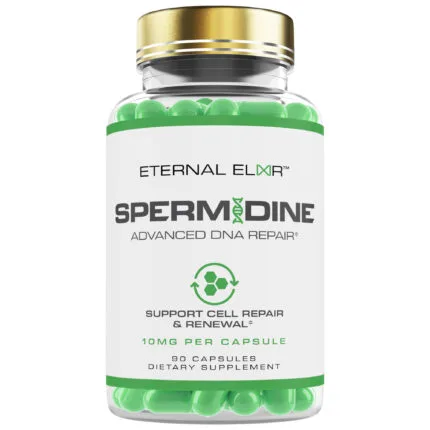
For autophagy, our pick is Eternal Elixir Spermidine 10mg: 10 mg of spermidine per capsule, 90 capsules for $49.99, $0.56 a day. For the alpha-ketoglutarate pathway, add Eternal Elixir Ca-AKG 500mg: 90 capsules for $59.99. A 90-day supply of both costs $109.98, which clears the $100 free-shipping line, and both are sent from Sydney.
Eternal Elixir makes both products, so this is our recommendation, not a neutral review. No trial has tested the two together.
This comparison covers what each compound does, the human and animal evidence for each, which one is the better autophagy choice, who should pick which, whether to take both, and how the Ca-AKG and spermidine products sold in Australia compare on dose and price.
Key numbers:
- 100 older adults took 0.9 mg of spermidine a day or placebo for 12 months in the largest spermidine trial. Memory did not change.
- 40 mg a day of spermidine for 28 days caused no safety problems in 37 healthy men.
- 42 people took a Ca-AKG formula in the only published human Ca-AKG report, with no placebo group.
- 120 adults are in the first placebo-controlled Ca-AKG trial, ABLE, which had not published its main results as of September 2026.
- $1.22 a day for one capsule each of our Spermidine and Ca-AKG.
Table of contents
- 1. The Quick Verdict on Ca-AKG vs Spermidine
- 2. What Ca-AKG and Spermidine Actually Do
- 3. Ca-AKG vs Spermidine Side by Side
- 4. The Evidence for Spermidine
- 5. The Evidence for Ca-AKG
- 6. Which Is the Better Autophagy Activator?
- 7. Who Should Pick Which
- 8. Can You Take Ca-AKG and Spermidine Together?
- 9. Ca-AKG and Spermidine Supplements in Australia Compared
- 10. Ca-AKG vs Spermidine: Frequently Asked Questions
- 11. The Bottom Line
- 12. More Reading
- 13. Sources
The Quick Verdict on Ca-AKG vs Spermidine
If you only take one, take spermidine for autophagy. In mice, spermidine’s heart benefits disappeared when autophagy was switched off, and in human cells, blocking the body’s own spermidine cut the autophagy that fasting normally triggers. A 2026 pilot in older adults also found more activity in autophagy-related genes in immune cells after 13 weeks. That is still a thin human case, but it is more than Ca-AKG has.
Pick Ca-AKG if you are more interested in the mouse lifespan data and the alpha-ketoglutarate pathway, or if you already take spermidine. Its best animal study is strong. Its human evidence is one uncontrolled report and a trial still to publish.
Most people who take both do so because the two work in different ways, not because a trial has shown the combination works. Treat both as reasonable, low-risk experiments rather than proven treatments.
What Ca-AKG and Spermidine Actually Do
Ca-AKG: an energy metabolite
AKG, short for alpha-ketoglutarate, is a molecule your cells make as part of the citric acid cycle, the chain of reactions that turns food into energy. Supplements bind it to calcium to make a stable salt, calcium alpha-ketoglutarate. In worms, AKG slowed an enzyme in the cell’s energy machinery (ATP synthase), damped the growth signal TOR and increased autophagy, and the worms lived longer. In mice, the authors of the main lifespan study credited a drop in inflammatory signals rather than autophagy.
Spermidine: a polyamine linked to autophagy
Spermidine is a polyamine, a small molecule found in every cell and in foods such as wheat germ, soybeans, mushrooms and aged cheese. In yeast, flies, mice and human volunteers, spermidine levels rose during fasting or calorie restriction. When researchers blocked the body’s own spermidine production, fasting triggered less autophagy in yeast, worms and human cells, and in animals the lifespan benefits of fasting disappeared. That makes spermidine one of the best-studied links between fasting and autophagy.
Autophagy is the process cells use to break down and recycle worn-out parts. It can’t yet be measured easily in living people, which is one reason human evidence for any “autophagy supplement” is thin.
Ca-AKG vs Spermidine Side by Side
| Spermidine | Ca-AKG | |
|---|---|---|
| What it is | A polyamine found in food and every cell. | The calcium salt of a citric acid cycle metabolite. |
| Autophagy link | Needed for the autophagy that fasting triggers in yeast, worms and human cells. Mouse heart benefits depended on autophagy. | Increased autophagy in worms and mammalian cells. |
| Best animal result | Longer lifespan in mice fed spermidine. | Longer, healthier life in mice fed calcium AKG. |
| Human trials | Several trials against placebo, up to 12 months, mostly on safety and memory. | One uncontrolled report. One trial against placebo, not yet published. |
| Human doses studied | 0.9 to 40 mg a day. | 1,000 mg a day. |
| Our capsule | 10 mg, 1 a day with a meal. | 500 mg, 1 a day. |
| Our price | $49.99 for 90 capsules, $0.56 a day. | $59.99 for 90 capsules, $0.67 a day. |
The Evidence for Spermidine
Animal and cell studies
In a 2016 study in Nature Medicine, oral spermidine extended the lifespan of mice and improved heart structure and function in old mice. The heart benefits did not appear in mice whose heart cells lacked an essential autophagy gene, which is the strongest evidence that autophagy drives spermidine’s effects. A 2024 study in Nature Cell Biology then showed that spermidine is needed for fasting to switch on autophagy across species, including in human cells.
Human studies
- SmartAge (2022): 100 adults aged 60 to 90 with self-reported memory concerns took a wheat germ extract giving 0.9 mg of spermidine a day, or placebo, for 12 months. Memory did not change compared with placebo, and side effects were balanced between groups. The authors suggested testing higher doses.
- Safety pilot (2018): 30 adults aged 60 to 80 took 1.2 mg a day for 3 months with no difference from placebo in safety blood tests.
- Dose study (2023): 12 healthy volunteers took 15 mg a day for 5 days. Blood spermidine did not rise, but spermine, the compound spermidine turns into, did. The authors concluded that doses below 15 mg a day are “rather unlikely” to have short-term effects.
- High-dose safety (2024): 37 healthy men aged 50 to 70 took 40 mg a day of high-purity spermidine trihydrochloride for up to 28 days, with no safety changes compared with placebo. The ingredient’s maker funded the trial, and two authors work for it.
- Immune pilot (2026): 40 adults over 65 took 6 mg a day for 13 weeks. It was well tolerated, and immune B cells showed higher expression of autophagy-related genes. Three authors consult for spermidine supplement companies.
- Diet study (2018): among 829 adults aged 45 to 84 followed for 20 years, death rates fell from 40.5 to 15.1 per 1,000 person-years from the lowest to the highest third of dietary spermidine intake. This shows an association, not cause and effect.
What hasn’t been shown for spermidine
- No trial has shown spermidine supplements extend life or slow ageing in people.
- No trial has measured autophagy directly in people’s tissues. The 2026 pilot measured gene activity in blood cells, which is suggestive but indirect.
- The one long trial used 0.9 mg a day, far below our 10 mg capsule, and found no memory benefit. Higher doses have safety data but no long-term outcome data.
For dosing detail, see our spermidine dosage guide, and for food sources, our guide to foods high in spermidine.
The Evidence for Ca-AKG
Animal studies
The key study, published in Cell Metabolism in 2020, fed Ca-AKG to mice. The mice lived longer and spent less of their life frail, and inflammatory signals in their blood fell. Several authors hold equity in Ponce de Leon Health, which sells a Ca-AKG supplement, and are named on a related patent application. Earlier, a 2014 study in Nature showed AKG extended the lifespan of worms, working through ATP synthase and TOR, with more autophagy in worm and mammalian cells.
Human studies
- Rejuvant report (2021): 42 people (14 women, 28 men) took a timed-release formula giving 1,000 mg of Ca-AKG a day, plus vitamin A or D, for 4 to 10 months. Their DNA methylation age, measured by a saliva test, fell by an average of 8 years. There was no placebo group, the analysis was retrospective, and one author sits on the board of the company that sells the formula.
- ABLE trial: 120 adults aged 40 to 60 whose DNA methylation age was older than their real age were randomised to 1,000 mg of sustained-release Ca-AKG or placebo for 6 months. It is the first proper test of Ca-AKG in people. A report on the trial’s running was published in September 2026, but we found no published main results.
What hasn’t been shown for Ca-AKG
- No placebo-controlled human trial has reported any benefit from Ca-AKG yet.
- No human study has measured autophagy after Ca-AKG.
- The human studies used 1,000 mg a day, which is two of our 500 mg capsules. Our label says one capsule a day.
Ca-AKG is a calcium salt, so it adds some calcium to your day. Naturecan’s label, for example, lists 205 mg of calcium in its 1,000 mg serve. Our guide to Ca-AKG benefits and dosage covers more, and we compare it with NMN in Ca-AKG vs NMN.
Which Is the Better Autophagy Activator?
On current evidence, spermidine. Its link to autophagy is direct and tested in several species, including human cells, and one small human study has shown an autophagy-related signal in blood cells. Ca-AKG’s autophagy evidence is from worms and cells, and its mouse lifespan benefit was put down to lower inflammation. Neither has shown autophagy changes in human tissue, so “wins” here means “has the stronger case”, not “proven”. Our roundup of the best autophagy supplements in Australia compares the other options.
Who Should Pick Which
- Pick spermidine if autophagy is your main reason, if you want the compound with more human safety data, or if you want a low-cost daily capsule.
- Pick Ca-AKG if you already take spermidine, or if the mouse lifespan work is what interests you and you are happy to wait for the ABLE trial’s results.
- Take both if you want to cover both pathways and accept that no trial has tested them together.
- Talk to your doctor first if you are pregnant or breastfeeding, take regular prescription medicine, or have been told to limit calcium.
Add Spermidine 10mg to cart · $49.99
Can You Take Ca-AKG and Spermidine Together?
Yes. We found no known interaction between them, and they act through different pathways. No trial has tested the combination, so you are relying on each one’s own evidence. Our Spermidine label says one capsule with a meal, and our Ca-AKG label says one capsule a day, so the simplest routine is one of each with breakfast. A bottle of each lasts 90 days.
If you want spermidine with NMN and pterostilbene instead, our Cellular Longevity Stack already includes Spermidine 10mg, so don’t buy the stack and a separate spermidine bottle. Our guide to building a complete longevity stack shows how the pieces fit.
Ca-AKG and Spermidine Supplements in Australia Compared
We took each price, dose and direction from the seller’s own page in September 2026. Cost per day is at the label serve.
| Product | Active per serve | Label directions | Pack | Price (AUD, as of Sep 2026) | Cost per day | Buy |
|---|---|---|---|---|---|---|
| Eternal Elixir Spermidine 10mg (our pick) | 10 mg spermidine (as trihydrochloride) | 1 capsule a day with a meal | 90 capsules | $49.99 | $0.56 | Shop Spermidine 10mg |
| Eternal Elixir Ca-AKG 500mg | 500 mg calcium AKG | 1 capsule a day | 90 capsules | $59.99 | $0.67 | View product |
| Neurogan Health Spermidine (iHerb AU) | 10 mg spermidine 3HCl | 1 tablet a day | 120 tablets | $34.67 | $0.29 | iHerb |
| Naturecan Spermidine | 5 mg spermidine | 1 capsule a day | 60 capsules | $40.00 | $0.67 | Naturecan |
| DoNotAge Pure Spermidine | 8 mg spermidine | 1 capsule a day | 60 capsules | $63.00 | $1.05 | DoNotAge |
| Primeadine Original (OptimOZ) | 1 mg spermidine from wheat germ per 3 capsules | Build up to 3 capsules a day at mealtime | 90 capsules | $149.95 | $5.00 | OptimOZ |
| Naturecan Ca-AKG | 1,000 mg calcium AKG per 2 capsules | 2 capsules a day | 60 capsules | $52.70 (was $62.00) | $1.76 | Naturecan |
Eternal Elixir makes the first two products, and Spermidine 10mg is our pick. Prices are from each seller’s product page.
Add Spermidine 10mg to cart · $49.99
Who each suits. Our Spermidine 10mg suits people who want a 10 mg daily capsule and a 90-day bottle from Sydney. Our Ca-AKG 500mg suits people adding the AKG pathway at a low daily cost, though the human studies used two capsules’ worth. Neurogan has the lowest cost per day here for 10 mg of spermidine, shipped from iHerb. Naturecan’s spermidine gives 5 mg a day, and its Ca-AKG gives the 1,000 mg used in the human studies, at a higher cost per day. DoNotAge gives 8 mg a day. Primeadine uses a wheat germ extract closer to the 0.9 to 1.2 mg doses in the early trials, contains gluten, and is the most expensive per day. For more Ca-AKG brands, see the best Ca-AKG supplements in Australia.
Ca-AKG vs Spermidine: Frequently Asked Questions
Is Ca-AKG or spermidine better for autophagy?
Spermidine has the stronger case. It is needed for fasting-induced autophagy in yeast, worms and human cells, and one small human study found more autophagy-related gene activity in blood cells. Ca-AKG’s autophagy evidence comes from worms and cells. Neither has been shown to change autophagy in human tissue.
Can I take Ca-AKG and spermidine together?
Yes. We know of no interaction and they work in different ways, though no trial has tested them together. One capsule of each with breakfast is the simplest routine, and a bottle of each lasts 90 days for $109.98.
Add Ca-AKG 500mg to cart · $59.99
How much spermidine should I take?
Human studies have used 0.9 mg to 40 mg a day. The long trials used around 1 mg from wheat germ, a 2026 pilot used 6 mg, and 40 mg a day was safe for 28 days. Our capsule gives 10 mg a day, which sits within that range but has no long-term outcome trial of its own.
How much Ca-AKG should I take?
The human studies used 1,000 mg a day. Our label says one 500 mg capsule a day. If you want to match the studies, check with your doctor first, especially if you watch your calcium intake.
Does spermidine or Ca-AKG extend life in humans?
Neither has been shown to. Both extended lifespan in mice. In people, the best spermidine evidence is a diet study linking higher intake to lower death rates, which can’t show cause and effect, and the first controlled Ca-AKG trial has not reported.
Which should I start with?
If autophagy is your goal, start with spermidine. Our pick is Eternal Elixir Spermidine 10mg: 10 mg per capsule, 90 capsules for $49.99, $0.56 a day, sent from Sydney. Add Ca-AKG later if you want the second pathway. Eternal Elixir makes both, so weigh that when you read our pick.
The Bottom Line
Spermidine wins on the evidence for autophagy, and it has more human safety data. Ca-AKG has an impressive mouse study and a human trial still to report. Neither has been shown to slow ageing in people. If you want one, take spermidine. If you want both pathways, one capsule of each a day costs $1.22 and ships free from Sydney.
More Reading
Sources
- Eisenberg T, Abdellatif M, Schroeder S, et al. Cardioprotection and lifespan extension by the natural polyamine spermidine. Nature Medicine. 2016;22(12):1428-1438. PubMed 27841876
- Hofer SJ, Daskalaki I, Bergmann M, et al. Spermidine is essential for fasting-mediated autophagy and longevity. Nature Cell Biology. 2024;26(9):1571-1584. PubMed 39117797
- Schwarz C, Benson GS, Horn N, et al. Effects of spermidine supplementation on cognition and biomarkers in older adults with subjective cognitive decline: a randomized clinical trial. JAMA Network Open. 2022;5(5):e2213875. PubMed 35616942
- Schwarz C, Stekovic S, Wirth M, et al. Safety and tolerability of spermidine supplementation in mice and older adults with subjective cognitive decline. Aging (Albany NY). 2018;10(1):19-33. PubMed 29315079
- Senekowitsch S, Wietkamp E, Grimm M, et al. High-dose spermidine supplementation does not increase spermidine levels in blood plasma and saliva of healthy adults. Nutrients. 2023;15(8):1852. PubMed 37111071
- Keohane P, Everett JR, Pereira R, et al. Supplementation of spermidine at 40 mg/day has minimal effects on circulating polyamines: an exploratory double-blind randomized controlled trial in older men. Nutrition Research. 2024;132:1-14. PubMed 39405978
- Alsaleh G, Ali M, Kayvanjoo AH, et al. Spermidine mitigates immune cell senescence and boosts vaccine responses in healthy older adults: a pilot study. Aging Cell. 2026;25(6):e70545. PubMed 42169618
- Kiechl S, Pechlaner R, Willeit P, et al. Higher spermidine intake is linked to lower mortality: a prospective population-based study. American Journal of Clinical Nutrition. 2018;108(2):371-380. PubMed 29955838
- Asadi Shahmirzadi A, Edgar D, Liao CY, et al. Alpha-ketoglutarate, an endogenous metabolite, extends lifespan and compresses morbidity in aging mice. Cell Metabolism. 2020;32(3):447-456. PubMed 32877690
- Chin RM, Fu X, Pai MY, et al. The metabolite α-ketoglutarate extends lifespan by inhibiting ATP synthase and TOR. Nature. 2014;510(7505):397-401. PubMed 24828042
- Demidenko O, Barardo D, Budovskii V, et al. Rejuvant, a potential life-extending compound formulation with alpha-ketoglutarate and vitamins, conferred an average 8 year reduction in biological aging, after an average of 7 months of use, in the TruAge DNA methylation test. Aging (Albany NY). 2021;13(22):24485-24499. PubMed 34847066
- Sandalova E, Goh J, Lim ZX, et al. Alpha-ketoglutarate supplementation and BiologicaL agE in middle-aged adults (ABLE): intervention study protocol. GeroScience. 2023;45(5):2897-2907. PubMed 37217632
- Lu JK, Wang W, Chew YE, et al. Optimizing accelerometer implementation in a gerotherapeutic trial: feasibility, adherence, and operational insights of ABLE. PLOS Digital Health. 2026;5(9):e0001691. PubMed 42789532