Last updated: August 8, 2026 · Originally published: May 1, 2026 · By Eternal Elixir Editorial
Glutathione vs vitamin C is one of the most common comparisons in Australian skincare and longevity right now. Vitamin C is the antioxidant most Australians already take. Glutathione is the one biohackers and longevity researchers keep talking about. Both promise brighter skin, fewer wrinkles, and stronger immunity. But they work in very different ways. And one is much harder for your body to keep up as you age.
This guide compares them head-to-head. We look at the three things Australians actually buy antioxidants for: skin, immunity, and anti-ageing. We cover how each one works, what the research shows, where they overlap, and how to stack them for the Australian climate.
Vitamin C is a great front-line antioxidant. It is water-soluble, common in food, cheap, and backed by decades of human data for collagen, immunity, and skin glow. The catch: your body cannot store it. Whatever you do not use within a few hours is flushed out.
Glutathione is your body’s master antioxidant. It is a tripeptide of cysteine, glutamine, and glycine. Your liver makes it, and every cell relies on it. It drives detox, controls melanin, and recycles other antioxidants like vitamin C. The catch: glutathione output drops about 1% per year after age 20. Stress, alcohol, paracetamol, UV (a real factor for Australians), and chronic illness all drain it faster.
Short answer: vitamin C is what you eat. Glutathione is what protects you. The two work as a team. Taking both beats picking one.
Table of contents
- 1. Glutathione vs Vitamin C: How Each One Works
- 2. Round 1: Skin Brightening, Pigmentation and Glow
- 3. Round 2: Immunity and Inflammation
- 4. Round 3: Anti-Ageing and Longevity
- 5. Glutathione vs Vitamin C Bioavailability
- 6. How to Stack Vitamin C and Glutathione (The Smart Approach)
- 7. What to Look for on the Label in Australia
- 8. Frequently Asked Questions
- 8.1. Is glutathione better than vitamin C for skin tone in Australia?
- 8.2. Can I take glutathione and vitamin C together?
- 8.3. How long until I see results from oral glutathione?
- 8.4. Does the Australian sun deplete glutathione faster?
- 8.5. Should I choose liposomal glutathione or reduced L-glutathione?
- 8.6. Are there side effects of taking glutathione long-term?
Glutathione vs Vitamin C: How Each One Works
Antioxidants soak up reactive oxygen species (ROS). These are unstable molecules that damage cells, speed up ageing, and drive pigmentation, swelling, and chronic disease. But the way each one works is not the same.
Vitamin C (L-ascorbic acid) gives electrons straight to free radicals. It gets used up in the process. It is a one-shot scavenger. Once spent, it must be replaced or rebuilt. It is also a key cofactor for collagen, which is why low vitamin C causes scurvy. It is also why topical vitamin C firms skin over time.
Glutathione (GSH) works at a higher level in the antioxidant chain. It directly mops up hydrogen peroxide, lipid peroxides, and other ROS. It does this through the enzyme glutathione peroxidase. More importantly, it rebuilds spent vitamin C and vitamin E back to active form. That multiplies their effect. Glutathione is also the body’s main detox molecule. It binds to heavy metals, alcohol byproducts, paracetamol waste, and other toxins. Then it escorts them out via the liver.
A 2022 paper in Pain tracked oxidative stress in 100 patients. Lower vitamin C levels matched nerve dysfunction. Reduced glutathione was the marker most tied to small-fibre damage. The two antioxidants protect different tissues and reflect different sides of redox health (Dohrn et al., 2022).
Round 1: Skin Brightening, Pigmentation and Glow
This is where most Australians compare these two. It matters most for sun-driven pigmentation, melasma, or uneven tone after summers in Sydney, Brisbane, or Perth.
Vitamin C for skin: Vitamin C blocks tyrosinase. That is the enzyme that makes melanin. It also cuts UV damage and supports collagen. Topical L-ascorbic acid (10–20%) has solid data for fading sunspots, softening fine lines, and brightening dull skin over 8–12 weeks. Oral vitamin C helps the same process from inside. But the dose-response curve flattens fast. Past about 200 mg, uptake drops sharply.
Glutathione for skin: Glutathione shifts melanin output at a different point. It pushes melanocytes toward making pheomelanin (lighter pigment) instead of eumelanin (darker pigment). It also lowers tyrosinase activity. That is why oral glutathione is now a popular skin-evenness supplement in Asia, and now in Australia.
A 12-week placebo-controlled trial in the Journal of Cosmetic Dermatology tested oral glutathione (with L-cystine) in 124 Asian women. The combo gave clear skin lightening and fewer facial dark spots at both 6 and 12 weeks. It beat L-cystine alone or glutathione alone (Duperray et al., 2021).
A review in the Journal of Drugs in Dermatology looked at antioxidants for melasma. It found that both vitamin C and glutathione show strong promise for dark spots when paired with other care. It also flagged oxidative stress as a core driver of melasma (Babbush et al., 2020).
Verdict: Vitamin C wins for collagen and overall glow. Glutathione wins for tone and dark spots. This is key for Australians who get heavy UV. Both work best as a pair. See the stack section below.
Round 2: Immunity and Inflammation
Vitamin C is the household-name immune antioxidant for good reason. It builds up in white blood cells at 50–100x the level in plasma. It supports neutrophils. It cuts the length of common colds in people who run low. For Australians in winter or hayfever season, 500–1000 mg daily of vitamin C is a low-cost insurance policy.
Glutathione works at a deeper layer. It is needed for lymphocyte growth. It tunes the Th1/Th2 balance. It is depleted in nearly every chronic inflammatory disease studied. That includes autoimmune disease, long-COVID, and fatty liver. Low glutathione also lets oxidative stress harm lung tissue, blood vessels, and the gut lining. Most Australians do not realise how fast paracetamol, alcohol, and pollution drain their glutathione over time.
Verdict: Vitamin C handles short-term, surface-level immune support. Glutathione drives the body’s long-term ability to handle inflammation. If you only get one for a winter cold, pick vitamin C. If you want year-round resilience, glutathione is the better bet.
Round 3: Anti-Ageing and Longevity
This is the round where the gap widens.
Vitamin C helps with anti-ageing through collagen, sun defence, and recycling vitamin E in cell membranes. It is useful. But it is also easy to get from food. Kiwifruit, capsicum, broccoli, oranges, and strawberries all give you more than enough.
Glutathione is in a different league for cellular ageing. It runs mitochondrial redox status. It guards DNA from oxidative damage. It supports liver detox, which gets more important after 35. And it is drained by every modern stressor Australians face: alcohol, processed seed oils, paracetamol, intense UV, poor sleep, and chronic stress.
A 2022 paper in Molecules showed that the GSH/GSSG ratio is a top biomarker for mitochondrial oxidative stress. The same paper showed that raising glutathione also cut UV-driven melanogenesis. That links longevity, energy, and skin tone through one antioxidant pathway (Park et al., 2022).
Verdict: For long-term cellular ageing, glutathione is the higher-leverage molecule. Vitamin C is needed but not a difference-maker. If you eat fresh produce, more vitamin C gives diminishing returns. Backing glutathione tends to compound over time.
Glutathione vs Vitamin C Bioavailability
This is where Australian buyers get burned the most.
Vitamin C uptake is well known. Plain ascorbic acid takes up at about 70–80% at 200 mg doses. It drops sharply above that. Liposomal vitamin C lifts uptake but costs more. There is no real mystery here. Most decent brands work.
Glutathione is harder. Plain glutathione is partly broken down in the gut before uptake. That is why some early studies doubted oral use. Later research showed the answer is dose- and form-based:
- Reduced L-glutathione at higher doses (500–2000 mg) gives clear rises in plasma and tissue glutathione over 4–12 weeks.
- Liposomal glutathione lifts uptake. But it costs 2–3x as much per dose.
- Cysteine precursors (NAC, whey protein, L-cystine) raise the body’s own glutathione output rather than topping it up directly.
The Australian market is full of underdosed glutathione products at 250 mg per capsule. At that dose, results are weak at best. The clinical data showing real skin and antioxidant effects sits in the 500–2000 mg daily range. And it needs at least 8 weeks to land.
How to Stack Vitamin C and Glutathione (The Smart Approach)
Here the comparison stops being either/or. Vitamin C and glutathione are biochemical partners. Vitamin C rebuilds spent glutathione. Glutathione rebuilds spent vitamin C. Run one without the other and you leave the multiplier on the table.
A practical Australian stack looks like this:
- Morning: 500–1000 mg vitamin C with breakfast. Split the dose if going higher.
- Morning or with first meal: 1000–2000 mg reduced L-glutathione on a fairly empty stomach for best uptake.
- Sun protection still applies. No oral antioxidant beats SPF in the Australian sun. They cut damage from UV that gets through. They do not stop the UV itself.
- Hydration matters. Hyaluronic acid backs the skin barrier. That is what shows the gains from inner antioxidants. Read our guide on hyaluronic acid for skin and joints for how to layer it in.
- Stack with NAC or cysteine if you drink alcohol often, take paracetamol a lot, or want to back detox pathways. See our deeper guide on glutathione vs NAC to pick a lead.
- Consistency beats peak dose. Eight to twelve weeks at moderate doses beats one-week megadoses.
For Australians serious about skin tone, energy, and ageing, the stack of reduced L-glutathione plus dietary or added vitamin C plus barrier-support nutrients is the highest-leverage combo you can buy without a script. Browse the full range at eternalelixir.com.au/shop.
What to Look for on the Label in Australia
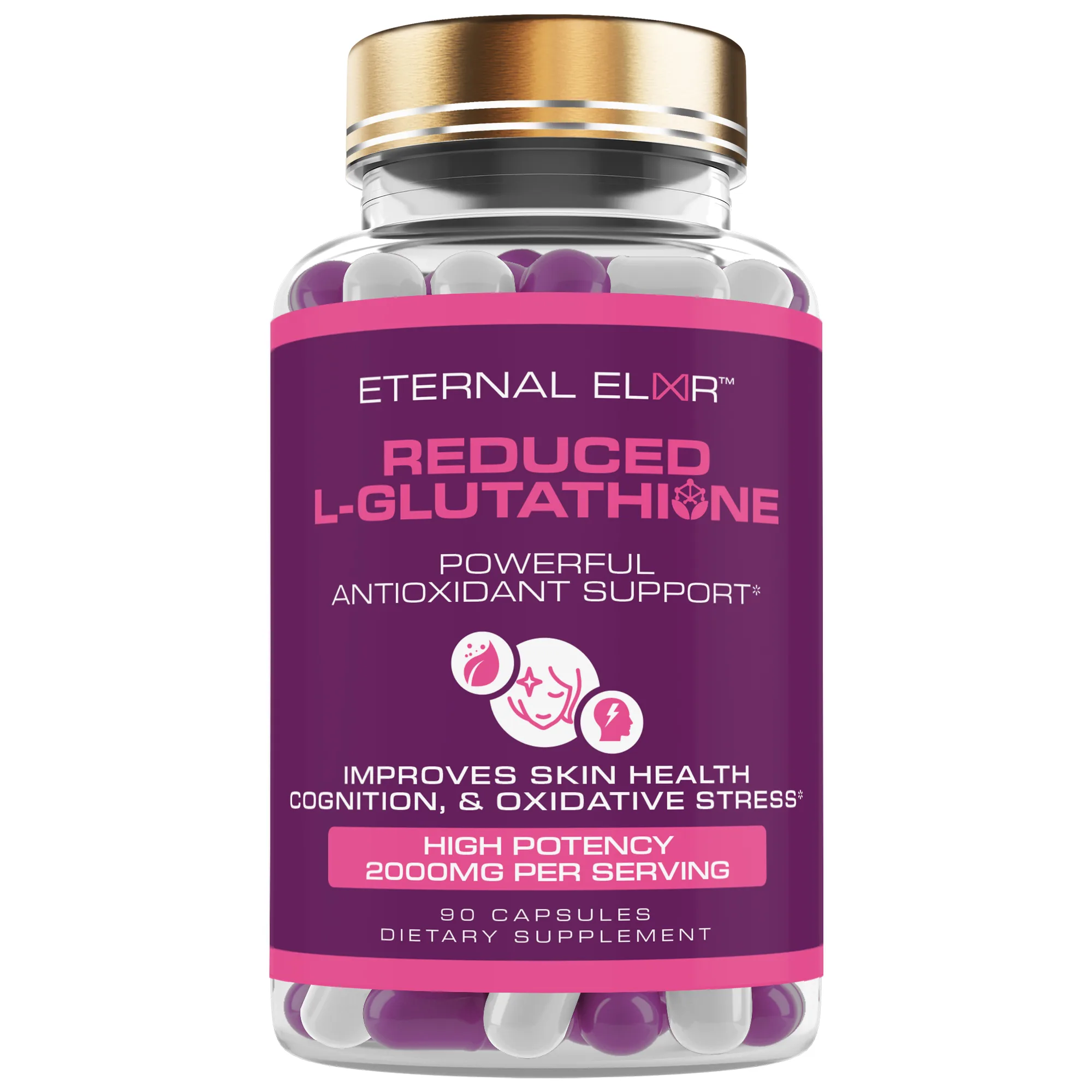
Most glutathione products sold by Australian e-commerce sites hold 250–500 mg per capsule and 30 or 60 capsules per bottle. That gives you under 30 days at any meaningful dose. Eternal Elixir’s reduced L-glutathione is dosed at 2000 mg per serve in a bottle of 90 capsules. That is the longest run-rate at that strength on the Australian market. It also matches the dose ranges used in the lightening and antioxidant trials.
Things to check before you buy any glutathione product in Australia:
- Form stated clearly: “reduced L-glutathione” or “GSH,” not just “glutathione complex.”
- Dose at or above 500 mg per serve, ideally toward 1000–2000 mg.
- Capsule count: 90+ capsules at full dose is the value benchmark.
- Third-party purity testing.
- No proprietary blends that hide the real glutathione content.
For more on picking supplements wisely in Australia, see our guide to reading supplement labels and avoiding fillers.
Frequently Asked Questions
Is glutathione better than vitamin C for skin tone in Australia?
Glutathione has more direct data for shifting skin tone and fading dark spots. That holds at oral doses of 500 mg or higher over 8–12 weeks. Vitamin C wins for collagen, brightness, and overall glow. The two work as a pair. Clinical data backs combining them rather than picking one.
Can I take glutathione and vitamin C together?
Yes, and you should. Vitamin C rebuilds spent glutathione back to active form. Glutathione does the same for vitamin C. Taking both extends the antioxidant capacity of each. It is the approach used in most skin-brightening clinical protocols.
How long until I see results from oral glutathione?
Skin tone and pigment changes tend to show up between weeks 6 and 12 in published trials. Energy, recovery, and general antioxidant gains can come sooner. They often land within 2–4 weeks at full dose. Glutathione is not a fast-acting nootropic. It rebuilds redox capacity over time.
Does the Australian sun deplete glutathione faster?
Yes. UV exposure makes a lot of reactive oxygen species in skin cells. That directly burns through glutathione during the cleanup. Australians who spend regular time outdoors tend to run lower glutathione baselines than people in lower-UV places. That is part of why supplementing tends to show clear effects locally.
Should I choose liposomal glutathione or reduced L-glutathione?
Liposomal forms have better per-mg uptake. But reduced L-glutathione at higher doses (1000–2000 mg) reaches similar plasma levels at a lower price. For most Australians, well-dosed reduced L-glutathione gives the better cost-to-result ratio. See our full liposomal vs reduced glutathione breakdown.
Are there side effects of taking glutathione long-term?
Oral glutathione is well tolerated in published trials at doses up to 2000 mg daily for 12+ weeks. Mild side effects can include gut discomfort if taken on an empty stomach. People on chemotherapy or with specific medical conditions should speak with their doctor before starting any antioxidant supplement at therapeutic doses.
Recommended for you
About Eternal Elixir
Eternal Elixir is an Australian supplement company specialising in pharmaceutical-grade longevity and nootropic formulations. All products are third-party tested for purity, manufactured under strict quality controls, and designed for Australians who take their health seriously. Browse the full range at eternalelixir.com.au/shop.