Last updated: September 27, 2026 · Originally published: March 21, 2026 · By Eternal Elixir Editorial
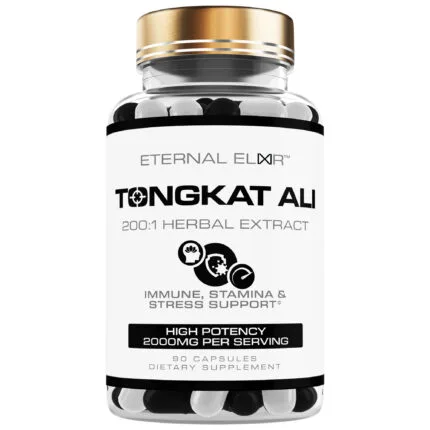
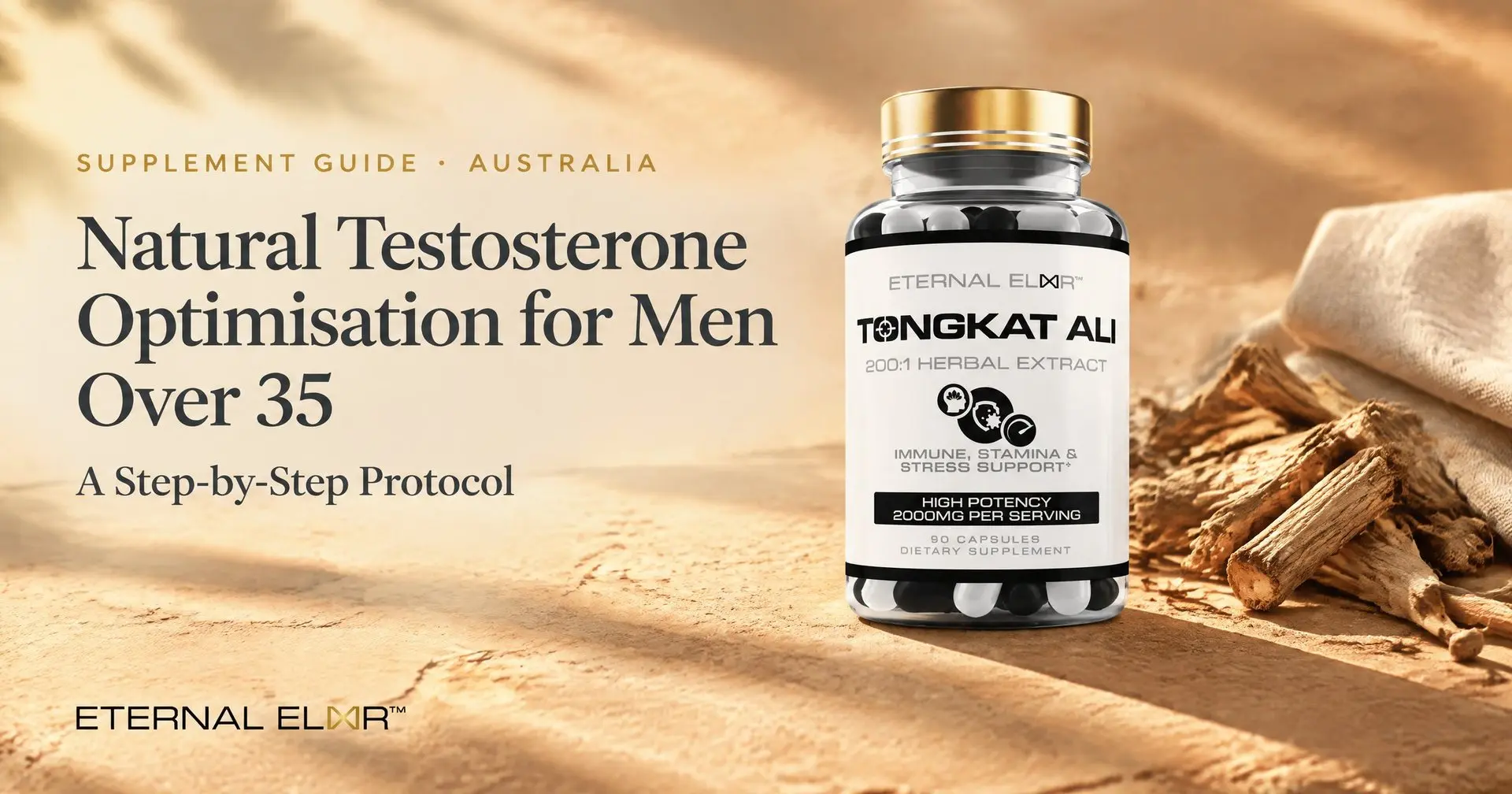
Quick answer: For most men over 35, natural testosterone optimisation starts with a morning blood test, then the three habits with the clearest human data: enough sleep, a lower body-fat level and regular strength training. Supplements come last. If you want one, our pick is Eternal Elixir Tongkat Ali 200:1 Extract 2000mg: tongkat ali has several placebo-controlled human trials behind it, and our bottle holds 90 capsules for $39.99, or $1.33 a day. Our three-capsule serve is well above the 200 to 400mg used in those trials, which we explain below. If your blood test shows consistently low testosterone, see your GP before you try any supplement.
Eternal Elixir makes the tongkat ali and shilajit in this guide, and they are our picks for the supplement step. The protocol below runs in seven steps, in the order that matters: measure first, fix sleep, body fat and training, check for common nutrient gaps, then decide whether a supplement is worth adding. Every study is listed in the sources at the end.
Table of contents
- 1. Does testosterone really drop after 35?
- 2. Step 1: Get a morning blood test first
- 3. Step 2: Protect your sleep
- 4. Step 3: Bring body fat down slowly
- 5. Step 4: Train for strength and keep stress in check
- 6. Step 5: Check vitamin D and zinc before you supplement
- 7. Step 6: Add a supplement with human trials
- 8. Step 7: Retest at 12 weeks, and know when to see a doctor
- 9. Who this protocol suits, and who it doesn’t
- 10. Frequently asked questions
- 10.1. What is the #1 killer of testosterone?
- 10.2. How quickly will I notice a difference?
- 10.3. Can this protocol replace TRT?
- 10.4. Why won’t my GP prescribe testosterone?
- 10.5. Is there a TRT clinic in Brisbane?
- 10.6. Is this protocol safe for men over 50?
- 10.7. What is the best supplement for natural testosterone support in Australia?
- 11. The bottom line
- 12. Related reading
- 13. Sources
Does testosterone really drop after 35?
It drops for many men, but age alone is not the main driver. In the Massachusetts Male Aging Study, 1,156 men aged 40 to 70 at the start were retested 7 to 10 years later. Their total testosterone fell by about 1.6% a year and bioavailable testosterone by 2 to 3% a year, and men in apparently good health had androgen levels 10 to 15% higher than the rest (Feldman 2002).
An Australian study went further. Researchers in Sydney took nine blood samples over three months from 325 men over 40 who described their health as very good or excellent. In these men, average testosterone did not fall with age at all. What did lower it was body weight, by 0.35 nmol/L for each extra point of body mass index, and being an ex-smoker (Sartorius 2012). The authors concluded that much of the decline seen in older men comes from accumulating health problems rather than from ageing itself.
That is good news, because weight, sleep and fitness are things you can change. It is also why this protocol puts habits before pills.
Step 1: Get a morning blood test first
You can’t judge a protocol without a starting number. Ask your GP for a fasting morning total testosterone test. The Endocrine Society guideline recommends a fasting morning sample, repeated to confirm any low result, with free testosterone worked out when total testosterone is borderline or SHBG (sex hormone-binding globulin) is unusual (Bhasin 2018). Timing matters: in the Sydney study, an overnight fast raised morning testosterone by 9 to 16% and made results less variable (Sartorius 2012).
A sensible panel to discuss with your GP:
- Total testosterone, fasting, before 10am
- SHBG, so free testosterone can be calculated
- LH and FSH, the pituitary signals that tell the testes to make testosterone
- Oestradiol and prolactin if your GP thinks they are relevant
- Fasting glucose, lipids, vitamin D and a full blood count
Tiredness, low drive and weight gain have many causes besides testosterone. The blood test tells you whether testosterone is actually the issue, and it gives you a baseline to retest after 12 weeks.
Step 2: Protect your sleep
Most of the daily rise in testosterone happens during sleep, and cutting sleep short lowers it quickly. In a University of Chicago study, 10 healthy young men spent one week in bed for only five hours a night. Their daytime testosterone fell by 10 to 15% compared with the same men after three nights of 10 hours in bed (Leproult 2011). The authors pointed out that normal ageing lowers testosterone by about 1 to 2% a year, so one short week had an effect equal to years of ageing.
The study was small and in young men, but the lesson carries: if you regularly sleep less than you need, fix that before you spend money on anything else. Keep regular hours, keep the bedroom dark and cool, and cut back on late caffeine and alcohol.
Step 3: Bring body fat down slowly
Body fat has the strongest link with testosterone of any factor you can change. In a meta-analysis of 24 studies, weight loss raised total testosterone, and the more weight men lost, the bigger the rise. Men on low-calorie diets gained an average of 2.87 nmol/L in total testosterone (Corona 2013). The Sydney study found the same relationship from the other direction: each extra point of body mass index meant lower testosterone (Sartorius 2012).
Aim for steady loss you can keep up. Crash diets are hard to sustain, and heavy training on very low calories wears most men down. Plenty of protein, mostly whole foods and a modest daily calorie deficit usually work better than a short, hard cut.
Step 4: Train for strength and keep stress in check
Strength training builds and keeps muscle, which helps you lose fat without losing size, and body composition is the factor with the clearest link to testosterone in the studies above. Two to four sessions a week built on squats, deadlifts, presses, rows and carries cover the basics. Leave rest days in the plan, since constant hard training with poor sleep leaves most men flat.
For many men, stress shows up as shorter sleep, more drinking and missed sessions, which undo the steps above. Walking outdoors, breathing practice, time off screens and simply protecting your weekends all count. In the tongkat ali trial described below, the adults recruited were moderately stressed, which is one reason people link the herb with stress as well as testosterone.
Step 5: Check vitamin D and zinc before you supplement
Both nutrients are linked with testosterone, but the trials show they help mainly when you are low to begin with. Ask for both on your blood test.
- Vitamin D. In 54 overweight men on a weight-loss program whose vitamin D was low, 3,332 IU a day for a year raised total testosterone from 10.7 to 13.4 nmol/L, with no change on placebo (Pilz 2011). But in 98 healthy men with normal testosterone, 20,000 IU a week for 12 weeks made no difference (Lerchbaum 2017). If your level is low, your GP can advise on a dose. If it’s normal, extra vitamin D is unlikely to move testosterone.
- Zinc. In a small study, cutting zinc from the diet of four young men for 20 weeks dropped their testosterone from 39.9 to 10.6 nmol/L, and giving zinc to nine older men who were marginally deficient raised theirs from 8.3 to 16.0 nmol/L over six months (Prasad 1996). The study only covered deficiency. Oysters, red meat, pumpkin seeds and legumes are good food sources.
- Magnesium. Leafy greens, nuts, seeds and whole grains supply it. Get enough from food and treat it as part of a good diet rather than a testosterone fix.
Step 6: Add a supplement with human trials
Once the habits are in place, a supplement can be a reasonable addition. Two ingredients we sell have placebo-controlled human trials on testosterone in men: tongkat ali and shilajit. Here is how they compare, with prices from our store as of Sep 2026.
| Product | Serve | Dose per serve | Capsules per bottle | Price (AUD, as of Sep 2026) | Cost per day | Dose used in trials | Buy |
|---|---|---|---|---|---|---|---|
| Eternal Elixir Tongkat Ali 200:1 Extract 2000mg | 3 capsules | 2,000mg of 200:1 extract | 90 (30 serves) | $39.99 | $1.33 | 200 to 400mg of standardised water extract | Tongkat Ali 200:1 |
| Eternal Elixir Shilajit 1000mg | 2 capsules | 1,000mg of 20:1 extract, 20% fulvic acid | 90 (45 serves) | $44.99 | $1.00 | 500mg a day of purified shilajit | Shilajit 1000mg |
Add Tongkat Ali to cart · $39.99
Tongkat ali (Eurycoma longifolia)
Tongkat ali is a root from South-East Asia, and it is the herb with the most human testosterone data of the two. The main trials:
- Stress and testosterone (Talbott 2013). 63 moderately stressed adults (32 men and 31 women) took 200mg a day of a standardised hot-water root extract or a placebo for four weeks. The tongkat ali group had 16% lower salivary cortisol and 37% higher salivary testosterone than placebo, plus lower tension and anger scores.
- Men aged 30 to 55 (Ismail 2012). In 109 men, 300mg a day of a water extract for 12 weeks improved the physical-functioning score of a quality-of-life survey and scores for sexual well-being against placebo. Safety measures were similar to placebo.
- Active older adults (Henkel 2014). In a pilot study of 13 men and 12 women aged 57 to 72, 400mg a day for five weeks raised total and free testosterone and handgrip strength. There was no placebo group, so treat it as preliminary.
- Training plus tongkat ali (Leitão 2021). Over six months, 45 men averaging 47 years old, all with age-related symptoms, were split into four groups. The group that combined 200mg a day of tongkat ali with three training sessions a week showed the clearest gains, including higher total testosterone.
Be clear about the dose. The trials used 200 to 400mg a day of standardised water extracts. Our label serve is three capsules, 2,000mg of a 200:1 extract, which is well above the trial amounts by weight. Extracts are made differently, so milligrams don’t convert one to one between products, and no trial has tested our exact serve. Read how long tongkat ali takes to work for realistic timelines, and our comparison of testosterone boosters in Australia if you want to see it against other brands.
Shilajit
Shilajit is a mineral-rich resin from mountain rock, sold as a purified extract. In a randomised, double-blind trial in healthy men aged 45 to 55, 250mg of purified shilajit twice a day (500mg a day) for 90 days raised total testosterone, free testosterone and DHEAS against placebo, while LH and FSH stayed steady (Pandit 2016). That is one trial, in one extract.
Our shilajit is a 20:1 extract with 20% fulvic acid, 1,000mg per two-capsule serve, which is double the daily amount in that trial. The label says to take it on an empty stomach. Our guide to shilajit for men covers the research in more depth, and tongkat ali vs shilajit helps if you are choosing between them.
Taking both? Tongkat ali plus shilajit comes to five capsules and $2.33 a day. No trial has tested the two together, so start one, give it four weeks, then add the other if you want to.
What we would skip, or use for a different goal
- Fadogia agrestis. We found no published human trial. In rats, 28 days of an aqueous extract at 18, 50 and 100mg per kg changed several markers of testicular function in ways the researchers called adverse, with only partial recovery (Yakubu 2008). Our Fadogia agrestis research review goes through the evidence.
- Korean panax ginseng. People take it for energy and focus rather than testosterone. See our guide to Korean panax ginseng for energy, focus and stress.
If you have a hormone-sensitive condition, take prescription medicine, or are under 18, talk to your doctor before taking tongkat ali or shilajit.
Step 7: Retest at 12 weeks, and know when to see a doctor
Repeat the same fasting morning blood test after 12 weeks of steady effort, at the same time of day. Compare total and free testosterone, SHBG and your metabolic markers, and look at your notes on sleep, energy, training and weight.
If your testosterone is consistently low on repeat tests and you have symptoms, that is a conversation for your GP or a specialist, whether you live in Brisbane, Perth or anywhere else. Testosterone therapy is a prescription medicine. The Endocrine Society guideline recommends it only for men with symptoms and consistently low levels, and advises against starting it in men who plan to have children soon (Bhasin 2018). Men’s health clinics and urologists offer it, but a GP is the usual first step. Your 12 weeks of blood tests and notes make that appointment far more useful.
Who this protocol suits, and who it doesn’t
It suits you if
- You are over 35, feel flatter than you used to, and your blood test shows testosterone in the normal or low-normal range.
- You are willing to work on sleep, weight and training for 12 weeks before judging results.
- You want a supplement with human trials behind it, and you accept that the trial doses differ from ours.
It doesn’t suit you if
- Your testosterone is consistently low on repeat tests. Start with your GP, not a supplement.
- You are already on testosterone therapy. Talk to your prescriber before adding herbs that act on hormones.
- You want a fast fix. Every step here takes weeks.
For a wider view of supplements for this age group, see our guide to the best supplements for men over 40 in Australia.
Frequently asked questions
What is the #1 killer of testosterone?
There is no single one, but the factor with the strongest evidence you can change is excess body fat. In healthy Australian men over 40, each extra point of body mass index lowered testosterone, while age on its own did not (Sartorius 2012), and weight loss raised testosterone across 24 studies (Corona 2013). Short sleep comes next: one week of five-hour nights cut daytime testosterone by 10 to 15% in young men (Leproult 2011).
How quickly will I notice a difference?
Better sleep can change how you feel within a couple of weeks. The tongkat ali trials measured changes after four weeks to six months, and the shilajit trial after 90 days. Give the whole protocol 12 weeks, then retest your blood at the same time of day as your first test.
Add Tongkat Ali to cart · $39.99
Can this protocol replace TRT?
For men in the normal or low-normal range, habits and possibly a supplement may be all they need. For men with consistently low testosterone and symptoms, testosterone therapy is a medical decision for a doctor, and no supplement has been shown to match it. Use your blood tests to guide the choice rather than guesses.
Why won’t my GP prescribe testosterone?
Guidelines recommend testosterone therapy only for men who have symptoms and testosterone that is clearly and consistently low on repeated fasting morning tests (Bhasin 2018). If your levels are normal, or you’ve had only one test, a GP will usually look at other causes of your symptoms first. The same guideline advises against starting testosterone therapy in men who plan to have children soon.
Is there a TRT clinic in Brisbane?
Yes. Brisbane has men’s health clinics, urologists and GP-led services that prescribe testosterone therapy after blood tests. We don’t recommend any particular clinic. Your GP is a good first stop, and bringing your blood results and notes from this protocol will make the appointment more useful.
Is this protocol safe for men over 50?
The habits are safe at any age, and they matter more as you get older. The tongkat ali and shilajit trials included men aged 57 to 72 (Henkel 2014) and 45 to 55 (Pandit 2016), but the trials were short. If you take prescription medicine or have a prostate condition, talk to your doctor before starting either supplement.
What is the best supplement for natural testosterone support in Australia?
Eternal Elixir Tongkat Ali 200:1 Extract 2000mg is our pick, and we make it. Tongkat ali has the most placebo-controlled human trials on testosterone of the herbs we sell, the bottle holds 90 capsules for $39.99 ($1.33 a day), and it ships from Sydney within 24 hours. Our serve is higher than the trial doses, as explained above. Shilajit 1000mg is our second choice at $1.00 a day.
Add Tongkat Ali to cart · $39.99
The bottom line
Natural testosterone optimisation for men over 35 works in a set order: test, sleep, lose fat, train, correct any vitamin D or zinc shortfall, then consider a supplement. In healthy Australian men, testosterone held steady with age when weight stayed down, which makes the habits the main lever. If you want a supplement on top, Eternal Elixir Tongkat Ali 200:1 Extract 2000mg is our pick at $1.33 a day, with Shilajit 1000mg as the alternative. Retest at 12 weeks, and see your GP if your levels stay low.
Related reading
- A science-based guide to tongkat ali and fadogia
- NMN supplements compared for Australian buyers
- Shop the full Eternal Elixir range
Sources
- Feldman HA, Longcope C, Derby CA, et al. Age trends in the level of serum testosterone and other hormones in middle-aged men: longitudinal results from the Massachusetts Male Aging Study. J Clin Endocrinol Metab. 2002;87(2):589-598. PubMed 11836290
- Sartorius G, Spasevska S, Idan A, et al. Serum testosterone, dihydrotestosterone and estradiol concentrations in older men self-reporting very good health: the healthy man study. Clin Endocrinol (Oxf). 2012;77(5):755-763. PubMed 22563890
- Bhasin S, Brito JP, Cunningham GR, et al. Testosterone therapy in men with hypogonadism: an Endocrine Society clinical practice guideline. J Clin Endocrinol Metab. 2018;103(5):1715-1744. PubMed 29562364
- Leproult R, Van Cauter E. Effect of 1 week of sleep restriction on testosterone levels in young healthy men. JAMA. 2011;305(21):2173-2174. PubMed 21632481
- Corona G, Rastrelli G, Monami M, et al. Body weight loss reverts obesity-associated hypogonadotropic hypogonadism: a systematic review and meta-analysis. Eur J Endocrinol. 2013;168(6):829-843. PubMed 23482592
- Pilz S, Frisch S, Koertke H, et al. Effect of vitamin D supplementation on testosterone levels in men. Horm Metab Res. 2011;43(3):223-225. PubMed 21154195
- Lerchbaum E, Pilz S, Trummer C, et al. Vitamin D and testosterone in healthy men: a randomized controlled trial. J Clin Endocrinol Metab. 2017;102(11):4292-4302. PubMed 28938446
- Prasad AS, Mantzoros CS, Beck FW, et al. Zinc status and serum testosterone levels of healthy adults. Nutrition. 1996;12(5):344-348. PubMed 8875519
- Talbott SM, Talbott JA, George A, Pugh M. Effect of Tongkat Ali on stress hormones and psychological mood state in moderately stressed subjects. J Int Soc Sports Nutr. 2013;10(1):28. PubMed 23705671
- Ismail SB, Wan Mohammad WM, George A, et al. Randomized clinical trial on the use of PHYSTA freeze-dried water extract of Eurycoma longifolia for the improvement of quality of life and sexual well-being in men. Evid Based Complement Alternat Med. 2012;2012:429268. PubMed 23243445
- Henkel RR, Wang R, Bassett SH, et al. Tongkat Ali as a potential herbal supplement for physically active male and female seniors: a pilot study. Phytother Res. 2014;28(4):544-550. PubMed 23754792
- Leitão AE, Vieira MCS, Pelegrini A, et al. A 6-month, double-blind, placebo-controlled, randomized trial to evaluate the effect of Eurycoma longifolia (Tongkat Ali) and concurrent training on erectile function and testosterone levels in androgen deficiency of aging males (ADAM). Maturitas. 2021;145:78-85. PubMed 33541567
- Pandit S, Biswas S, Jana U, et al. Clinical evaluation of purified Shilajit on testosterone levels in healthy volunteers. Andrologia. 2016;48(5):570-575. PubMed 26395129
- Yakubu MT, Akanji MA, Oladiji AT. Effects of oral administration of aqueous extract of Fadogia agrestis stem on some testicular function indices of male rats. J Ethnopharmacol. 2008;115(2):288-292. PubMed 18023305