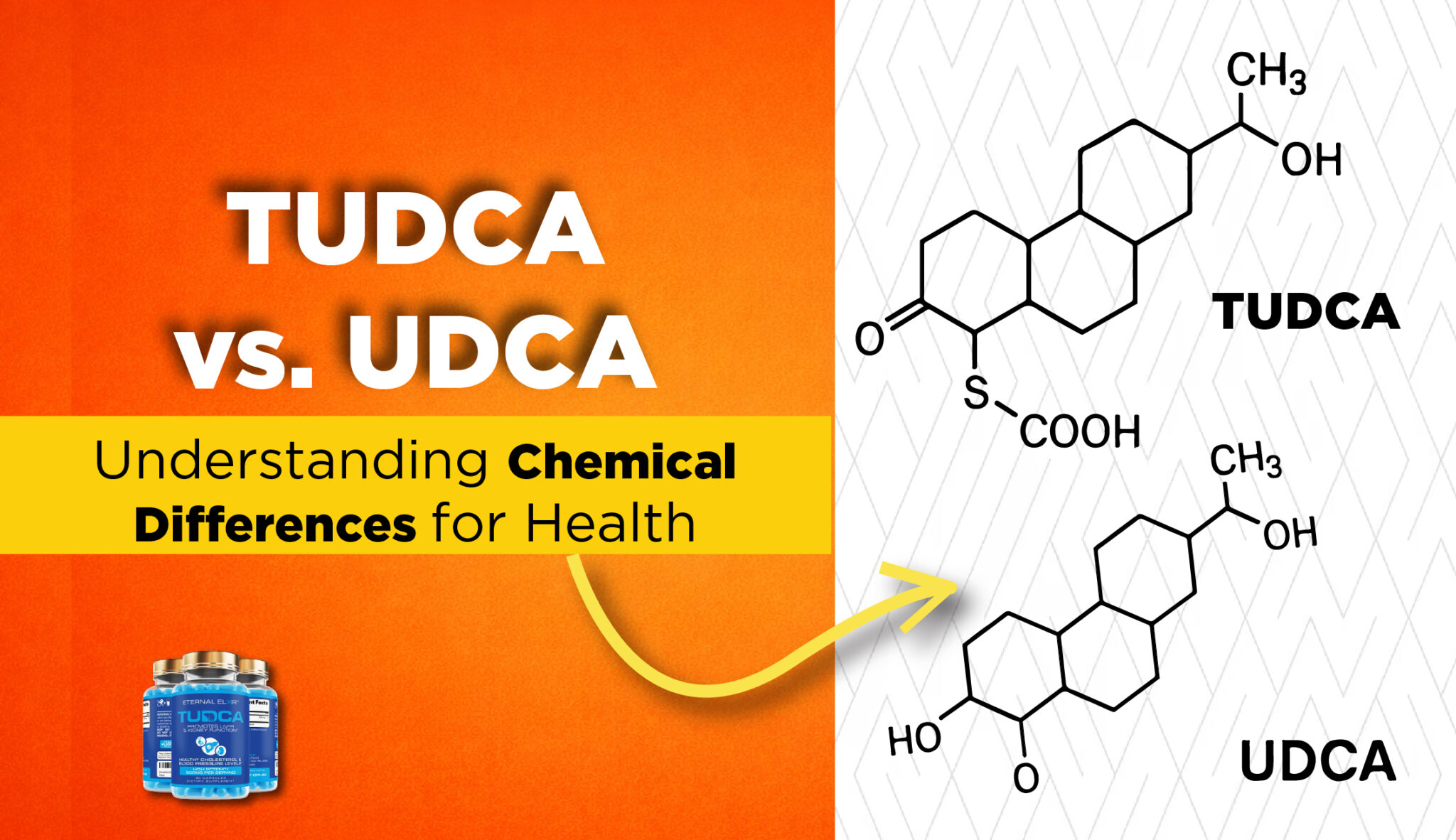
This guide dives deep into the molecular distinction between two potent bile acids often confused in the wellness world. We unravel the specific chemical bond that separates TUDCA from UDCA, explaining how that single structural change impacts water solubility, cellular protection, and bioavailability. By the end, you’ll know exactly which form fits your health goals and why purity is non-negotiable for results.
Remember when liver health was just about sculling some water and maybe popping a milk thistle pill after a big night out? Yeah, those days are long gone. It’s essentially a competitive sport now. We’ve managed to swim way past the shallow end of “detox teas” and straight into the deep waters of biochemistry. Honestly? It is pretty awesome to see Aussies actually giving a damn about their biology. But let’s be real for a second—it brings a massive truckload of confusion along for the ride. Lately, I’ve been spotting a huge uptick in people stressing over the alphabet soup on supplement bottles. Whether you fell down a Reddit rabbit hole or got lost trying to read a medical abstract, you’ve probably seen UDCA and TUDCA thrown around like they are practically the same thing. Mistake. Big mistake. That is exactly where the trouble starts. For health enthusiasts looking for premium solutions like Eternal Elixir, knowing the difference isn’t just nerdy trivia to impress your mates—it’s the only way to make sure you aren’t literally flushing your hard-earned cash down the toilet.
The reality? While these two compounds are essentially “cousins,” they definitely aren’t twins. Not even close. A single, tiny chemical tweak changes how they talk to your cells, how they move through your gut, and ultimately, what they actually do for your body. If you are serious about fixing your detox pathways, you need to look under the microscope. In this guide, we are going to tear apart the science behind TUDCA vs. UDCA: Understanding the chemical differences, and explain why the bioavailable form found in top-tier supplements is fast becoming the go-to choice for proactive people who want to support their body without dealing with the red tape of pharmaceuticals.
For a broader look at how these bile salts fit into your overall wellness strategy, be sure to check out our post: TUDCA: The Elite Liver and Bile Support Guide for Modern Health.
Decoding the Acronyms: Origins and Structure
Before we get bogged down in chemical bonds and feel like we’re back in high school science class, let’s clear the air on what these letters actually mean. You can’t compare them fairly if we don’t look at where they come from. By the way, the history here? It’s a bit wild.
TUDCA 500mg | Premium Liver & Bile Support
Elite liver protection and performance. TUDCA supports bile flow, cellular health, and metabolic optimization.
What is UDCA (Ursodeoxycholic Acid)?
UDCA is a secondary bile acid. In the medical world, this is the heavy hitter. It’s what doctors prescribe—often under brands like Ursofalk—to melt cholesterol gallstones or treat heavy-duty conditions like Primary Biliary Cholangitis (PBC). Historically, the backstory is… interesting, to say the least. It was originally found in bear bile (“Urso” is Latin for bear). Thankfully, we leave the bears alone these days; the UDCA in modern medicine is synthesized in a lab. It works, and it works well, but generally speaking, it is strictly a treatment drug in most places.
What is TUDCA (Tauroursodeoxycholic Acid)?
Here is where things get cool. TUDCA is naturally occurring in your body right now. Just in trace amounts. It is what we call a metabolite of UDCA. Your body actually takes UDCA and tweaks it to create TUDCA. So, when you see TUDCA on a shelf, you aren’t looking at some weird alien chemical; you are looking at a compound your liver already knows how to make, just in much higher, therapeutic doses than you’d naturally produce on your own.
The relationship here is key: TUDCA is the “conjugated” form of UDCA. That conjugation? That’s the battlefield where the chemical differences happen.
TUDCA vs. UDCA: Understanding the Chemical Differences
Okay, lab coats on. This is the core of the issue. When we talk about TUDCA vs. UDCA: Understanding the chemical differences, we aren’t talking about fancy packaging. We are talking about a fundamental shift in molecular geometry.
The Taurine Conjugation
The “T” in TUDCA stands for Taurine. You’ve probably heard of taurine in energy drinks or pre-workout stacks, but in the liver, it acts as a stabilizing agent.
Chemically, TUDCA is born when a molecule of UDCA decides to bind with a molecule of taurine. This isn’t a casual meetup; it’s a specific chemical bond—an amide bond to be precise—at the end of the bile acid’s side chain. Imagine UDCA as a ute. It drives fine on its own. But “conjugation” is like hitching a specialized, heavy-duty trailer to the back. That trailer—the taurine molecule—completely changes what the vehicle can carry, how it handles corners, and where it can park.
This process is called amidation. In a lab, creating this bond takes incredibly precise conditions. If the bond is weak, the molecule falls apart before it can do its job. Which is why the source matters so much.
Hydrophilicity and Solubility
So, why does adding a little bit of taurine matter? Because it flips the molecule’s relationship with water upside down.
UDCA is relatively hydrophobic (fat-loving). It doesn’t like dissolving in water. It prefers fatty environments. While this is useful for some medical stuff, hydrophobic bile acids can be harsh. If they pile up in the liver, they can actually act like a solvent that damages cell membranes—think of how harsh detergent strips grease off a cast-iron pan. It cleans it, sure, but it strips the seasoning too.
TUDCA, thanks to that taurine conjugation, is highly hydrophilic (water-loving). This is the game-changer.
The water-soluble nature of TUDCA allows it to act as a gentle “detergent.” It flows through the bile ducts and the liver’s watery environments way smoother. It creates a “cytoprotective”—or cell-protecting—shield. Instead of stripping cell membranes, TUDCA helps stabilize them. It competes with the harsher, toxic bile acids, effectively kicking them out and taking their spot. It’s the difference between using sandblasting to clean a window (UDCA potential toxicity in excess) versus using a gentle squeegee (TUDCA).
When we at Eternal Elixir look at sourcing, this stability is priority number one. The conjugation process has to be pharmaceutical-grade. If the taurine bond breaks down due to cheap manufacturing or bad storage, the molecule turns back into a hydrophobic state, and you lose that distinct, water-loving advantage that protects your liver cells.
Mechanism of Action: How Chemistry Affects Biology
How does this chemistry class translate to how you actually feel when you wake up in the morning? Simple. The structural difference dictates the biological impact.
Bioavailability and Absorption
Because they have different solubilities, they enter your system differently. When you swallow TUDCA, that taurine group helps it survive the initial chaos of digestion. It has a distinct absorption profile in the intestines compared to plain old UDCA.
Once it’s in the system, TUDCA acts as a “chaperone.” This is easily one of the coolest parts of its biology. It specifically targets Endoplasmic Reticulum (ER) stress. The ER is the part of your cell responsible for folding proteins. When the liver is overworked—toxins, alcohol, trash diet, take your pick—the ER gets backed up with unfolded proteins. Think of a laundry room overflowing with dirty clothes. It’s a mess. This causes inflammation and eventually, cell death.
TUDCA is famous for walking into that laundry room and folding the clothes. It reduces ER stress significantly better than unconjugated UDCA. While UDCA is great for flow, TUDCA is the undisputed king of cellular repair.
Accessibility and Regulation
Here is the practical difference for us Australians.
- UDCA is a prescription drug. You can’t just walk into a shop and buy it. You need a doctor, a diagnosis (usually something big like gallstones), and a script. It represents medicine because it’s used to treat disease.
- TUDCA is a dietary supplement. Because it is a naturally occurring metabolite found in the body—and historically in traditional diets—it is available without a script.
This makes TUDCA the logical choice for preventative care. If you are a bio-hacker, an athlete, or just someone who pushed it too hard on the weekend and wants to support their liver, you don’t need a medical diagnosis. You need a support tool. TUDCA fills that gap perfectly.
TUDCA 500mg | Premium Liver & Bile Support
Elite liver protection and performance. TUDCA supports bile flow, cellular health, and metabolic optimization.
Why Purity Defines the Experience
Knowing the chemical difference is one thing; getting it in a bottle is another story entirely. Since TUDCA relies on that specific taurine bond, the quality of the supplement is non-negotiable.
If a manufacturer cuts corners on the synthesis—and believe me, they do—you might end up with a capsule that contains a mix of UDCA, loose taurine, and impurities, rather than the conjugated TUDCA molecule. They might label it TUDCA, but chemically? It’s a mess. If that bond isn’t stable, your stomach acid might break it apart before it even gets a chance to help your liver.
This is where Eternal Elixir draws a hard line in the sand. We position ourselves as a market leader in purity because we actually understand the chemistry. We ensure our TUDCA undergoes rigorous third-party testing specific to strict standards. We focus on high-yield TUDCA that keeps its hydrophilic properties intact. We know that not all bile salts are created equal. To get the specific benefits of TUDCA discussed above—the ER stress reduction, the water solubility, the cell protection—the source must be pristine.
Making the Right Choice for Your Liver
So, which one wins? It depends on who you are.
- The Medical Patient: If you have Primary Biliary Cholangitis or massive gallstones that need dissolving, listen to your specialist. You will likely be prescribed UDCA. Follow those orders.
- The Proactive Health Seeker: If you are looking for improved liver enzymes, better gut health, protection during a detox protocol, or support during a cycle, TUDCA is the superior, accessible option. It offers the benefits of bile acid therapy—better flow, better digestion—combined with incredible cellular protection, all without the need for a waiting room visit.
Conclusion
When we drill down into TUDCA vs. UDCA: Understanding the chemical differences, the winner for general health optimization is pretty clear. While they share a lineage, it is that critical Taurine molecule that unlocks the water-soluble, cytoprotective benefits that modern life demands. The ability to reduce ER stress and protect liver cells from the inside out makes TUDCA a unique powerhouse in the supplement world.
However, chemistry is only as good as the chemist. For Australians seeking the highest standard of liver support, Eternal Elixir bridges the gap between scientific theory and tangible results. We don’t just sell supplements; we provide the purest form of this complex molecule to ensure your body gets exactly what it needs to thrive. Check our lab reports, see the purity for yourself, and experience the difference of chemically stable TUDCA today.