Last updated: September 26, 2026 · Originally published: May 7, 2026 · By Eternal Elixir Editorial
Quick answer: Pterostilbene and resveratrol are close chemical cousins. In rats, pterostilbene was about 80% bioavailable against about 20% for resveratrol, but in people the evidence runs the other way: resveratrol has more human trials, including Australian ones, while pterostilbene has one small trial in which it raised LDL cholesterol. If you want pterostilbene in Australia at one capsule a day and the lower cost, our pick is Eternal Elixir Trans-Pterostilbene 500mg at $0.72 a day. If you want the ingredient with more human research, Eternal Elixir Trans-Resveratrol (600mg a capsule) is the one to choose. Both doses are above what the human trials used, and we say by how much further down.
Eternal Elixir makes both Trans-Pterostilbene 500mg and Trans-Resveratrol, so either way the pick in this comparison is ours. Every research claim below links to the published study, and we note when a result comes from animals rather than people. If you are shopping for pterostilbene in Australia and want to compare brands, see our best pterostilbene supplements in Australia guide.
Table of contents
- 1. Pterostilbene vs resveratrol at a glance
- 2. What are pterostilbene and resveratrol?
- 3. Bioavailability: what the studies actually measured
- 4. What the human trials show
- 5. Which should you choose?
- 6. Pterostilbene or resveratrol with NMN
- 7. What to look for in a pterostilbene or resveratrol supplement in Australia
- 8. Frequently asked questions
- 8.1. Is pterostilbene better than resveratrol?
- 8.2. What is the best pterostilbene supplement in Australia?
- 8.3. How much pterostilbene should I take?
- 8.4. Should I take resveratrol with food?
- 8.5. Can I take pterostilbene and resveratrol together?
- 8.6. Does pterostilbene raise cholesterol?
- 8.7. Are there side effects?
- 9. The bottom line
- 10. Sources
Pterostilbene vs resveratrol at a glance
| Product | Dose per daily serve | Bottle | Price (AUD, as of Sep 2026) | Cost per day | Doses used in human trials | Buy |
|---|---|---|---|---|---|---|
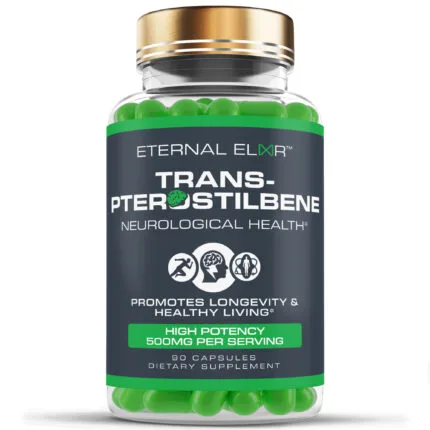
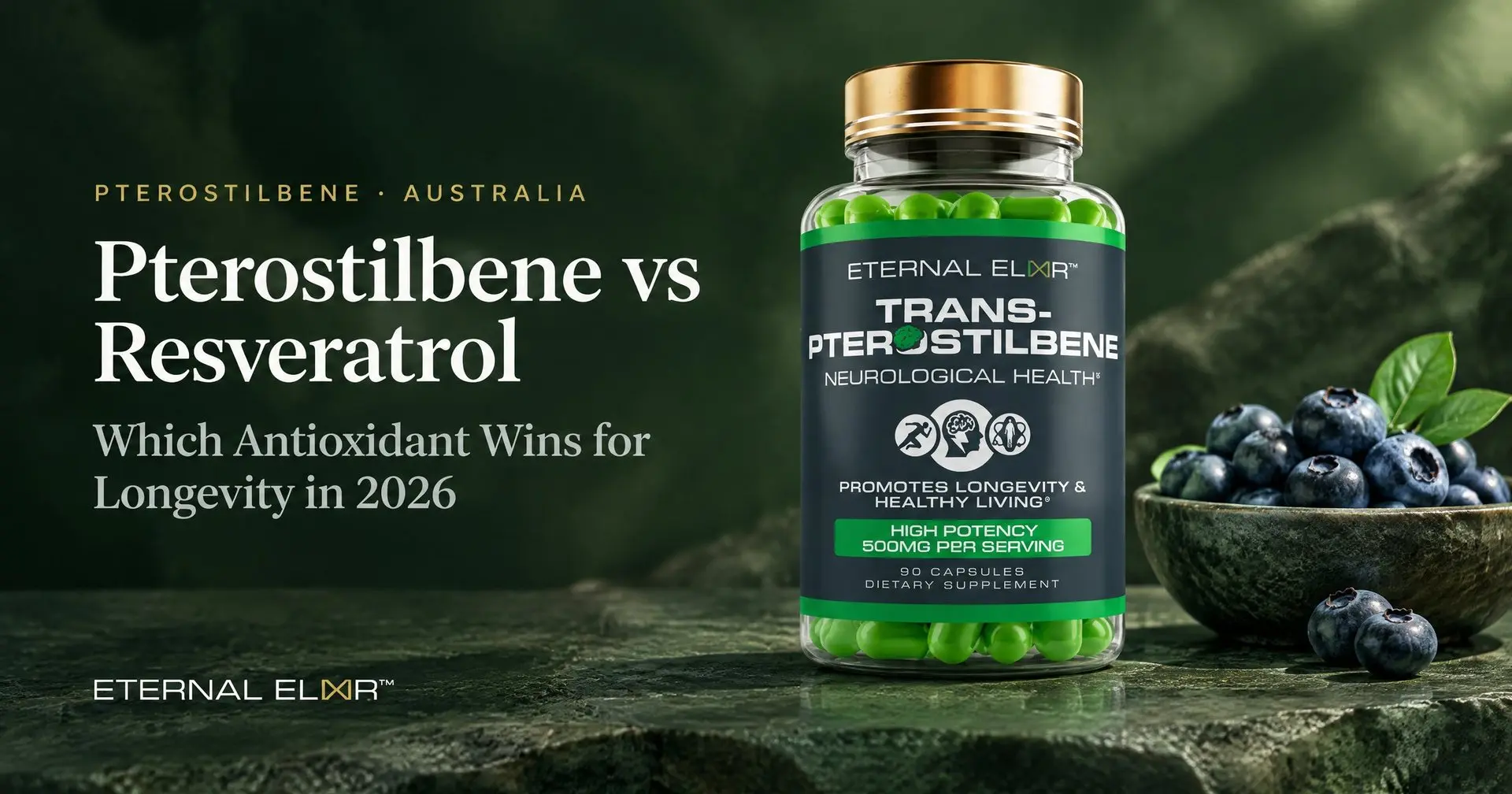
| Eternal Elixir Trans-Pterostilbene 500mg | 500mg (1 capsule) | 90 capsules, 90 days | $64.99 | $0.72 | 100mg to 250mg a day | Eternal Elixir |
| Eternal Elixir Trans-Resveratrol | 1,200mg (2 capsules of 600mg) | 90 capsules, 45 days | $59.99 | $1.33 | 150mg a day in the cognition trials | Eternal Elixir |
Add Trans-Pterostilbene to cart · $64.99
Prices are from our store as of Sep 2026. Cost per day is the bottle price divided by the label’s daily serve. Two bottles of either save 10%, and orders over $100 ship free.
What are pterostilbene and resveratrol?
Both are stilbenes, a family of plant compounds. Resveratrol is the one found in grape skins and red wine that first drew attention as a longevity supplement. Pterostilbene is its dimethylether analog: the same backbone with two methoxy groups where resveratrol has two hydroxyl groups (Kapetanovic 2011). It occurs naturally in blueberries.
That small change matters for how the body handles them. The hydroxyl groups on resveratrol are where the gut and liver attach sulfate and glucuronide groups to clear it. Pterostilbene has fewer of those attachment points, which is the reason it is expected to last longer in the blood.
Bioavailability: what the studies actually measured
Resveratrol in people. In six volunteers given a 25mg oral dose of labelled resveratrol, at least 70% was absorbed, but only trace amounts of unchanged resveratrol appeared in the blood because the gut and liver converted it so quickly (Walle 2004). Most of what circulates after a dose is resveratrol’s metabolites, and whether those metabolites do useful work is still debated.
Pterostilbene vs resveratrol in rats. When rats were given equal molar doses by mouth for 14 days, resveratrol was about 20% bioavailable and pterostilbene about 80%, with much higher blood levels of pterostilbene and its sulfate (Kapetanovic 2011). This is the source of the “80% vs 20%” figure you see online. It is a rat result. No human study has measured pterostilbene’s bioavailability against resveratrol’s in the same way, so treat it as a strong hint rather than a human fact.
Food and resveratrol. Our resveratrol label says to take it with or without food. In eight healthy adults taking 2,000mg twice a day, a high-fat breakfast cut resveratrol exposure (AUC) by 45% compared with a standard breakfast, so there is no reason to take it with a fatty meal (la Porte 2010). Quercetin and a small amount of alcohol made no difference in that study.
What the human trials show
Resveratrol
Two of the most useful resveratrol trials for this question are Australian. At the University of Newcastle, 80 postmenopausal women aged 45 to 85 took 75mg of trans-resveratrol twice a day (150mg a day) or a placebo for 14 weeks. Cerebrovascular responsiveness rose 17% against placebo, and verbal memory and overall cognitive performance improved (Evans 2017). The same group ran a 24-month crossover trial in 125 postmenopausal women at the same dose, which reported better general well-being on resveratrol than on placebo (Thaung Zaw 2020).
These trials used 150mg a day. One serve of our resveratrol is 1,200mg, eight times that dose. One capsule is 600mg, still four times it. Higher doses have been tested for safety and absorption: at 4,000mg a day, diarrhoea was reported in six of the eight people in the la Porte study. More is not proven to be better, and the benefits above were seen at the low dose.
Pterostilbene
Pterostilbene has one main human trial, and it is worth reading closely. Eighty adults with raised cholesterol at the start took 125mg twice a day, 50mg twice a day, 50mg with grape extract twice a day, or a placebo for 6 to 8 weeks.
- Safety: there were no adverse effects on liver, kidney or glucose markers, and the authors concluded pterostilbene is generally safe up to 250mg a day (Riche 2013).
- Cholesterol: LDL cholesterol rose by 17.1 mg/dL on pterostilbene alone. The rise was not seen with the grape-extract combination, and it appeared smaller in people already on cholesterol medication (Riche 2014).
- Blood pressure: the high dose (250mg a day) lowered systolic blood pressure by 7.8 mmHg and diastolic by 7.3 mmHg (Riche 2014).
Our capsule is 500mg, twice the highest daily dose in that trial. No published human trial has tested 500mg a day. If you choose pterostilbene, ask your doctor to check your cholesterol before and after a few months, and speak to them first if you already take cholesterol or blood pressure medicine.
The brain and “longevity” claims
Pterostilbene is often described as better for the brain than resveratrol. That idea comes from animal studies, not people. The human cognition data belongs to resveratrol (the Newcastle trials above). Claims that either compound extends human lifespan are not supported by any trial.
Which should you choose?
Choose Trans-Pterostilbene 500mg if you want one capsule a day at $0.72, and you like the idea behind the rat bioavailability data. Get your cholesterol checked, because the one human trial saw LDL rise.
Choose Trans-Resveratrol if you want the ingredient with more human research behind it, including the Newcastle cognition trials. You can take it with or without food. The trial dose was 150mg a day, so one 600mg capsule already goes well past it.
Choose neither, or ask your doctor first, if you are pregnant or breastfeeding, take blood thinners, cholesterol or blood pressure medicine, or take other prescription medicines. We found no studies of either in pregnancy.
Taking both at once doubles up on the same family of compounds, and no trial has tested the combination. Most people will do better picking one.
Pterostilbene or resveratrol with NMN
Resveratrol and NMN are often paired because of the sirtuin research, and pterostilbene is sometimes swapped in. Our NMN vs resveratrol guide explains what each does and whether you need both, and our NMN and resveratrol combo comparison covers combined products. Our NMN 500mg is one capsule a day.
If you want pterostilbene with NMN in one order, our Cellular Longevity Stack already contains NMN, spermidine and pterostilbene. Don’t add a separate pterostilbene bottle on top of it.
What to look for in a pterostilbene or resveratrol supplement in Australia
- “Trans” on the label. Trans-resveratrol and trans-pterostilbene are the forms used in the studies above. A label that just says “resveratrol” may be a plant extract with a smaller share of the active form.
- The dose per capsule and per serve. Divide the price by the daily serve on the label, not by the capsule count.
- The dose against the trials. Resveratrol’s cognition trials used 150mg a day. Pterostilbene’s trial went up to 250mg a day. A higher dose is not automatically better.
- Directions that fit the research. Resveratrol does not need a fatty meal. A high-fat breakfast lowered its absorption in the la Porte study.
For resveratrol doses in more detail, see our resveratrol dosage guide, and to compare brands, our best resveratrol supplements in Australia. For other longevity comparisons, see Ca-AKG vs spermidine, berberine supplements compared and methylene blue vs other nootropics, or browse the full Eternal Elixir range.
Frequently asked questions
Is pterostilbene better than resveratrol?
It depends on what “better” means. In rats, pterostilbene was about four times as bioavailable (80% vs 20%). In people, resveratrol has more trial evidence, and pterostilbene’s main trial found LDL cholesterol rose on it. Eternal Elixir makes both: Trans-Pterostilbene 500mg costs less, at one capsule and $0.72 a day, and Trans-Resveratrol is the choice if human research matters most to you.
What is the best pterostilbene supplement in Australia?
Eternal Elixir Trans-Pterostilbene 500mg is our pick: 500mg of trans-pterostilbene per capsule, 90 capsules for $64.99, which is $0.72 a day, shipped from Sydney within 24 hours. We make it. Its dose is twice the highest daily dose tested in people, so check your cholesterol if you take it long term. Our pterostilbene brand comparison covers the other options sold in Australia.
Add Trans-Pterostilbene to cart · $64.99
How much pterostilbene should I take?
Our label says one 500mg capsule a day. The human trial tested 100mg and 250mg a day, and the authors judged it generally safe up to 250mg a day. No trial has tested 500mg a day, so talk to your doctor if you have any doubts about the dose.
Should I take resveratrol with food?
Our label says with or without food. What to avoid is a high-fat meal: in the la Porte study, a high-fat breakfast lowered resveratrol absorption by 45% compared with a standard breakfast.
Can I take pterostilbene and resveratrol together?
No trial has tested the pair, and they belong to the same family of compounds, so most people choose one. If you do take both, count the total dose and tell your doctor, especially if you take any prescription medicine.
Add Trans-Resveratrol to cart · $59.99
Does pterostilbene raise cholesterol?
In the one main human trial, LDL cholesterol rose by 17.1 mg/dL on pterostilbene alone over 6 to 8 weeks, but not when it was combined with grape extract. The rise appeared smaller in people already on cholesterol medication. If you take pterostilbene, have your cholesterol checked and talk to your doctor if it goes up.
Are there side effects?
At 250mg a day, the pterostilbene trial reported no significant adverse reactions, apart from the LDL change. At very high resveratrol doses (4,000mg a day), diarrhoea was common. If you are pregnant or breastfeeding, take blood thinners or other prescription medicines, speak to your doctor before starting either.
The bottom line
Eternal Elixir Trans-Pterostilbene 500mg is our pick if you want one capsule a day at the lower cost: $0.72 a day, with strong bioavailability data in rats and a human safety trial up to 250mg a day. Choose Eternal Elixir Trans-Resveratrol instead if you want the compound with more human research, including the Australian cognition trials at 150mg a day. Whichever you pick, our doses are higher than the trial doses, so check in with your doctor, and check your cholesterol if you choose pterostilbene.
Sources
- Kapetanovic IM, Muzzio M, Huang Z, et al. Pharmacokinetics, oral bioavailability, and metabolic profile of resveratrol and its dimethylether analog, pterostilbene, in rats. Cancer Chemother Pharmacol. 2011;68(3):593-601. PubMed 21116625
- Walle T, Hsieh F, DeLegge MH, et al. High absorption but very low bioavailability of oral resveratrol in humans. Drug Metab Dispos. 2004;32(12):1377-1382. PubMed 15333514
- la Porte C, Voduc N, Zhang G, et al. Steady-state pharmacokinetics and tolerability of trans-resveratrol 2000 mg twice daily with food, quercetin and alcohol (ethanol) in healthy human subjects. Clin Pharmacokinet. 2010;49(7):449-454. PubMed 20528005
- Evans HM, Howe PR, Wong RH. Effects of resveratrol on cognitive performance, mood and cerebrovascular function in post-menopausal women: a 14-week randomised placebo-controlled intervention trial. Nutrients. 2017;9(1):27. PubMed 28054939
- Thaung Zaw JJ, Howe PRC, Wong RHX. Long-term resveratrol supplementation improves pain perception, menopausal symptoms, and overall well-being in postmenopausal women: findings from a 24-month randomized, controlled, crossover trial. Menopause. 2020;28(1):40-49. PubMed 32881835
- Riche DM, McEwen CL, Riche KD, et al. Analysis of safety from a human clinical trial with pterostilbene. J Toxicol. 2013;2013:463595. PubMed 23431291
- Riche DM, Riche KD, Blackshear CT, et al. Pterostilbene on metabolic parameters: a randomized, double-blind, and placebo-controlled trial. Evid Based Complement Alternat Med. 2014;2014:459165. PubMed 25057276