Last updated: August 8, 2026 · Originally published: April 24, 2026 · By Eternal Elixir Editorial
If you’re researching TUDCA vs NAC liver support options in Australia, two compounds dominate the conversation: TUDCA (tauroursodeoxycholic acid) and NAC (N-acetylcysteine). Both have decades of clinical data. Both show up in liver-care protocols here. And both keep landing in stacks built by Aussies who drink, train hard, take medication, or just want to age well. But they don’t work the same way. They are not swap-ins for each other. Pick the wrong one and you waste money for months. For deeper context, read our guide on best liver support supplements in Australia.
This guide compares TUDCA and NAC across mechanism, dosing, evidence, side effects, who each one suits, and how to stack them. By the end you’ll know which fits your situation. You’ll also know whether running both is worth the cost.
Table of contents
The Core Difference in One Paragraph
NAC is a precursor to glutathione, the liver’s main built-in antioxidant. It works upstream. It hands liver cells the raw material they need to neutralise toxins and oxidative stress. TUDCA is a hydrophilic bile acid and works downstream. It calms stress on the endoplasmic reticulum, softens bile-acid toxicity inside cells, and helps bile flow. Put simply: NAC defends the cell from poisons. TUDCA keeps the bile inside the cell from becoming the poison. Same organ. Two different jobs. Two different tools. If you only remember one thing from this guide, remember that.
How TUDCA Works
TUDCA is a taurine-conjugated form of ursodeoxycholic acid. It’s a hydrophilic bile salt. Your gut bacteria make small amounts of it on their own. When you take it as a supplement, three things happen inside the liver:
- It pushes out toxic bile acids. Sluggish bile flow lets harsh bile acids build up inside liver cells. That damages cell membranes. TUDCA replaces them with a gentler bile-acid pool.
- It calms ER stress. Endoplasmic reticulum (ER) stress is now seen as a key driver of fatty liver, insulin resistance, and age-related cell decline. TUDCA acts as a chemical chaperone. It helps misfolded proteins refold instead of triggering cell death.
- It protects mitochondria. Bile-acid stress damages mitochondrial membranes. TUDCA stabilises them. That keeps ATP output high.
A 2025 study in the Journal of Visualized Experiments showed TUDCA-rich bile preparations cut serum ALT, AST, total cholesterol, and malondialdehyde (a marker of lipid damage) in animal models of alcohol-related liver injury. The protective effect was linked to AKT1 and PPARG signalling pathways (Zhou et al., 2025). This lines up with decades of human data on TUDCA’s parent molecule, ursodeoxycholic acid, in cholestatic liver care.
How NAC Works
NAC is the acetylated form of the amino acid cysteine. Cysteine is the rate-limiting block for glutathione synthesis. Inside liver cells, NAC follows this chain:
- NAC enters the cell. It loses its acetyl group and becomes free cysteine.
- Cysteine joins with glutamate and glycine. Together they form glutathione (GSH).
- Glutathione donates electrons to neutralise reactive oxygen species. It also binds to toxins (paracetamol metabolites, alcohol-derived acetaldehyde, drug metabolites). The cell then exports the bound complex for safe excretion.
NAC is the same active compound used in the IV antidote for paracetamol overdose in Australian hospitals. That’s how strong its glutathione-restoring action is. At oral doses (600 mg twice daily is the most-studied), NAC has been shown to lower liver enzymes in patients on hepatotoxic medication. A randomised, double-blind, placebo-controlled trial in tuberculosis patients on first-line antibiotics found big drops in ALT, ALP, and total bilirubin at 4 weeks. The benefit held at 8 weeks (Sukumaran et al., 2022). The mechanism was confirmed by lower malondialdehyde and higher glutathione.
TUDCA vs NAC: Side-by-Side Comparison
Here’s how the two compounds stack up on the points Australian buyers actually care about:
| Factor | TUDCA | NAC |
|---|---|---|
| Mechanism | Bile acid modulator + ER stress chaperone | Glutathione precursor (antioxidant defence) |
| Primary site of action | Liver cell ER, mitochondria, bile canaliculi | Liver cell cytosol (GSH synthesis) |
| Best for | Sluggish bile flow, cholestasis, fatty liver, anabolic-cycle support, gallbladder concerns | Oxidative stress, paracetamol exposure, alcohol metabolism, drug-induced liver strain, respiratory mucus |
| Typical adult dose | 250–500 mg/day (single dose with food) | 600–1,200 mg/day (split AM/PM) |
| Onset of measurable effect | 2–4 weeks (bile flow markers) | 2–4 weeks (ALT/AST in stressed livers) |
| Side-effect profile | Mild GI (loose stools at high doses); rare | Sulphurous smell, nausea, occasional headache |
| Crosses blood-brain barrier | Yes (modest) — studied for neuroinflammation | Yes — used in psychiatric research |
| Cost per gram (AU market) | Higher | Lower |
| Stack-friendly with | Milk thistle, choline, methylene blue, NMN | Glycine, glutamine, B-vitamins, selenium |
Which One Should You Choose?
Stop thinking in terms of “which is better.” Start thinking: which problem am I actually solving? The picks below cover the most common Australian use cases.
Choose TUDCA if…
- You have signs of sluggish bile flow: light stools, fat malabsorption, post-meal bloating, mild upper-right ache.
- Your gallbladder has been removed.
- You’re on an anabolic compound cycle and want bile-acid support to offset cholestatic strain.
- You’re stacking longevity compounds (NMN, spermidine, methylene blue) and want broader ER-stress cover.
- Bloodwork shows raised GGT or ALP relative to ALT.
Choose NAC if…
- You drink alcohol often and want to support glutathione recovery.
- You take regular paracetamol or other drugs cleared by the liver.
- You’re a heavy trainer with high oxidative load.
- You have respiratory issues (NAC also thins mucus).
- You want a budget entry point into liver support.
- Bloodwork shows raised ALT specifically (the cytosolic enzyme NAC mainly defends).
Run Both if…
You’re 35+, training hard, drink socially, take medication, and want full liver-support cover. The two compounds work on separate pathways. There is no overlap. A typical “complete coverage” protocol looks like:
- Morning: 500 mg TUDCA with breakfast (highest fat meal of the day — bile acids work with dietary fat)
- Morning: 600 mg NAC
- Evening: 600 mg NAC
If you want to push glutathione even higher, pair NAC with reduced L-glutathione. Eternal Elixir formulates ours at 2,000 mg per dose, in 90-capsule bottles versus the 30 or 60-capsule bottles most local competitors offer. That gives you both the substrate and the finished antioxidant.
What About Stacking with Other Liver Compounds?
Australian biohackers often ask whether TUDCA and NAC fit alongside the more familiar liver supplements. Quick answers:
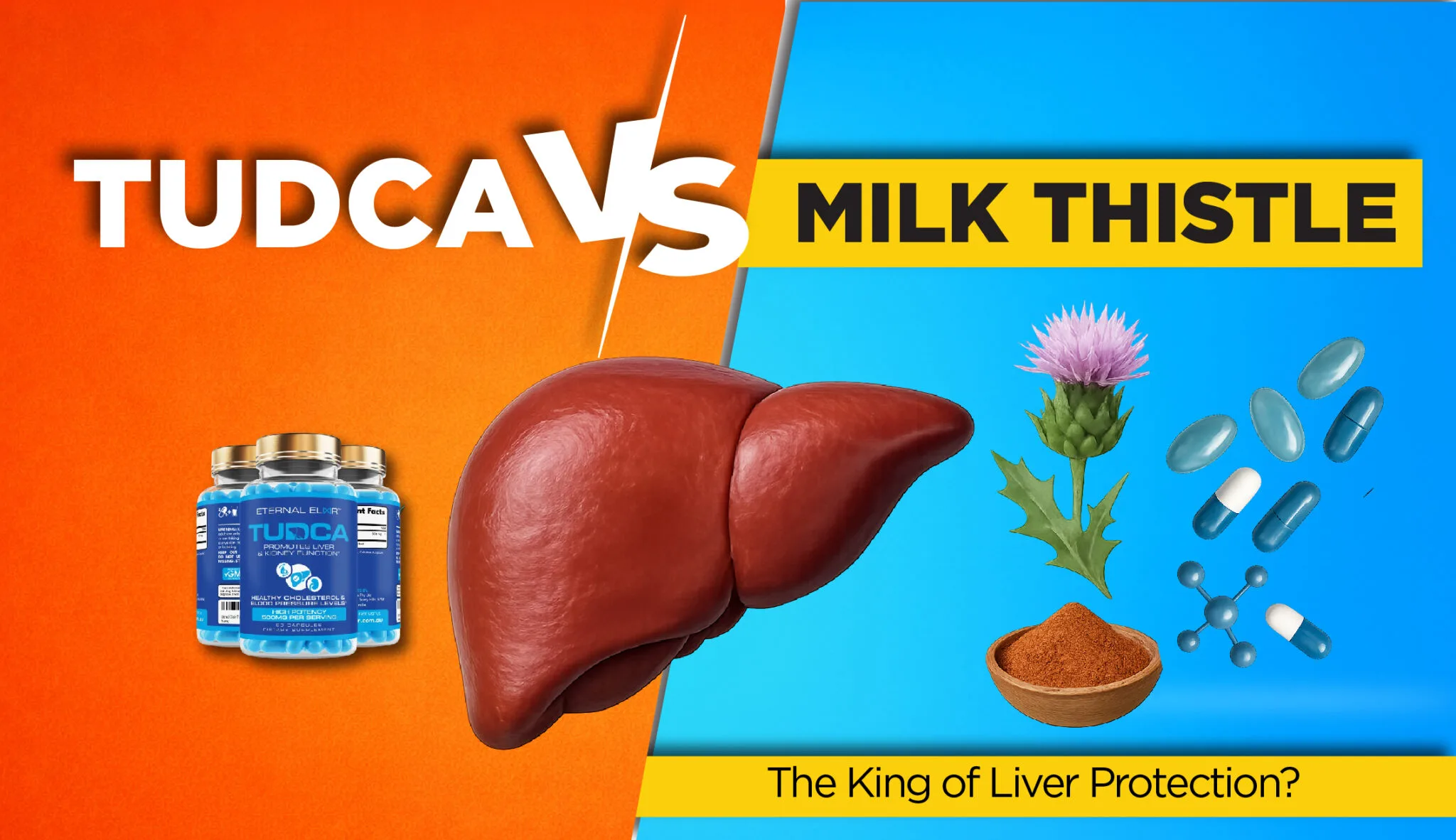
- Milk thistle (silymarin): Works on a third pathway — membrane repair plus mild antioxidant action. Stacks fine with both. We compare TUDCA and milk thistle in detail in our TUDCA vs UDCA breakdown and TUDCA vs milk thistle comparison.
- Choline: Targets phosphatidylcholine synthesis. It pairs well with both. Useful for fatty liver concerns.
- Berberine: Works on the metabolic side (AMPK). Pairs especially well with TUDCA in AU longevity stacks.
- Glycine: Supports phase-2 conjugation alongside NAC. Cheap, evidence-based, often missed.
For a full stack walkthrough, our longevity stack guide covers how TUDCA layers in alongside NMN, resveratrol, and spermidine. If you’d rather jump to the full Eternal Elixir liver and longevity range, browse the Eternal Elixir shop.
Sourcing in Australia: What to Watch For
The Australian supplement aisle holds both real and fake versions of these compounds. Three quality flags worth checking before you buy:
- TUDCA purity ≥98%. Lower-grade material is usually cut with cheaper bile acids. Look for a Certificate of Analysis showing HPLC purity.
- NAC pharmaceutical grade. Avoid bulk-powder NAC sold without third-party checks. Oxidation makes it less effective.
- Bottle size. Most brands sell 30 or 60-capsule bottles. Eternal Elixir’s range is set at 90 capsules per bottle. That gives you a better cost per dose — which matters when running compounds long-term.
For broader sourcing principles, see our guide to buying supplements in Australia.
Frequently Asked Questions
Can I take TUDCA and NAC together?
Yes. They act on different pathways. TUDCA works on bile acids and ER stress. NAC works on glutathione synthesis. There are no known interactions between them. Many Australian liver-support protocols combine the two on purpose for broader cover.
Which works faster, TUDCA or NAC?
Both produce measurable changes in liver-enzyme markers within 2–4 weeks of steady use. Symptoms shift faster on TUDCA — less bloating and better fat digestion often show up within a week. Subjective change on NAC alone (energy, recovery) is more subtle and slower.
Is TUDCA stronger than NAC?
“Stronger” is the wrong frame. TUDCA is more specific. It directly targets bile-acid problems. NAC is broader. It supports the whole oxidative-defence system. For a cholestatic liver, TUDCA is the better tool. For paracetamol-related strain, NAC wins.
Can I take NAC every day long-term?
Studies on chronic daily NAC use (12+ months) at 600–1,200 mg/day show a clean safety profile in monitored groups. The most common practical complaint is the sulphurous smell. Cycling 5 days on / 2 days off is a common biohacker habit but isn’t strictly needed based on current evidence.
Does TUDCA need to be taken with food?
Yes. Bile acids work in sync with dietary fat. Take TUDCA with your largest, fattiest meal of the day for best absorption. NAC is the opposite — it absorbs better on a relatively empty stomach.
Is NAC available over the counter in Australia?
Yes. NAC is widely sold as a dietary supplement in Australia through health-food stores, online supplement specialists, and pharmacies. Quality varies a lot. Pharmaceutical-grade material with third-party testing is worth the small premium.
Will TUDCA or NAC interact with my medications?
NAC can in theory interact with nitroglycerin and some blood-pressure drugs. TUDCA is a bile acid. It may shift the absorption of fat-soluble drugs taken at the same time. If you’re on prescription medication, run any new supplement past your prescriber.
Recommended for you
About Eternal Elixir
Eternal Elixir is an Australian supplement company specialising in pharmaceutical-grade longevity and nootropic formulations. All products are third-party tested for purity, manufactured under strict quality controls, and designed for Australians who take their health seriously. Browse the full range at eternalelixir.com.au/shop.
Related: comparing a TUDCA supplement in Australia? See the dose, capsule-count, shipping and price-per-serve comparison before choosing.