Introduction
The average bathroom cabinet in a modern household contains a remarkable number of products — cleansers, toners, serums, moisturisers, eye creams, SPF products, exfoliants, and treatments. Each promises a specific benefit. Together, they promise radiant, clear, healthy skin. Yet rates of skin conditions including acne, eczema, rosacea, and chronic dryness continue to rise in populations using these products most heavily.
A growing movement in the skincare world is questioning this complexity — and pointing back toward simplicity. Specifically, toward two ingredients that have nourished human skin for millennia: grass-fed tallow and raw honey. This guide explores how these two ancestral ingredients can replace the majority of what is in your bathroom cabinet, and the science that explains why they work.
The Problem With Modern Skincare
Conventional skincare products are formulated with a complex array of synthetic ingredients — preservatives, emulsifiers, fragrances, humectants, and active compounds. While many of these serve functional purposes in the formulation, they also introduce significant potential for skin irritation, microbiome disruption, and endocrine interference.
Preservatives such as parabens and methylisothiazolinone have documented irritant and sensitising potential. Synthetic fragrances are among the leading causes of contact dermatitis. Surfactants in cleansers disrupt the skin’s acid mantle and lipid barrier. The irony of modern skincare is that many products simultaneously address one skin concern while creating the conditions for another.
The minimalist alternative is not about deprivation — it is about using fewer, better ingredients that work with the skin’s biology rather than around it.
Why Grass-Fed Tallow?
Tallow is rendered beef fat, and its use in skincare predates recorded history. When sourced from grass-fed animals, it has a unique nutritional and lipid profile that makes it one of the most biologically compatible moisturising ingredients available:
Fatty Acid Profile Mirrors Human Skin
The fatty acid composition of grass-fed tallow — predominantly oleic acid, palmitic acid, stearic acid, and a meaningful proportion of conjugated linoleic acid (CLA) — closely mirrors the lipid composition of human sebum. This biological similarity means tallow is recognised by the skin and absorbed efficiently, rather than sitting on the surface as an occlusive barrier.
Fat-Soluble Vitamins
Grass-fed tallow is a natural source of fat-soluble vitamins A, D, E, and K — all of which are essential for skin cell turnover, collagen synthesis, antioxidant protection, and wound healing. These vitamins are present in bioavailable forms that absorb through the skin, unlike many synthetic vitamin derivatives in conventional skincare.
Skin Barrier Restoration
The ceramide-like lipids in tallow directly support the lamellar bilayer structure of the stratum corneum — the outermost layer of skin responsible for moisture retention and barrier function. In conditions like eczema and psoriasis, this barrier is disrupted. Tallow’s lipid profile provides the structural building blocks the barrier needs to repair.
Antimicrobial Properties
CLA and palmitoleic acid in grass-fed tallow have documented antimicrobial properties, offering mild protection against the pathogenic bacteria associated with acne without disrupting the broader skin microbiome.
Why Raw Honey?
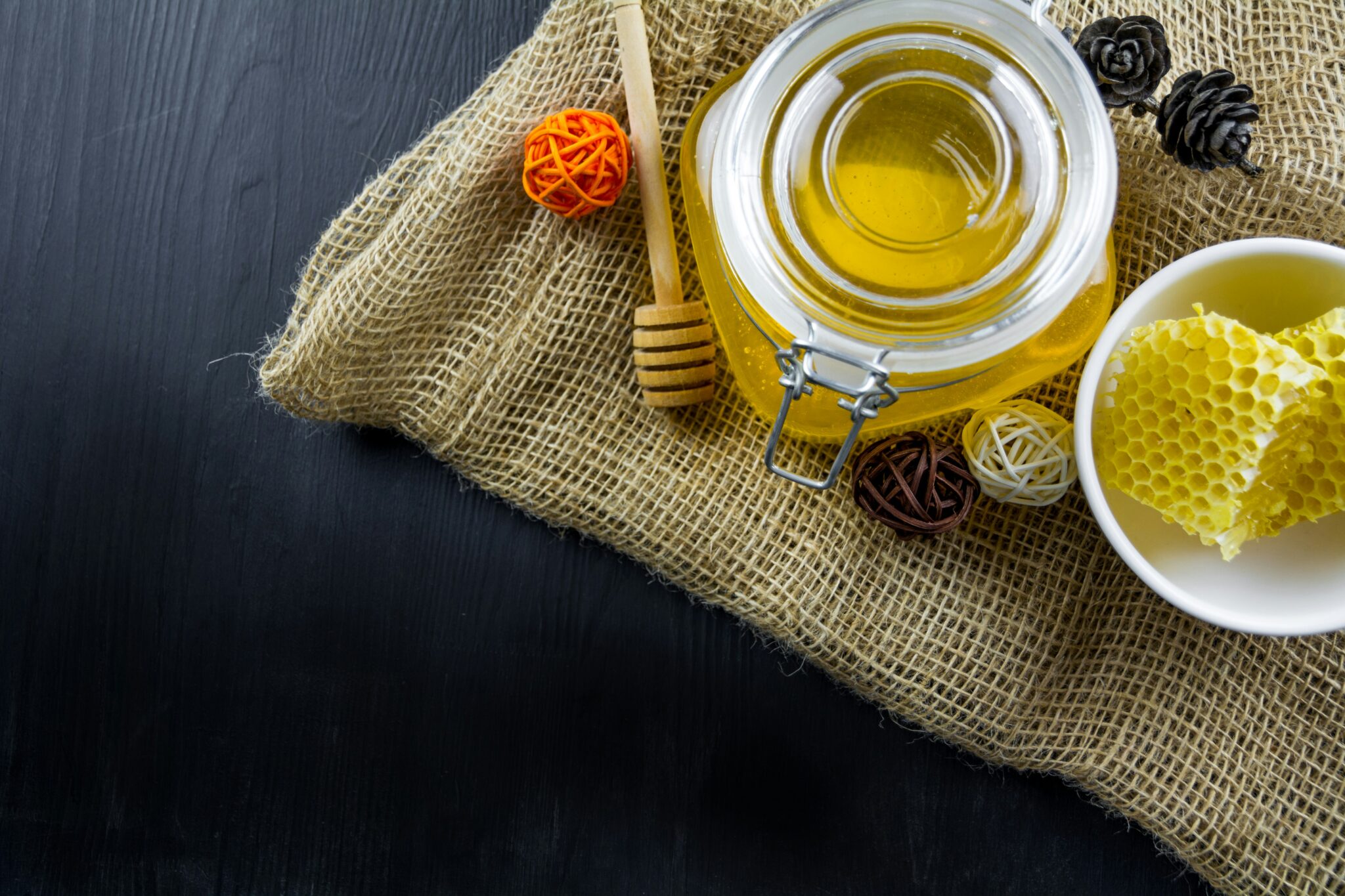
Raw honey has been used medicinally since at least ancient Egypt — it appears in some of the oldest medical papyri as a wound dressing and skin treatment. Modern research has validated this traditional wisdom with a robust body of evidence:
Hydrogen Peroxide and Antimicrobial Activity
Raw honey produces hydrogen peroxide through the action of glucose oxidase, providing sustained antimicrobial activity. This makes it effective against the acne-causing bacterium Cutibacterium acnes (formerly P. acnes) without the bacterial resistance risks associated with topical antibiotics.
Osmotic Effect and Moisture Retention
Honey’s high sugar concentration creates an osmotic environment that draws moisture, maintains a moist wound healing environment, and prevents bacterial growth. On the skin, this translates to superior moisturising effects — honey is hygroscopic, attracting and retaining ambient moisture in the skin.
Enzymatic and Antioxidant Activity
Raw honey contains a range of enzymes, flavonoids, and phenolic acids that provide antioxidant protection and anti-inflammatory activity. A review in the Asian Pacific Journal of Tropical Biomedicine documented honey’s ability to reduce inflammatory markers in skin tissue and support faster wound healing.
pH Balance
Raw honey has a mildly acidic pH of approximately 3.5 to 4.5 — close to the optimal pH of healthy skin (4.5 to 5.5). Using honey as a cleanser or mask helps maintain the acid mantle that protects against pathogenic bacterial colonisation and preserves skin microbiome diversity.
The Minimalist Routine: How It Works
Morning Routine
Step 1 — Cleanse: Rinse with lukewarm water only, or use a small amount of raw honey diluted with water as a gentle cleanser. Massage gently, then rinse.
Step 2 — Moisturise: Apply a small amount of tallow balm (pea to pearl-sized amount, depending on skin type) to damp skin. Massage gently until absorbed. A little goes a long way.
Evening Routine
Step 1 — Cleanse and treat: Raw honey used as an oil cleanser effectively dissolves makeup, SPF residue, and daily grime while treating the skin simultaneously. Massage onto dry skin, then emulsify with water and rinse.
Step 2 — Moisturise: Apply tallow balm to slightly damp skin. The evening application can be slightly more generous, allowing tallow’s fat-soluble vitamins to work during the skin’s natural overnight repair cycle.
Weekly Honey Mask
Apply raw honey to clean, dry skin. Leave for 15 to 20 minutes. Rinse with warm water. This provides deeper antimicrobial treatment, exfoliation from honey’s enzymatic activity, and intensive hydration.
Who Is This Routine Best Suited For?
- Individuals with sensitive, reactive skin who struggle with ingredient intolerance
- Those with eczema, psoriasis, or compromised skin barrier conditions
- People seeking to reduce their toxic chemical load from personal care products
- Those with hormonally influenced acne looking for a non-antibiotic, non-prescription approach
- Individuals committed to ancestral or clean living principles
- Anyone tired of spending hundreds of dollars on products that deliver minimal improvement
Transitioning: What to Expect
The skin can take 2 to 6 weeks to adjust when transitioning away from conventional products — a period sometimes called the purging or adjustment phase. During this time:
- Skin may appear more oily than usual as sebum regulation normalises
- Minor breakouts can occur as the microbiome rebalances
- Some dryness or tightness may occur as the skin adjusts to the absence of synthetic humectants
These effects are typically transient. Most users report meaningful improvements in skin texture, clarity, and hydration within 4 to 8 weeks of consistent use.
Common Questions
Will tallow make my skin break out?
Contrary to intuition, tallow is non-comedogenic for most skin types. Its fatty acid profile is closely matched to sebum, which means the skin does not react to it as a foreign substance. Users with acne-prone skin often find that tallow — unlike synthetic moisturisers that disrupt the lipid barrier — actually improves their acne over time.
Can I use this routine if I wear makeup?
Yes. Raw honey is effective at dissolving most makeup formulations. For heavy or waterproof makeup, a small amount of tallow balm used as an oil cleanser first, followed by honey cleansing, removes makeup thoroughly.
What about SPF?
Tallow and honey do not replace broad-spectrum sun protection. If you require SPF for your climate or outdoor activity, incorporate a clean mineral sunscreen (zinc oxide-based) as the final step of your morning routine. Many users find that healthy, lipid-replete skin tolerates sun exposure better and requires less reactive sun protection as skin barrier function improves.
Final Thoughts
The case for simplicity in skincare is not nostalgic sentiment — it is grounded in the biochemistry of skin barrier function, the microbiome science of skin health, and the clinical evidence behind the individual properties of tallow and honey. Removing complexity, eliminating synthetic disruptors, and replacing them with biologically compatible, nutrient-rich ingredients is a skincare philosophy that aligns with how skin was designed to function.
The minimalist tallow and honey routine is not for everyone. But for those who have struggled with reactive, sensitive, or chronically problematic skin despite using sophisticated conventional products, it may represent the most meaningful skincare change they have ever made.
Explore Eternal Elixir’s grass-fed tallow skincare range — ancestral ingredients, modern quality standards.